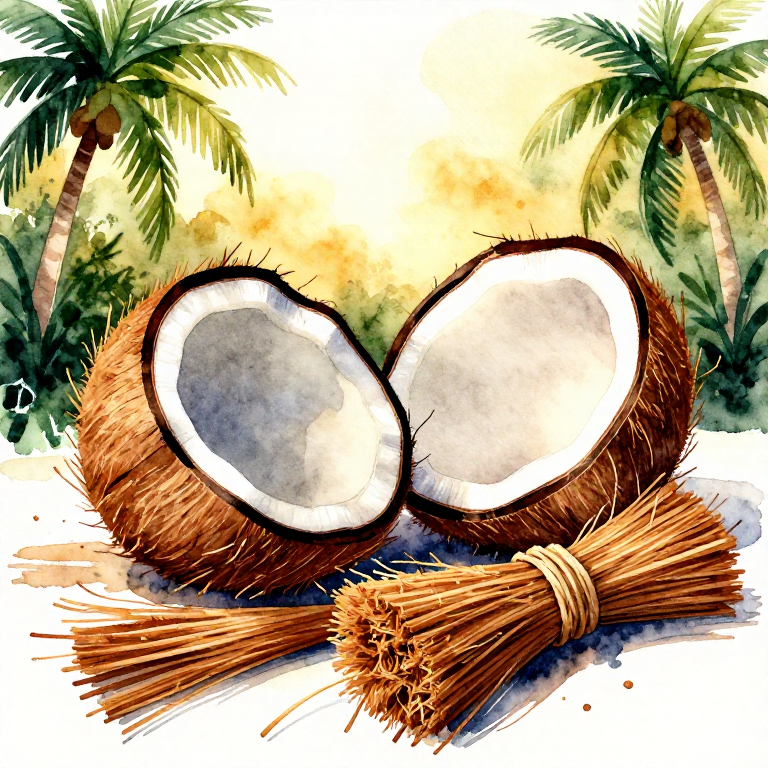
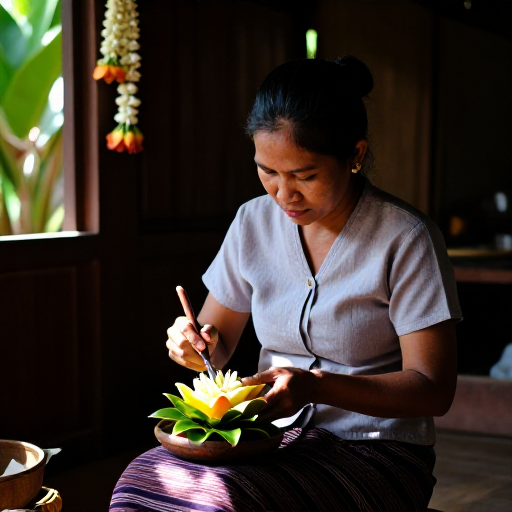

การเก็บเกี่ยวใยมะพร้าว — จากเปลือกสู่เส้นใย
说明
เลือกผลมะพร้าวที่เหมาะสม
เลือกผลมะพร้าวที่เหมาะสม
เลือกผลมะพร้าวที่แก่จัด (อายุ 10-12 เดือน) เปลือกนอกเปลี่ยนเป็นสีน้ำตาล มะพร้าวแก่มีเส้นใยที่แข็งแรงและยาวกว่ามะพร้าวอ่อน มะพร้าวอ่อน (สีเขียว) มีเส้นใยอ่อนเกินไปสำหรับการทำเชือก
此步骤所需材料:
 成熟椰子(10–12 个月)20 个
แกะเปลือกนอกออกจากกะลา
แกะเปลือกนอกออกจากกะลา
ปักเหล็กแหลม (หลาว) ลงดินในแนวเอียง ใช้แรงกดผลมะพร้าวลงบนปลายเหล็กเพื่อแทงเข้าไปในเปลือก แล้วงัดออก ทำซ้ำรอบผลจนเปลือกหลุดออกทั้งหมด แยกเปลือก (กาบ) ออกจากกะลา
所需工具:
 剥椰尖桩(铁桩)
 长袖皮手套
长袖皮手套ตัดเปลือกเป็นชิ้นเล็ก
ตัดเปลือกเป็นชิ้นเล็ก
ตัดเปลือกมะพร้าวเป็นชิ้นขนาดประมาณ 15-20 ซม. ชิ้นที่เล็กลงจะแช่น้ำได้ทั่วถึงกว่าและเส้นใยแยกตัวง่ายกว่า
所需工具:
 砍刀
砍刀เตรียมบ่อแช่น้ำ
เตรียมบ่อแช่น้ำ
เตรียมบ่อแช่ — อาจเป็นถังพลาสติกขนาดใหญ่ บ่อซีเมนต์ หรือบ่อน้ำธรรมชาติ น้ำต้องมากพอท่วมเปลือกมะพร้าวทั้งหมด น้ำจืดที่ค่อนข้างนิ่ง (ไม่ไหลแรง) ให้ผลดีที่สุด
此步骤所需材料:
 水200 升
所需工具:
 大塑料水箱
大塑料水箱แช่เปลือกมะพร้าวในน้ำ (Retting)
แช่เปลือกมะพร้าวในน้ำ (Retting)
จุ่มชิ้นเปลือกมะพร้าวลงในน้ำ วางหินหรือไม้ทับไว้ไม่ให้ลอย น้ำจะค่อย ๆ ย่อยสลายเนื้อเยื่ออ่อน (เพกติน) ที่ยึดเส้นใยไว้ กระบวนการนี้เรียกว่า "retting" (การแช่หมัก)
此步骤所需材料:
 秤石5 kilogram
ตรวจสอบทุกสัปดาห์
ตรวจสอบทุกสัปดาห์
ตรวจสอบเปลือกทุก 7 วัน ลองดึงเส้นใยด้วยนิ้ว ถ้าเส้นใยยังแยกยาก ให้แช่ต่อ น้ำจะเปลี่ยนเป็นสีน้ำตาลเข้มและมีกลิ่น — นี่เป็นเรื่องปกติ เป็นผลจากการย่อยสลายของจุลินทรีย์
แช่ 2-4 สัปดาห์
แช่ 2-4 สัปดาห์
ระยะเวลาแช่ขึ้นกับอุณหภูมิ: อากาศร้อน (30°C+) ใช้เวลา 2-3 สัปดาห์ อากาศเย็น (20°C) อาจนาน 4-6 สัปดาห์ เมื่อเส้นใยแยกตัวง่ายด้วยนิ้วมือ ถือว่าพร้อม อย่าแช่นานเกินไป — เส้นใยจะอ่อนและเปราะ
นำเปลือกขึ้นจากน้ำ
นำเปลือกขึ้นจากน้ำ
ยกเปลือกที่แช่แล้วออกจากบ่อ ปล่อยน้ำหยดออกสักครู่ ใส่ถุงตาข่ายหรือวางบนตะแกรงให้สะเด็ดน้ำ น้ำที่เหลือในบ่อมีธาตุอาหารสูง — ใช้รดต้นไม้ได้
所需工具:
 网眼沥水袋
网眼沥水袋ตีแยกเส้นใย
ตีแยกเส้นใย
วางเปลือกที่แช่แล้วบนพื้นแข็ง (แผ่นไม้หรือหิน) ใช้ไม้ท่อนตีเบา ๆ ซ้ำ ๆ เพื่อแยกเส้นใยออกจากเนื้อเยื่ออ่อนที่เหลือ ตีทั่วชิ้น พลิกด้านแล้วตีอีก
所需工具:
 木制拍打槌
木制拍打槌 平木板
平木板ล้างเส้นใยในน้ำสะอาด
ล้างเส้นใยในน้ำสะอาด
นำเส้นใยที่แยกแล้วไปล้างในน้ำสะอาด ขยำและบีบเบา ๆ เพื่อล้างเศษเนื้อเยื่อ โคลน และกลิ่นออก เปลี่ยนน้ำ 2-3 ครั้งจนน้ำล้างค่อนข้างใส
此步骤所需材料:
 蒸馏水40 升
所需工具:
 洗涤盆
洗涤盆คัดแยกเส้นใยตามความยาว
คัดแยกเส้นใยตามความยาว
แยกเส้นใยเป็น 3 กลุ่ม: ยาว (15 ซม.+) สำหรับทำเชือกและทอเสื่อ, ปานกลาง (5-15 ซม.) สำหรับทำแปรงและบุนวม, สั้น (ต่ำกว่า 5 ซม.) สำหรับผสมดินปลูกหรือวัสดุกรอง
บีบน้ำออกจากเส้นใย
บีบน้ำออกจากเส้นใย
บีบเส้นใยด้วยมือให้แห้งที่สุดเท่าที่จะทำได้ หรือใช้เครื่องบีบ (ถ้ามี) ยิ่งบีบน้ำออกมากเท่าไหร่ เวลาตากแห้งจะน้อยลง
ตากเส้นใยให้แห้ง
ตากเส้นใยให้แห้ง
กระจายเส้นใยบาง ๆ บนตะแกรงหรือผ้าใบกลางแดด พลิกกลับทุก 3-4 ชั่วโมงเพื่อให้แห้งสม่ำเสมอ ใช้เวลา 2-3 วันในแดดจัด เก็บเข้าร่มถ้าฝนตก
所需工具:
 碗碟沥水架
碗碟沥水架ตรวจสอบความแห้ง
ตรวจสอบความแห้ง
เส้นใยที่แห้งดีจะรู้สึกแห้งสนิท ไม่เย็นเมื่อสัมผัส และมีสีน้ำตาลทอง ถ้ายังชื้นอยู่ จะมีกลิ่นเหม็นอับและขึ้นรา ความชื้นควรต่ำกว่า 12%
สางเส้นใยให้ฟู
สางเส้นใยให้ฟู
ใช้หวีเหล็กหรือมือสางเส้นใยที่แห้งแล้วให้แยกตัวฟูขึ้น เส้นใยที่จับตัวเป็นก้อนจะใช้งานยาก การสางช่วยให้เส้นใยพร้อมสำหรับการตีเกลียวเป็นเชือกหรือทอเสื่อ
所需工具:
 钢梳
钢梳บรรจุและเก็บรักษา
บรรจุและเก็บรักษา
บรรจุเส้นใยแห้งในกระสอบป่านหรือถุงผ้าที่ระบายอากาศได้ อย่าใช้ถุงพลาสติกปิดสนิท — ความชื้นจะทำให้ขึ้นรา เก็บในที่แห้ง ยกสูงจากพื้น ใยมะพร้าวแห้งเก็บได้นานหลายปีโดยไม่เสื่อมคุณภาพ
此步骤所需材料:
 麻袋3 个
麻袋3 个CC0 公共领域
此蓝图以 CC0 协议发布。你可以自由复制、修改、分发和使用此作品,无需征得许可。
通过购买蓝图中的产品支持创客,他们将获得 创客佣金 (由供应商设定),或创建此蓝图的新版本并将其作为连接包含在你自己的蓝图中以分享收入。