合作
艺术
美容与健康
工艺
文化与历史
娱乐
环境
食品与饮料
逆向工程
科学
体育
技术
可穿戴设备


Lead Came: Window Rods Cast in a Hinged Iron Mould (Theophilus, tr. Hendrie 1847)
The lead rods that hold the pieces of a medieval glass window, cast the way Theophilus describes around 1100: pure lead is poured with a warm iron spoon into a hinged iron mould with grooves hollowed down both halves, knocked out, and the mould closed again for the next.
Kept at an even heat, one heating of the mould casts more than forty rods.
Source: Theophilus, De Diversis Artibus, Book II, ch. XXIII-XXV, tr. R. Hendrie (1847), pp. 147-149. Picture: p. 149.
中级
Unknown
说明
1
1
Make the iron mould
Make the iron mould
Take two irons two fingers broad, one finger thick and a yard long. Hinge them together at one end with a nail; make the other end a little wider and thinner to form the pouring mouth. File them until no light shows between them. Rule two lines down the middle of each, hollow the groove between them with a chasing iron as deep as you wish and rasp it a little, so that the lead poured in makes one piece.
所需工具:
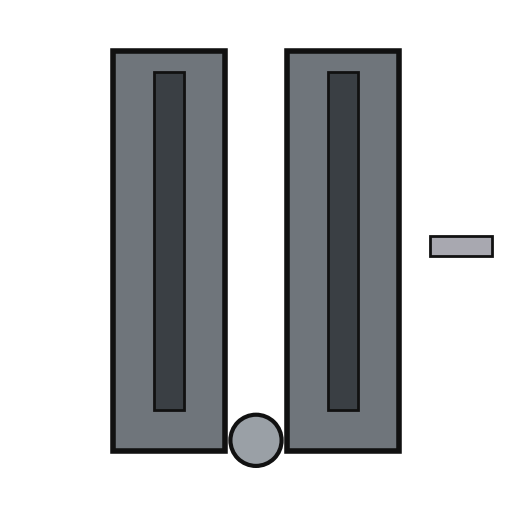 铅条(铅框)铸模
2
2
Melt the lead
Melt the lead
Make a hearth with a hollow for a large earthen vessel lined inside and out with clay beaten up with dung, and dry it with a big fire. Put pure lead on the fire over the vessel so that it runs into it as it melts.
此步骤所需材料:
 铅锭1 pure lead
所需工具:
 陶罐
 木炭
3
3
Cast the rods
Cast the rods
Warm the open mould on the charcoal, close it and set it in the slot of a yard-long wooden holder standing on the ground. Pour the lead in with a small warmed iron spoon, keeping the spoon on the fire between pours. Knock the mould out, open it with a knife, take out the rod, close it and cast again. If the lead does not reach the bottom, warm the mould more. At an even heat you can cast more than forty rods.
所需工具:
铅条(铅框)铸模 汤勺
 手工刀木炭

CC0 公共领域
此蓝图以 CC0 协议发布。你可以自由复制、修改、分发和使用此作品,无需征得许可。
通过购买蓝图中的产品支持创客,他们将获得 创客佣金 (由供应商设定),或创建此蓝图的新版本并将其作为连接包含在你自己的蓝图中以分享收入。