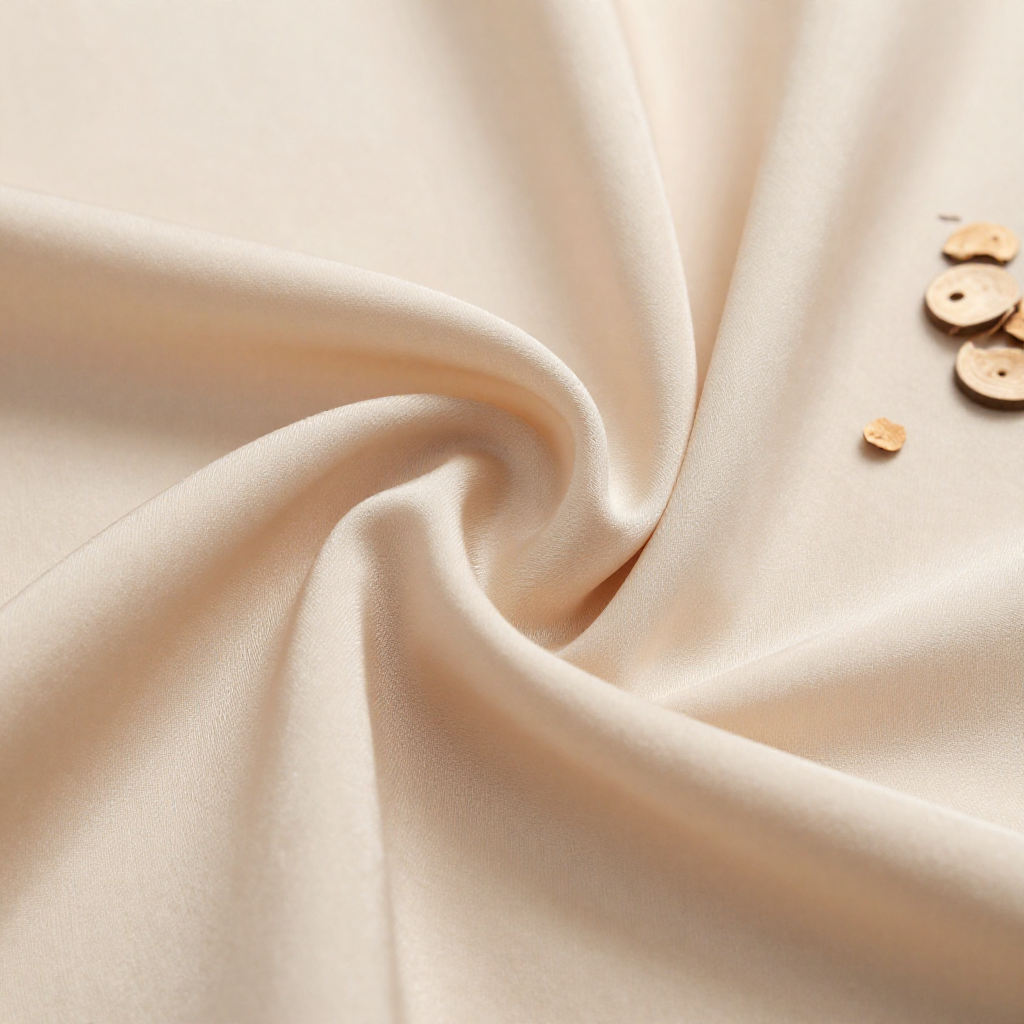


Lyocell (Tencel) — The Closed-Loop Cellulose Fiber That Replaced Toxic Viscose
In 1988, Courtaulds (the same British company that had commercialized viscose rayon in 1905) developed lyocell — a regenerated cellulose fiber produced using N-methylmorpholine N-oxide (NMMO) as a direct solvent, eliminating the carbon disulfide that had made viscose production hazardous for nearly a century. Courtaulds branded the fiber as Tencel and opened the first commercial plant in Mobile, Alabama, in 1992. Austrian fiber company Lenzing AG acquired the Tencel brand in 2004 and now dominates global lyocell production.
The chemistry is radically simpler than viscose. Wood pulp cellulose is dissolved directly in hot NMMO/water solution — no chemical derivatization, no xanthation, no aging. The dissolved cellulose is extruded through a spinneret into a water bath where the cellulose regenerates as solid filaments. The NMMO solvent is recovered from the water bath and recycled — over 99.7% solvent recovery, creating a nearly closed-loop process. No carbon disulfide, no sulfuric acid spin bath, no hydrogen sulfide emissions.
Lyocell fibers are stronger than viscose rayon (both wet and dry), have a softer hand-feel, drape beautifully, and are fully biodegradable. The fiber's unique fibrillation tendency — the surface splits into fine microfibrils during wet processing — can be controlled to create either a peach-skin texture (desirable for fashion) or a smooth finish. Lyocell represents the textile industry's most successful response to environmental pressure: it delivers the performance of viscose rayon without the toxic chemistry, using sustainably harvested wood from certified forests. Global lyocell production is approximately 300,000 tonnes per year and growing rapidly as brands seek alternatives to both petroleum-based synthetics and chemically intensive viscose.
相关蓝图
这些蓝图共享知识——技术、材料或原理
CC0 公共领域
此蓝图以 CC0 协议发布。你可以自由复制、修改、分发和使用此作品,无需征得许可。
通过购买蓝图中的产品支持创客,他们将获得 创客佣金 (由供应商设定),或创建此蓝图的新版本并将其作为连接包含在你自己的蓝图中以分享收入。