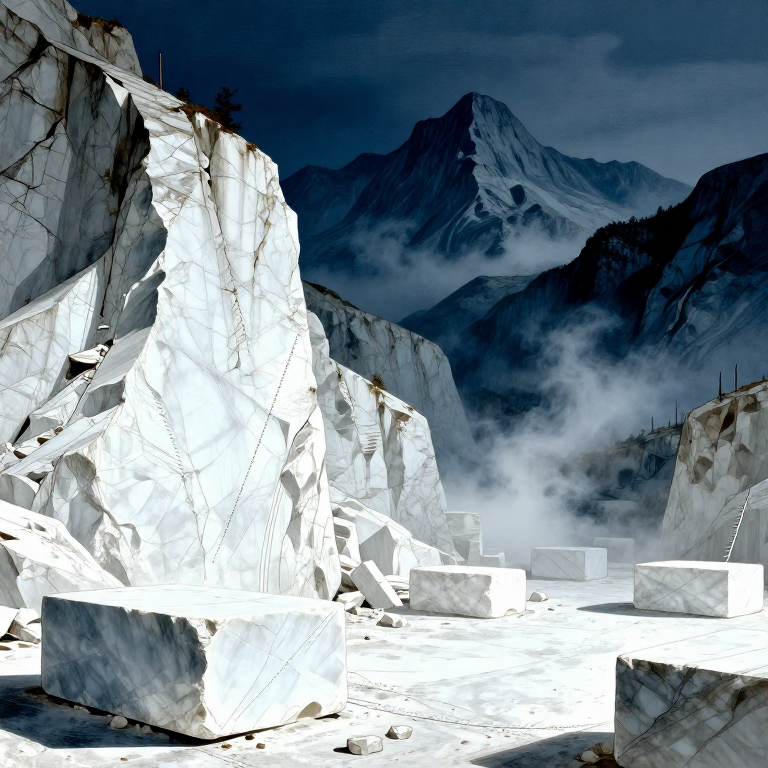


Estrazione del Marmo di Carrara — Dalla Cava al Blocco Squadrato
说明
Comprendere la geologia del marmo di Carrara
Comprendere la geologia del marmo di Carrara
Il marmo di Carrara si e formato circa 200 milioni di anni fa, durante il periodo Giurassico, dalla metamorfosi di sedimenti calcarei depositati sul fondo di un antico mare. Temperature superiori a 200 gradi Celsius e pressioni di migliaia di atmosfere hanno trasformato il calcare (CaCO3) in marmo cristallino. Il marmo di Carrara e composto per il 99% da calcite pura, il che gli conferisce il bianco caratteristico. Le Alpi Apuane contengono oltre 300 cave attive, e l'area produce circa 800.000 tonnellate di marmo all'anno. Le varieta principali sono lo Statuario (il piu puro, quasi trasparente), il Bianco ordinario, il Venato (con venature grigie) e l'Arabescato (con disegni marcati).
Leggere la montagna e individuare le vene di qualita
Leggere la montagna e individuare le vene di qualita
L'identificazione delle vene di marmo di qualita richiede esperienza e conoscenza geologica. Si osservano le pareti rocciose esposte, cercando strati di marmo bianco uniforme senza inclusioni di minerali scuri come pirite o grafite. Le vene migliori corrono in strati continui con spessore superiore a 3 metri. Si cerca marmo con grana fine e cristalli piccoli (inferiori a 0,2 mm), segno di metamorfismo completo. Il colore deve essere bianco omogeneo, senza macchie giallastre causate da ossidi di ferro. Il cavatore esperto batte la parete con un martello da geologo: un suono chiaro e squillante indica marmo compatto e sano, mentre un suono sordo rivela fratture interne o inclusioni.
所需工具:
 地质锤
地质锤 10 倍手持放大镜
 地质图
地质图Preparare il piano di estrazione e la sicurezza in cava
Preparare il piano di estrazione e la sicurezza in cava
Prima di iniziare l'estrazione si prepara un piano dettagliato che tiene conto della direzione delle venature, della pendenza del fronte di cava e delle fratture naturali. In Italia, le cave sono regolate dal Decreto Legislativo 624/1996 e dal piano regionale delle attivita estrattive. Ogni cava deve avere un direttore responsabile (ingegnere minerario iscritto all'albo). Si controlla la stabilita del fronte di cava, si posizionano le reti paramassi sulle pareti superiori e si delimitano le aree di lavoro. Tutto il personale indossa casco protettivo, scarpe antinfortunistiche con puntale in acciaio, occhiali di protezione e protezioni auricolari, poiche il rumore in cava supera regolarmente gli 85 decibel.
此步骤所需材料:
 落石防护网50 米
 警示带100 米
所需工具:
 带下颏带的安全帽
 钢头安全靴
钢头安全靴 密闭式护目镜
 护耳罩
护耳罩Perforare i fori guida per il filo diamantato
Perforare i fori guida per il filo diamantato
Per creare il percorso del filo diamantato si praticano fori passanti nella roccia. Si utilizza una perforatrice ad aria compressa montata su cingoli che esegue fori con diametro di 80-100 mm. I fori vengono perforati in configurazione ad L oppure ad U, collegando la base del blocco al lato posteriore per consentire il passaggio del filo. La perforazione avviene con punte al carburo di tungsteno raffreddate ad acqua. Un singolo foro di 10 metri richiede circa 2-3 ore di lavoro. L'acqua di raffreddamento viene continuamente pompata nel foro per evitare il surriscaldamento della punta e per evacuare i detriti di perforazione.
此步骤所需材料:
 90 毫米硬质合金钻头3 个
 钻孔供水软管30 米
所需工具:
 履带式风动钻机
 工业空气压缩机
 潜水泵
潜水泵Infilare e mettere in tensione il filo diamantato
Infilare e mettere in tensione il filo diamantato
Il filo diamantato e costituito da un cavo d'acciaio di 5 mm di diametro su cui sono montate perline diamantate distanziate di 25-30 mm. Ogni perlina contiene diamanti sintetici in una matrice metallica sinterizzata. Il filo viene fatto passare attraverso i fori guida precedentemente perforati, formando un anello chiuso. Si collega il filo alla macchina tagliatrice (tagliablocchi a filo), che consiste in un volano motorizzato montato su binari. La macchina mette in tensione il filo e lo fa girare a velocita di 20-30 metri al secondo. Un filo diamantato di buona qualita taglia circa 8-12 metri quadrati di marmo prima di esaurirsi.
此步骤所需材料:
 直径 11 毫米金刚石绳锯40 米
 接线压接套管4 个
所需工具:
 金刚石绳锯机
 压线钳
压线钳Eseguire il taglio con il filo diamantato
Eseguire il taglio con il filo diamantato
La macchina tagliablocchi viene avviata e il filo diamantato inizia a ruotare attraverso il marmo. La velocita di taglio nel marmo di Carrara e di circa 2-4 metri quadrati all'ora, a seconda della durezza e della presenza di venature. Si inietta acqua continuamente sul punto di taglio per raffreddare il filo, ridurre la polvere e prolungare la vita delle perline diamantate. L'operatore sorveglia la tensione del filo e la velocita di avanzamento, regolando la macchina in tempo reale. Un taglio verticale di 6 metri di altezza e 10 metri di lunghezza richiede circa 15-20 ore di lavoro continuo. Si eseguono tre tagli: posteriore, laterale destro e laterale sinistro, lasciando il blocco collegato alla montagna solo alla base.
此步骤所需材料:
 冷却水5000 升
所需工具:
金刚石绳锯机 供水系统
供水系统 钢丝张力监测仪
Tagliare la base del blocco
Tagliare la base del blocco
Il taglio alla base e il piu critico dell'intera operazione. Si perfora una serie di fori orizzontali alla base del blocco, distanziati di circa 25-30 cm. In questi fori si inseriscono cunei in acciaio (dette anche 'mine a cuneo') azionati idraulicamente oppure cuscini idraulici piatti. I cuscini idraulici vengono gonfiati lentamente fino a una pressione di 300-400 bar, generando una forza di separazione sufficiente a staccare il blocco lungo il piano di base. In alternativa, si usa il filo diamantato anche per il taglio orizzontale, facendolo passare attraverso un foro orizzontale perforato sotto il blocco. Questo taglio richiede precisione estrema perche un errore puo causare la frattura irregolare del blocco intero.
此步骤所需材料:
 扁平液压枕8 个
所需工具:
 400 巴液压泵站履带式风动钻机
 钢楔套装
钢楔套装Ribaltare il blocco dalla parete
Ribaltare il blocco dalla parete
Una volta che tutti i tagli sono completati, il blocco viene separato dalla parete della montagna. Si usa un escavatore cingolato da cava o un cavo d'acciaio collegato a un argano per tirare delicatamente il blocco in avanti. Il blocco, che puo pesare da 20 a 300 tonnellate, si ribalta sul piano di cava preparato in precedenza con uno strato di detriti morbidi (chiamato 'ravaneto') che ammortizza la caduta. Il ribaltamento e il momento piu pericoloso: tutto il personale deve trovarsi a distanza di sicurezza (minimo 50 metri). Il direttore della cava coordina l'operazione con segnali sonori codificati.
此步骤所需材料:
 碎大理石缓冲垫层10 cubic meter
 40 毫米钢缆30 米
所需工具:
 履带式挖掘机
 液压绞盘
液压绞盘 警示号角
警示号角Ispezionare e classificare il blocco
Ispezionare e classificare il blocco
Dopo il ribaltamento, il blocco viene ispezionato visivamente e con strumenti per valutarne la qualita commerciale. Si esaminano le superfici esposte per individuare fratture, inclusioni, macchie di ossido di ferro, vene grigie o inclusioni di pirite. Il marmo viene classificato secondo il sistema tradizionale carrarese: Statuario (bianco puro, cristalli fini, trasparenza alla luce, il piu pregiato), Bianco C (buona bianchezza con minime venature), Bianco CD (venature leggere), Venato (venature grigie decorative), Arabescato (venature marcate e disegni complessi), e Bardiglio (grigio scuro uniforme). Un blocco di Statuario di qualita superiore puo valere oltre 10.000 euro al metro cubo.
所需工具:
 LED 检查手电10 倍手持放大镜
 大理石分级参照表
 卷尺
卷尺Squadrare il blocco con la tagliatrice a catena
Squadrare il blocco con la tagliatrice a catena
Il blocco grezzo ribaltato ha superfici irregolari e deve essere squadrato in forme regolari per il trasporto e la vendita. Si utilizza una tagliatrice a catena da cava (detta 'braccio tagliablocchi'), montata su cingoli, con una barra di 3-4 metri dotata di denti al carburo di tungsteno. La macchina taglia il marmo in blocchi regolari con dimensioni standard: tipicamente 2,0 x 1,5 x 1,0 metri per un peso di circa 8 tonnellate. Ogni taglio di squadratura richiede raffreddamento ad acqua continuo. I blocchi squadrati vengono contrassegnati con il numero di cava, la data di estrazione e la classificazione di qualita, dipinti direttamente sulla superficie con vernice industriale.
此步骤所需材料:
 链锯切齿(碳化钨)20 个
 工业标记漆2 can
所需工具:
 轨道式链锯采石机供水系统卷尺
 1.5 米水平尺
Caricare e trasportare i blocchi
Caricare e trasportare i blocchi
I blocchi squadrati vengono caricati su autocarri ribassati da cava con carico utile di 30-40 tonnellate, utilizzando pale gommate o escavatori dotati di pinze per marmo. Le strade di cava nelle Alpi Apuane sono strette e ripide, con pendenze fino al 18% e tornanti a 180 gradi. Gli autocarri scendono a velocita massima di 15 km/h, usando freni a tamburo e rallentatori idraulici. Storicamente, i blocchi venivano calati a valle con la 'lizzatura': venivano trascinati su slitte di legno lungo piste ripide unte di sapone, con i 'lizzatori' che controllavano la discesa con pali di faggio come freni. La lizzatura e stata utilizzata dal Medioevo fino agli anni 1960.
此步骤所需材料:
 成型用橡胶垫8 个
 重型棘轮绑带4 个
所需工具:
 低床采石卡车
 带大理石夹具的轮式装载机
Gestire i residui e il recupero ambientale
Gestire i residui e il recupero ambientale
L'estrazione del marmo produce una quantita significativa di scarti: circa il 70-80% del materiale estratto diventa detrito. I ravaneti (accumuli di detriti) sono visibili come cascate bianche sulle montagne sopra Carrara. La polvere di marmo (carbonato di calcio puro) viene recuperata e utilizzata nell'industria della carta come carica minerale, nella produzione di dentifrici, come correttore di acidita per i terreni agricoli e come materia prima per pitture e intonaci. I blocchi di scarto di dimensioni medie vengono venduti per pavimentazioni, massicciate stradali e produzione di granulati decorativi. Le cave dismesse devono essere riabilitate secondo la legge regionale toscana, con rimodellamento delle pareti, rinverdimento e stabilizzazione dei ravaneti.
Controllare la qualita finale al deposito
Controllare la qualita finale al deposito
Al deposito a valle (il principale si trova nel porto di Marina di Carrara), ogni blocco viene misurato con precisione: lunghezza, larghezza e altezza in centimetri. Il volume viene calcolato e il blocco viene pesato su una bilancia industriale. Il marmo di Carrara ha una densita di 2,69-2,71 g/cm3. Si eseguono i test finali di qualita: assorbimento d'acqua (deve essere inferiore allo 0,5% per lo Statuario), resistenza a compressione (tipicamente 120-140 MPa per il bianco di Carrara), e lucidabilita (si leviga un campione per verificare che raggiunga un livello di lucentezza speculare). Il blocco riceve la documentazione finale con certificato di provenienza, analisi chimica e classificazione commerciale definitiva, pronto per la vendita a scultori, architetti e industrie di tutto il mondo.
此步骤所需材料:
 样品抛光垫套装1 套
所需工具:
 工业平台秤卷尺
 光泽度仪
光泽度仪 吸水率测试套装
材料
16- 50 米占位符
- 100 米占位符
- 3 个占位符
- 30 米占位符
- 40 米占位符
- 4 个占位符
- 5000 升占位符
- 8 个占位符
- 10 cubic meter占位符
- 30 米占位符
- 20 个占位符
- 2 can占位符
- 8 个占位符
- 4 个占位符
- 1 套占位符
- 5000 升占位符
所需工具
29- 占位符
- 占位符
- 占位符
- 占位符
- 占位符
- 占位符
- 占位符
- 占位符
- 占位符
- 占位符
- 占位符
- 占位符
- 占位符
- 占位符
- 占位符
- 占位符
- 占位符
- 占位符
- 占位符
- 占位符
- 占位符
- 1 vendor sell this, none ship to you yet占位符
- 占位符
- 占位符
- 占位符
- 占位符
- 占位符
- 占位符
- 占位符
CC0 公共领域
此蓝图以 CC0 协议发布。你可以自由复制、修改、分发和使用此作品,无需征得许可。
通过购买蓝图中的产品支持创客,他们将获得 创客佣金 (由供应商设定),或创建此蓝图的新版本并将其作为连接包含在你自己的蓝图中以分享收入。