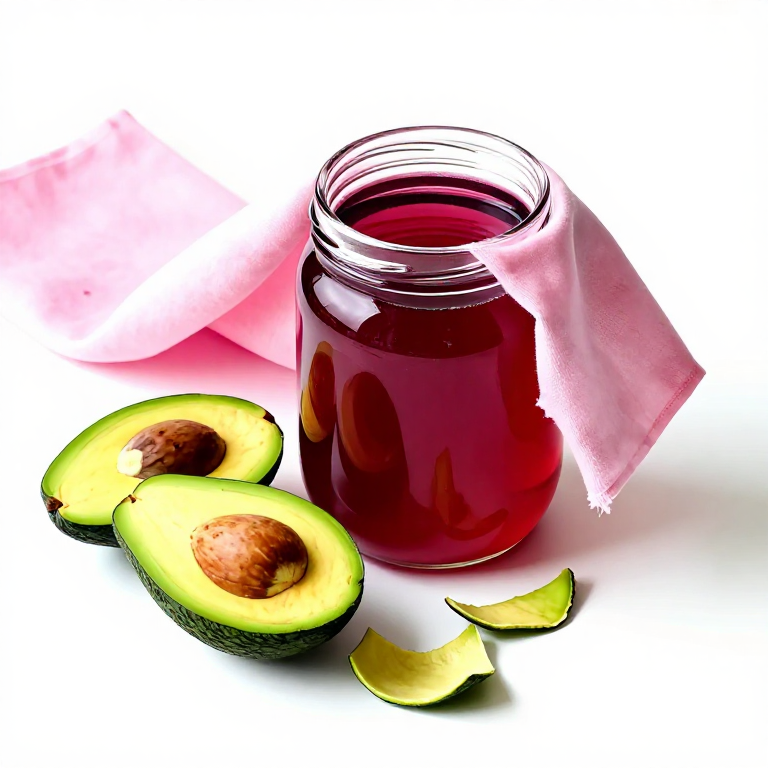


Extracting Natural Dye from Avocado Pits — Pink Plant-Based Dye
说明
Prepare the Avocado Pits
Prepare the Avocado Pits
Wash the avocado pits thoroughly to remove any remaining fruit flesh, which can cause the dye bath to ferment and smell. Collect pits over time in the freezer if needed — they retain their dye potential when frozen. Chop the pits into quarters or smaller pieces to increase surface area and speed extraction. The reddish-brown inner layer of the pit contains the highest concentration of tannins (condensed proanthocyanidins) that produce the pink colour. Avocado skins also contribute colour and can be added to the dye pot. You need approximately 1:1 weight ratio of dye material to fabric for a medium-intensity colour.
此步骤所需材料:
 牛油果核与果皮6-8 pits (washed and dried) 个
 鳄梨skins from same 6-8 avocados 个
 水3-4 litres 个
 棉花100-200g 克
 碳酸钠(纯碱)1 teaspoon 个
所需工具:
 大汤锅
大汤锅 细纱布
细纱布 木质搅拌勺
木质搅拌勺Simmer the Dye Bath
Simmer the Dye Bath
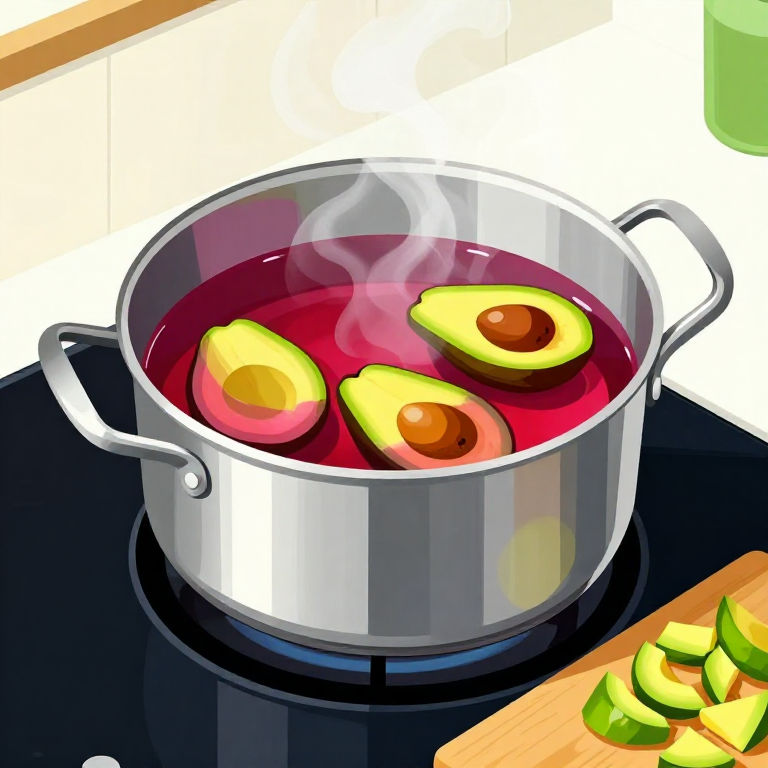
Place the chopped pits and skins in a stainless steel pot (never aluminium or iron, which react with tannins and shift the colour dramatically). Cover with 3-4 litres of water. Bring to a gentle simmer (not a rolling boil — high heat can muddy the colour) and maintain for 1-2 hours. The liquid will gradually turn from pale yellow to deep reddish-pink. Strain out all the solid material through cheesecloth. The liquid should be a clear, deep reddish-pink. Adding a small pinch of washing soda (sodium carbonate) shifts the pH to alkaline, which tends to push the colour toward a truer pink rather than salmon-orange. Add just enough to shift, not enough to make the bath soapy.
Prepare and Enter the Fabric
Prepare and Enter the Fabric
Pre-wet the scoured fabric in warm water and wring out excess. Submerge the damp fabric in the warm (not boiling) dye bath, ensuring it is fully covered and not bunched up. Bunched fabric dyes unevenly, producing blotchy results. Stir gently every 15-20 minutes to ensure even dye uptake. Cellulose fibres (cotton, linen) absorb avocado tannins slowly — leave the fabric in the dye bath for a minimum of 2 hours, and up to overnight for the deepest colour. The colour develops gradually and continues to shift as the fabric absorbs more tannin. Protein fibres (silk, wool) absorb tannin dyes faster and typically produce deeper shades.
Remove and Oxidize
Remove and Oxidize
Remove the fabric from the dye bath and squeeze out excess liquid gently (do not wring, which creates uneven marks). Hang the fabric to dry in the open air. As the fabric oxidizes and dries, the colour often deepens and shifts — avocado dye continues to develop for several days after dyeing. The initial colour from the wet bath may appear darker than the final dry colour, or lighter — it depends on the specific tannin composition, water chemistry, and fabric type. If the colour is too light after drying, re-enter the fabric in the dye bath for another round. Multiple dip-and-dry cycles produce progressively deeper colour.
Rinse and Set the Colour
Rinse and Set the Colour
After the final dyeing and complete drying, rinse the fabric in cool water until the water runs mostly clear. Some initial colour loss is normal. Avocado-dyed fabric should be washed in cold water with pH-neutral soap for best colour retention. The colour will mellow over time with washing and light exposure, gradually softening from vivid pink to a warm dusty rose. Avocado dye is moderately lightfast — it performs better than many plant dyes but will fade in prolonged direct sunlight. Store dyed textiles away from strong light when not in use. The dye bath can be reused for lighter shades until the colour is exhausted, typically 2-3 additional batches.
材料
7- skins from same 6-8 avocados 个占位符
- 3-4 litres 个占位符
- 100-200g 克占位符
- 1 teaspoon 个占位符
- 6-8 pits (washed and dried) 个占位符
- skins from same 6-8 avocados 个占位符
- 1 teaspoon 个占位符
此蓝图制作

CC0 公共领域
此蓝图以 CC0 协议发布。你可以自由复制、修改、分发和使用此作品,无需征得许可。
通过购买蓝图中的产品支持创客,他们将获得 创客佣金 (由供应商设定),或创建此蓝图的新版本并将其作为连接包含在你自己的蓝图中以分享收入。