

艺术
美容与健康
工艺
文化与历史
娱乐
环境
食品与饮料
绿色未来
逆向工程
科学
体育
技术
可穿戴设备
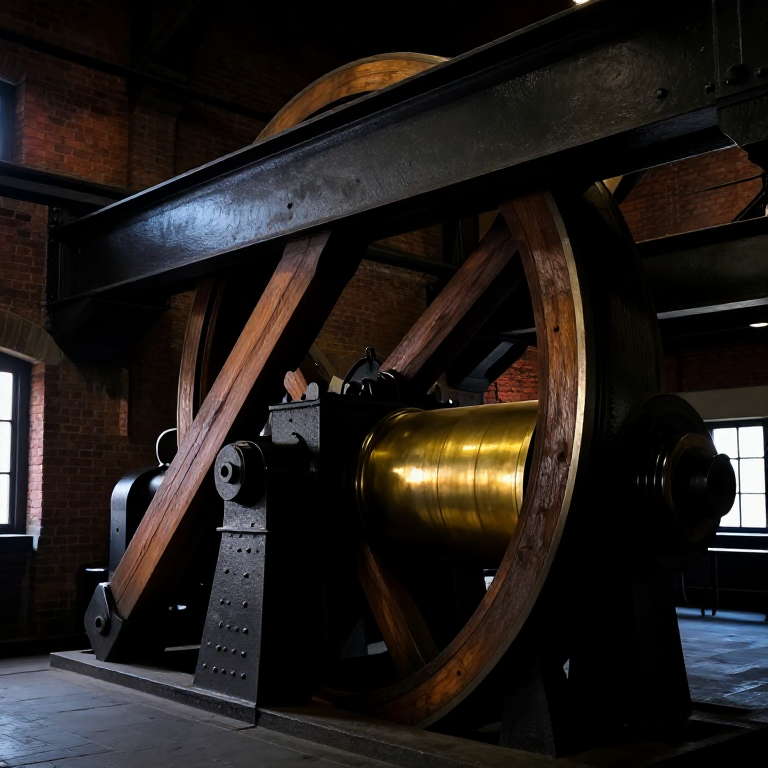
Building a Newcomen Atmospheric Engine — The First Engine to Do Real Work
Dwalin

创建者

Dwalin

25. 六月 2026US
2
0
0
0
0

Building a Newcomen Atmospheric Engine — The First Engine to Do Real Work

In 1712 Thomas Newcomen built a machine that changed the world quietly, by pumping water out of coal mines. It was the first engine to turn the heat of a fire into useful mechanical work on a large scale, and every steam engine and motor that followed descends from it.

Its genius is counter-intuitive: the steam does not push the piston. Newcomen's engine fills a cylinder with low-pressure steam, then sprays in cold water to condense that steam into a few drops, leaving a vacuum. The ordinary pressure of the atmosphere — about a tonne on a large piston — then shoves the piston down into the vacuum. That downward stroke rocks a great wooden beam whose far end lifts the mine pump. Because air pressure does the work, it is called an atmospheric engine.

It was thirsty and wasteful, reheating its whole cylinder every stroke, but it was tireless and it worked. For sixty years Newcomen engines drained the mines that supplied the coal that fed the Industrial Revolution — until James Watt's separate condenser made the steam engine efficient enough to drive factories and locomotives.

高级
A major build; weeks of fabrication and erection

说明

1

Grasp the atmospheric principle

Understand the trick before building: the engine works by vacuum, not pressure. Steam fills the cylinder, then is condensed to a vacuum, and the weight of the atmosphere pushes the piston down. The power comes from air pressure, which is why it is called an atmospheric engine.
2

Build the boiler

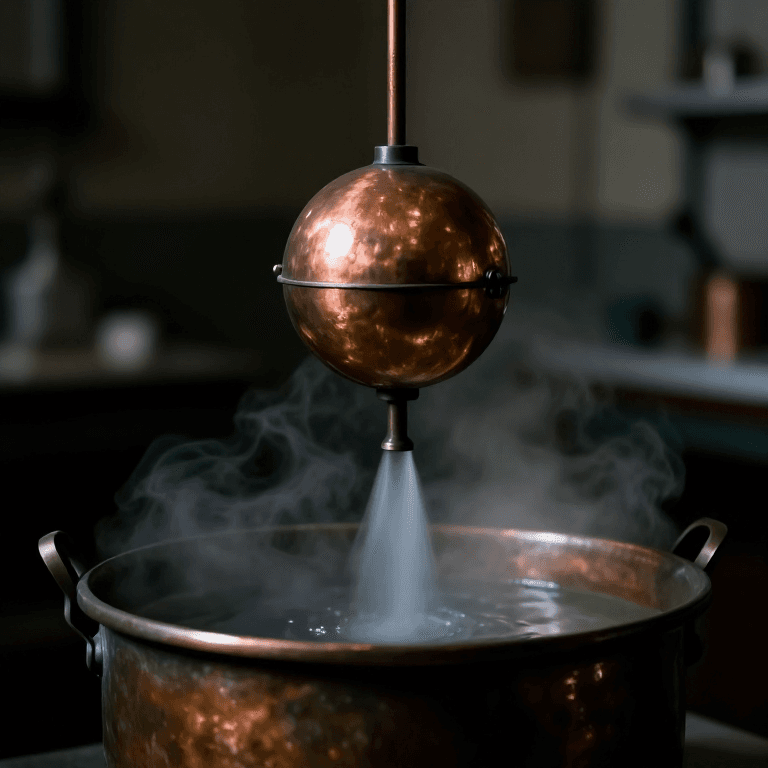
Build a large domed boiler — historically called a haystack boiler — set over a coal fire. It only needs to raise steam at little more than atmospheric pressure, so it can be a big riveted copper or iron kettle rather than a high-pressure vessel.

此步骤所需材料:

Sheet CopperSheet Copper40 公斤
FirebrickFirebrick120
3

Cast and bore the cylinder

Make a large vertical cylinder, open at the top, of cast brass or iron, and bore it as true as you can. A close-fitting piston runs in it; the better the fit, the less vacuum leaks past. Newcomen sealed the gap with a little water and a leather flap on the piston.

此步骤所需材料:

Cast Iron CylinderCast Iron Cylinder1
LeatherLeather2 sqm
4

Erect the great beam

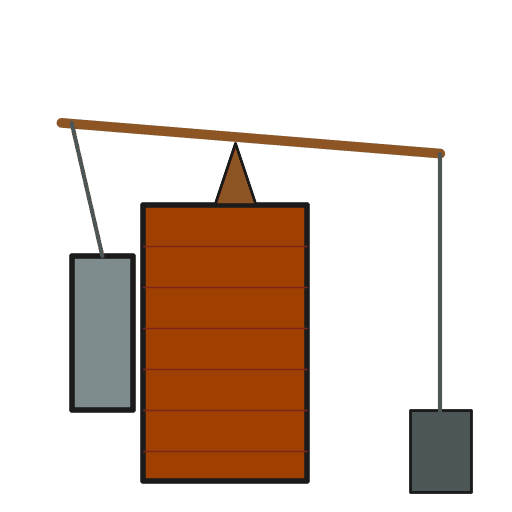
Raise a massive timber beam pivoted in the middle on a sturdy wall, like a giant see-saw. Chain one end to the piston by an arch-head, and the other end to the heavy mine pump rod, which also acts as the counterweight that pulls the piston back up.

此步骤所需材料:

Timber BeamTimber Beam1
5

Plumb the steam and water pipes

Run a steam pipe with a valve from the boiler into the base of the cylinder. Add an injection pipe to spray cold water into the cylinder, and an eduction pipe to drain the condensed water and air away to a well below.

此步骤所需材料:

Copper TubingCopper Tubing6

所需工具:

WrenchWrench
6

Raise steam

Light the coal fire and bring the boiler to a gentle boil, raising low-pressure steam. Let the engine warm through — the first strokes are weak until the cylinder and pipes are hot and the air is swept out.

此步骤所需材料:

Bituminous CoalBituminous Coal50 公斤
7

Admit steam and let the piston rise

Open the steam valve so steam fills the cylinder under the piston. With little pressure resisting it, the heavy pump rod on the far end of the beam sinks and pulls the piston up to the top of its stroke, filling the cylinder with steam.

所需工具:

Steam ValveSteam Valve
8

Inject cold water to make the vacuum

Shut the steam valve and open the injection jet, spraying cold water into the steam-filled cylinder. The steam collapses into a few drops of water, and the cylinder is left nearly empty — a vacuum beneath the piston.

所需工具:

Steam ValveSteam Valve
9

Take the power stroke

With a vacuum below and open air above, atmospheric pressure drives the piston down hard. This is the working stroke: it rocks the beam, lifts the pump rod at the far end, and raises a column of mine water. All the engine's useful work happens here.

此步骤所需材料:

WaterWater30
10

Drain and repeat

Drain the warm condensate down the eduction pipe, then re-admit steam to start again. A working Newcomen engine settles into a steady rhythm of perhaps ten to fifteen strokes a minute, pumping day and night.

所需工具:

Steam ValveSteam Valve
11

Make it self-acting

Hang a plug rod from the beam that trips the steam and injection valves automatically at the top and bottom of each stroke. With this linkage the engine works itself, needing only stoking and watching rather than a hand on the valves.

所需工具:

WrenchWrench
12

Know its power and its flaw

The engine will pump a deep mine tirelessly, but it wastes most of its coal reheating the cylinder it just cooled every stroke. Recognising that waste is what led James Watt to add a separate condenser — the next great step in the steam age.

材料

8

所需工具

2

CC0 公共领域

此蓝图以 CC0 协议发布。你可以自由复制、修改、分发和使用此作品,无需征得许可。

通过购买蓝图中的产品支持创客,他们将获得 创客佣金 (由供应商设定),或创建此蓝图的新版本并将其作为连接包含在你自己的蓝图中以分享收入。

讨论

(0)

登录 加入讨论

加载评论中...