
Nichrome Resistance Element
Turning electricity into heat is trivial — any resistance does it. The difficulty is doing it at red heat, in open air, every day, for years. Iron wire scales and crumbles. Platinum survives and costs more than the appliance. Carbon burns.
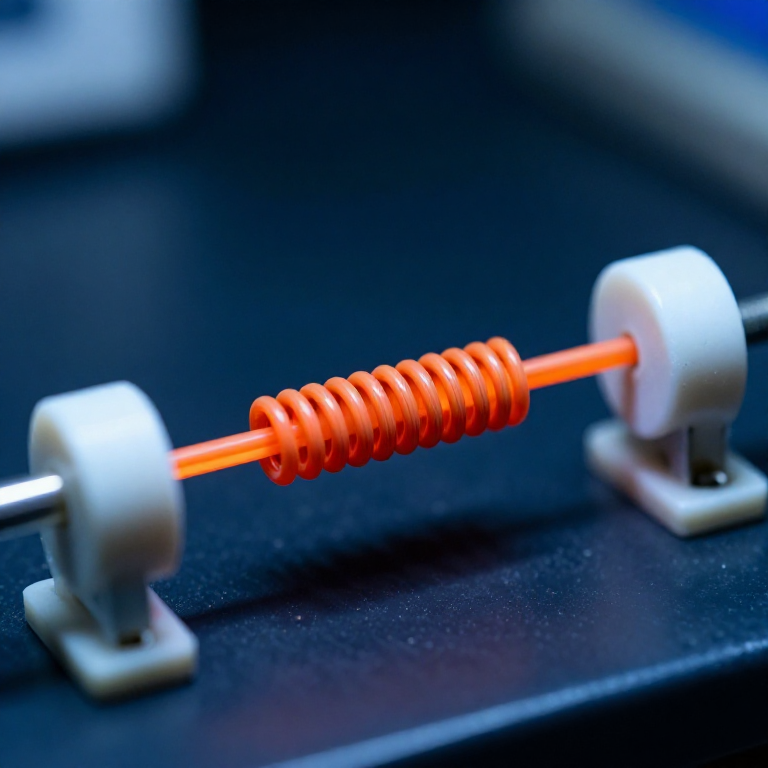
Albert Marsh's alloy solves it with a paradox: it protects itself by corroding immediately. Nickel-chromium wire forms a thin, tightly adherent chromium oxide skin the first time it is heated, and that skin is impermeable, does not flake, and expands at nearly the same rate as the metal beneath. The wire oxidises once and then stops.
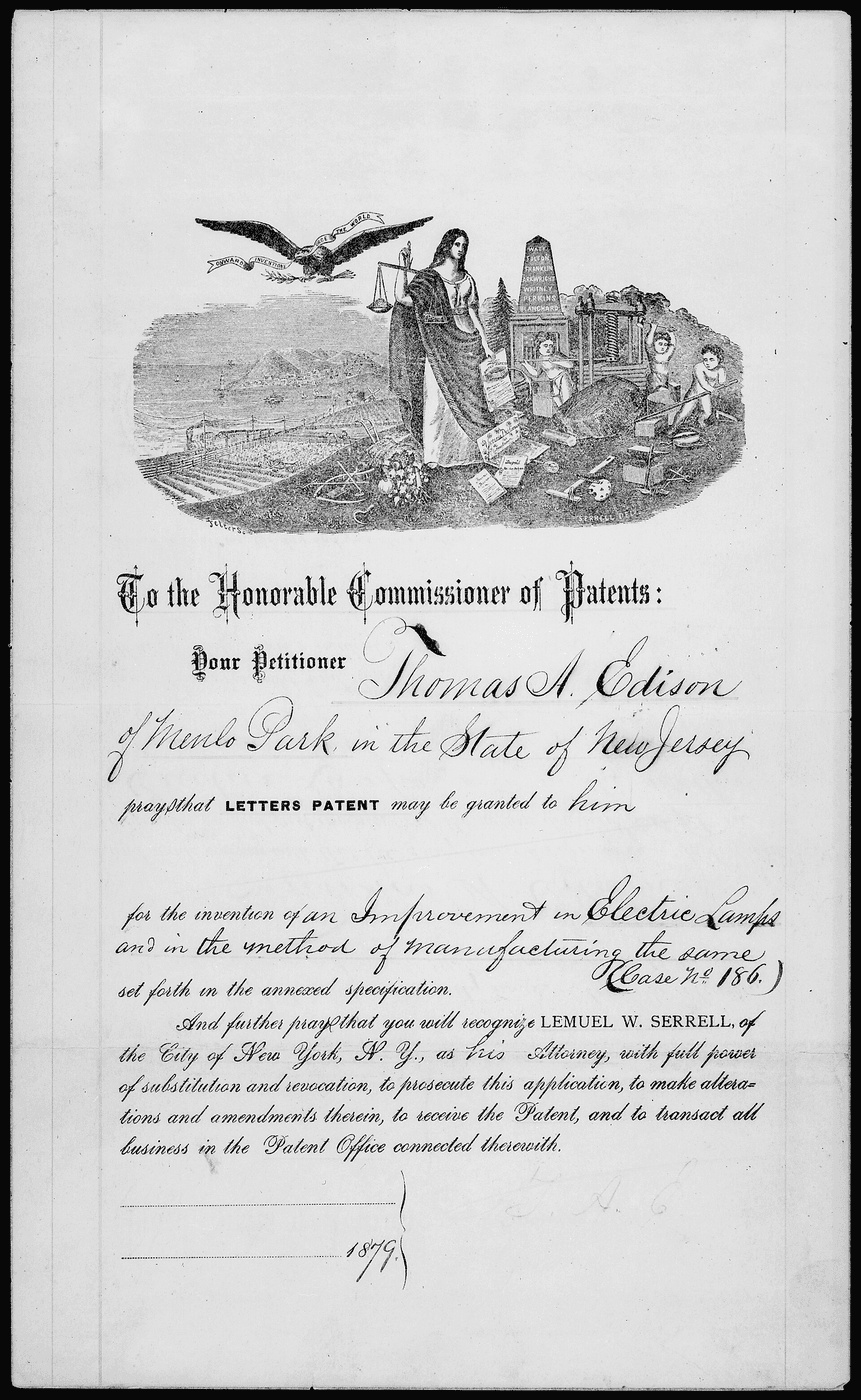
US Patent 811,859, "Electric Resistance Element", granted 6 February 1906. Everything with a glowing element inside — toaster, kettle, hair dryer, kiln, 3D-printer hot end — exists because of this alloy, and it is the material that is patented, not any device.
说明
Work at low voltage only
Work at low voltage only
Run every test from a bench supply or battery, never from the mains. Glowing wire is hot enough to ignite anything it touches — clear the bench and keep a heatproof surface underneath.
Read US 811,859 and note what is claimed
Read US 811,859 and note what is claimed
Marsh claims an alloy of nickel with chromium for use as a resistance element. The patent is on a MATERIAL — no appliance is described.
Run an iron wire to red heat and watch it die
Run an iron wire to red heat and watch it die
Heat plain steel wire until it glows and hold it there. It scales, flakes, thins where it flaked, gets hotter there, and fails at that point. That runaway is the whole problem.
此步骤所需材料:
 钢丝2 米
钢丝2 米Now run nichrome the same way
Now run nichrome the same way
Heat nichrome to the same colour. It darkens once in the first minutes and then stays put. Compare the two side by side — the difference is not subtle.
此步骤所需材料:
 镍铬丝5 米
Measure resistance per metre
Measure resistance per metre
Measure a known length. Nichrome's resistivity is roughly 60 times copper's, which is why a short piece can dissipate real power.
所需工具:
 万用表
万用表Calculate the length you need before cutting
Calculate the length you need before cutting
Use R = V²/P to get target resistance, then divide by resistance per metre. Guessing the length is the commonest way to destroy a coil on first switch-on.
Check resistance again when hot
Check resistance again when hot
Nichrome's resistance barely changes with temperature. That flatness is a design gift — power stays predictable instead of running away as it heats.
Wind a coil around a mandrel
Wind a coil around a mandrel
Wind close turns around a rod, then stretch the coil out. Coiling packs a long wire into a short space so the element fits the appliance.
Space the turns so none of them touch
Space the turns so none of them touch
Pull the coil to open the pitch. Touching turns short out part of the length, which raises current through the rest and burns it out.
Mount the coil on ceramic, never on metal
Mount the coil on ceramic, never on metal
Support it on ceramic or mica standoffs. Metal supports conduct heat away locally, creating cold spots and thermal stress at every contact.
此步骤所需材料:
 陶瓷绝缘子4 个
Deliberately age the wire before use
Deliberately age the wire before use
Run it at working temperature for several minutes on first use. This grows the protective oxide layer evenly — the single most useful thing you can do for its life.
Never let it touch iron or copper when hot
Never let it touch iron or copper when hot
Contact with other metals at temperature causes local alloying that destroys the oxide skin. The wire then fails at that exact spot.
Test airflow across the element
Test airflow across the element
Blow air over the glowing coil and watch it dim. Convection removes heat far faster than radiation, which is why a hair dryer element runs cooler than a toaster's.
Cycle it a hundred times on and off
Cycle it a hundred times on and off
Switch it repeatedly and inspect. Thermal cycling, not steady running, is what eventually cracks the oxide layer and ends the element's life.
Compendium — a material that corrodes once and then stops
Compendium — a material that corrodes once and then stops
The patent. US 811,859, "Electric Resistance Element", granted 6 February 1906 to Albert L. Marsh, working at Hoskins Manufacturing in Michigan. The claim is an alloy of nickel with chromium, and this is a material patent — no toaster, no heater, no appliance. Marsh has been called the father of the electrical heating industry on the strength of it, because before nichrome there was no material that could sit at red heat in open air at a price a household appliance could bear.
Why the oxide layer is everything. Chromium in the alloy oxidises preferentially to form Cr₂O₃, a thin, dense, tightly adherent film. Three properties make it work: it is impermeable, so oxygen cannot reach the metal beneath; it adheres rather than flaking; and its thermal expansion is close enough to the alloy's that heating and cooling do not shear it off. Iron oxide has none of these — it is porous and it spalls, exposing fresh metal that oxidises in turn, thinning the wire until a hot spot forms and fails. The failure is self-accelerating, which is why iron elements do not merely wear out but burn through at a point. This is the same passivation chemistry that makes stainless steel stainless.
Two more properties that matter as much. Nichrome's resistivity is roughly 60 times that of copper, so a manageable length dissipates useful power at domestic voltages. And its temperature coefficient of resistance is remarkably low, so resistance is nearly the same cold and glowing. A material whose resistance fell with temperature would draw more current as it heated and destroy itself; one whose resistance rose steeply would need current far above its running value at switch-on. Flat is exactly what a designer wants, and it is why a nichrome element needs no regulating circuit at all.
What it made possible. The electric toaster reached the market in 1909, three years after the patent, and the electric kettle, iron, heater, hair dryer, soldering iron, kiln, foam cutter and 3D-printer hot end all followed the same material. Kanthal, an iron-chromium-aluminium alloy developed in Sweden in the 1930s, goes hotter still by forming an aluminium oxide skin — the same trick with a different oxide. It is a good example of a patent whose value lies entirely in a composition, and whose consequences are visible in almost every kitchen.
此蓝图制作
相关蓝图
这些蓝图共享知识——技术、材料或原理

CC0 公共领域
此蓝图以 CC0 协议发布。你可以自由复制、修改、分发和使用此作品,无需征得许可。
通过购买蓝图中的产品支持创客,他们将获得 创客佣金 (由供应商设定),或创建此蓝图的新版本并将其作为连接包含在你自己的蓝图中以分享收入。