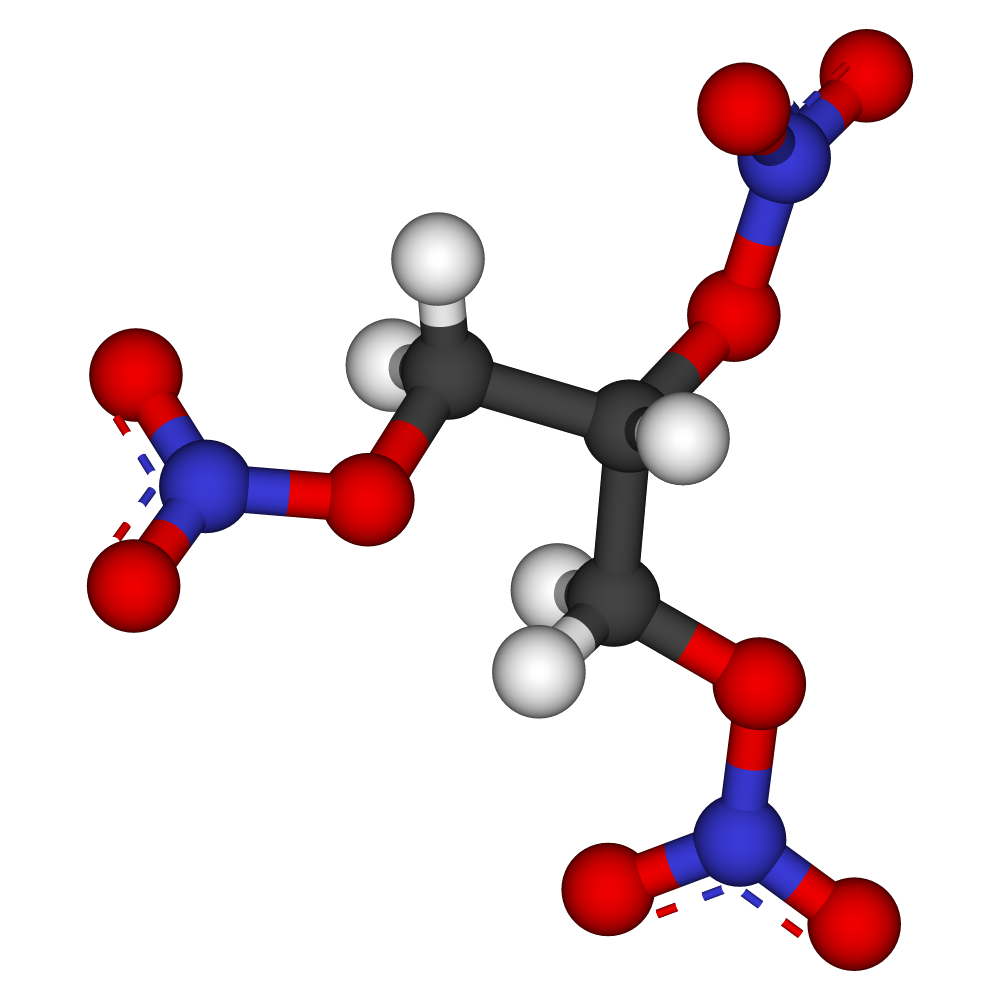


Nitroglycerin
Glycerin is a harmless syrup. You can eat it. Nitrate it and you get a pale oily liquid that detonates if you jolt it — and the difference between the two is not magic, it is bookkeeping. Nitration bolts the oxidiser directly onto the fuel molecule, so the reaction no longer has to wait for air to arrive.
That bookkeeping is a number you can calculate, and this blueprint calculates it. Glycerin's oxygen balance is about −122 %: it is starved of oxygen and needs a great deal of air to burn. Nitroglycerin's is +3.5 % — it carries a slight surplus. Every atom it needs is already in the molecule, which is why it does not burn so much as rearrange, all at once.
Ascanio Sobrero made it at Turin in 1847 and was appalled by it. He was scarred by an explosion, sat on the discovery for over a year, and then published rather than patented — which is why there is no patent number on this page. He wrote that he was "almost ashamed to admit to be its discoverer".
⚠ This blueprint is arithmetic and molecular models. It contains no synthesis of any kind, and needs none — the whole argument is in the atom count.
相关蓝图
这些蓝图共享知识——技术、材料或原理


CC0 公共领域
此蓝图以 CC0 协议发布。你可以自由复制、修改、分发和使用此作品,无需征得许可。
通过购买蓝图中的产品支持创客,他们将获得 创客佣金 (由供应商设定),或创建此蓝图的新版本并将其作为连接包含在你自己的蓝图中以分享收入。