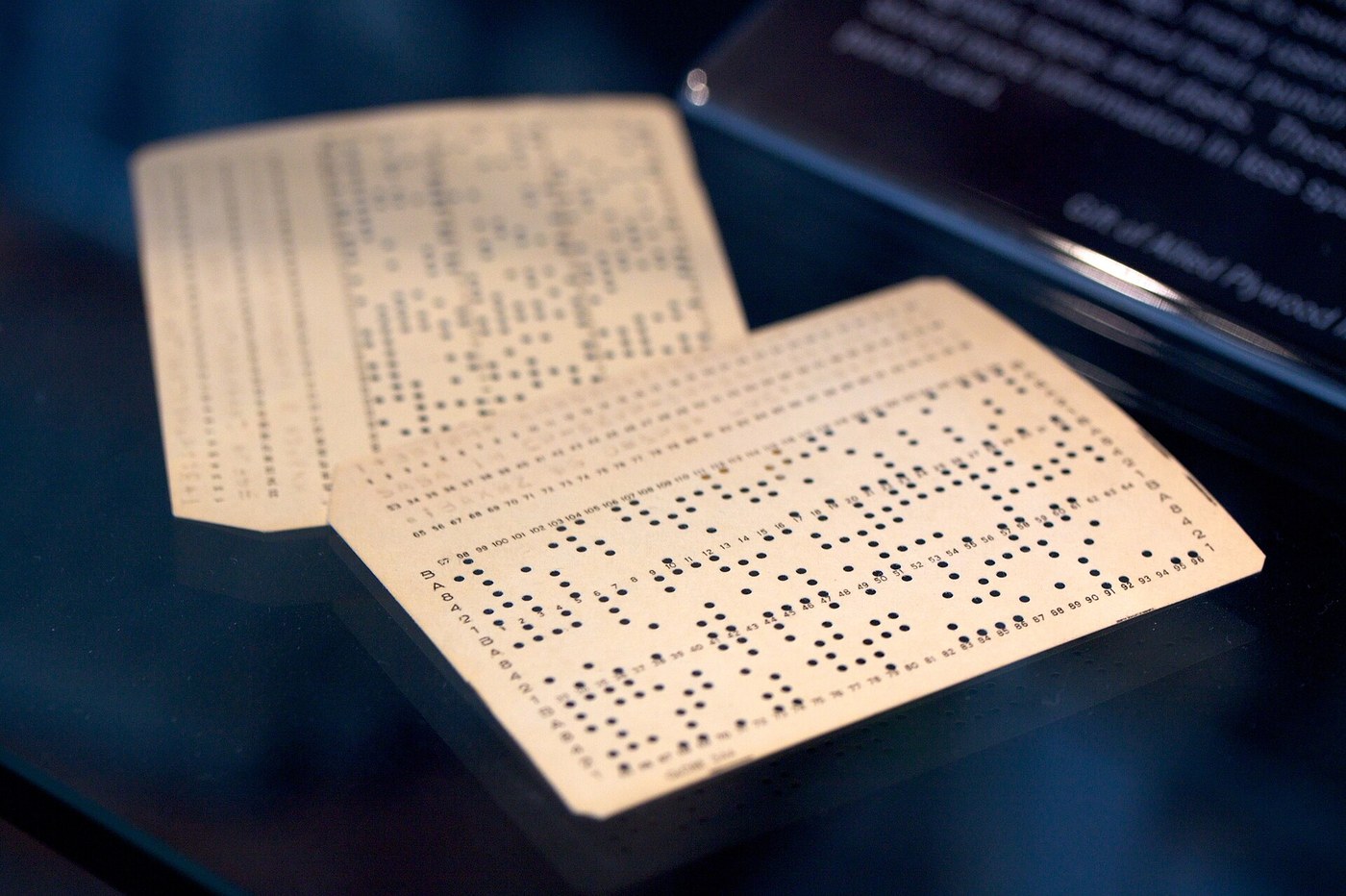


Parity Check
说明
Add a parity bit
Add a parity bit
One extra bit that makes the count come out even.
- Write a seven-bit binary value.
- Count the 1s.
- Append a 0 if that count is already even, a 1 if it is odd.
此步骤所需材料:
 坐标纸1 pad
 石墨铅笔套装1 套
Corrupt it and get caught
Corrupt it and get caught
Play sender and attacker.
- Hand a parity-protected block to someone else.
- Have them flip exactly one bit, anywhere, without telling you which.
- Count the 1s.
Find both blind spots
Find both blind spots
Attack it deliberately, as with casting out nines.
- Flip TWO bits and re-count.
- Note the parity is correct again and the error is invisible.
- Also note that with a single detected error you cannot say WHICH bit is wrong.
Go two-dimensional and correct the error
Go two-dimensional and correct the error
Now make it locate the fault, not just report it.
- Lay 16 bits out in a 4×4 grid.
- Add a parity bit to each row and to each column.
- Have someone flip one bit; check every row and every column.
此步骤所需材料:
 混色卡纸套装1 包
History and context
History and context
Parity is as old as the machines that needed it. Early relay and valve computers were unreliable enough that checking mattered constantly, and parity bits were used in punched tape, magnetic tape and memory from the beginning.
Richard Hamming's frustration is the founding story of the field. Working at Bell Labs in the 1940s, he ran jobs on a relay machine over the weekend with no operators present; the machine would detect a parity error, give up, and drop the job, so he would return on Monday to nothing. His response — if it can detect the error, why can it not fix it — produced the Hamming code in 1950, which locates and corrects single-bit errors using cleverly overlapping parity checks rather than a full grid.
Where it goes from there: Reed-Solomon codes handle bursts of errors and are why a scratched CD still plays and why QR codes survive being partly obscured. Deep space probes use codes so strong that data arrives intact from billions of kilometres at signal levels barely above noise — Voyager's pictures reached Earth because of error correction, not despite the distance.
The general principle is worth naming because it recurs far outside computing: deliberately adding structured redundancy makes corruption detectable, and adding enough of it makes corruption repairable. The cost is always bandwidth or storage, and the design question is always how much error you expect and how expensive a retransmission would be.
CC0 公共领域
此蓝图以 CC0 协议发布。你可以自由复制、修改、分发和使用此作品,无需征得许可。
通过购买蓝图中的产品支持创客,他们将获得 创客佣金 (由供应商设定),或创建此蓝图的新版本并将其作为连接包含在你自己的蓝图中以分享收入。