
Patolli
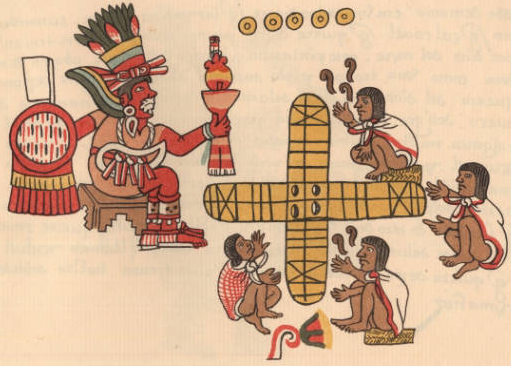
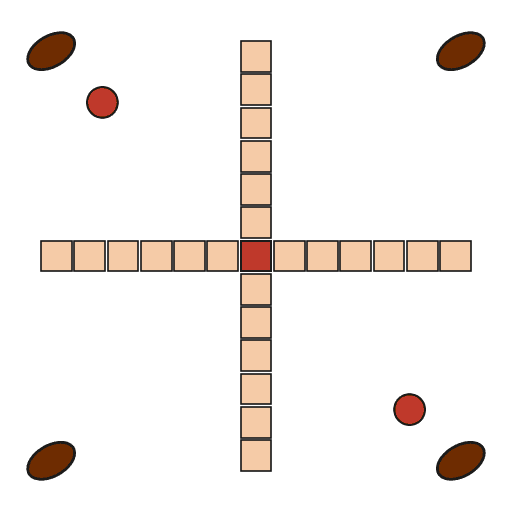
Un tablero en forma de cruz, cincuenta y dos casillas, y cinco frijoles que hacen de dados. Así se jugaba el patolli en Mesoamérica mucho antes de la llegada de los españoles.
Las cincuenta y dos casillas no son un número cualquiera: son los cincuenta y dos años del ciclo calendárico, la cuenta que unía el calendario ritual de 260 días con el solar de 365 hasta que ambos volvían a coincidir. El tablero es, literalmente, el calendario puesto en el suelo.
Una advertencia honesta sobre las reglas. No conocemos las reglas originales. Lo que se juega hoy es una reconstrucción hecha a partir de lo que escribieron los cronistas españoles — Sahagún y Durán — trabajada después por el antropólogo Edward Burnett Tylor. Sabemos la forma del tablero, los frijoles marcados y que era una carrera. El resto está reconstruido, y este blueprint lo dice en lugar de disimularlo.
说明
Elegir el soporte
Elegir el soporte
Cortar un cuadrado de 60 x 60 cm de manta de algodón, petate o cuero. Los tableros se pintaban sobre tela, estera o piel; los de los nobles eran mesas de madera con incrustaciones.
此步骤所需材料:
 棉帆布1 个
Trazar los ejes
Trazar los ejes
Marcar el centro y trazar dos líneas perpendiculares que crucen toda la tela. Sobre ellas se levantan los cuatro brazos de la cruz.
所需工具:
 直尺
直尺Dibujar los cuatro brazos
Dibujar los cuatro brazos
Dibujar cada brazo como dos filas paralelas de casillas que salen del centro. La figura terminada tiene forma de X o de cruz aspada, no de cruz recta.
Contar hasta 52 casillas
Contar hasta 52 casillas
Dividir los brazos hasta sumar 52 casillas en total, repartidas por igual entre los cuatro. Ese número es el ciclo de 52 años y no debe alterarse por comodidad de dibujo.
Marcar las casillas especiales
Marcar las casillas especiales
Sombrear las casillas de los extremos de cada brazo y las dos centrales de cada uno. En las reconstrucciones estas casillas hacen perder un turno o repetir tirada.
Pintar el tablero
Pintar el tablero
Repasar las líneas con pintura y dejar secar bien. Los tableros solían llevar además símbolos de buena fortuna alrededor del trazado.
此步骤所需材料:
 丙烯颜料套装1 套
所需工具:
 画笔套装
画笔套装Preparar los cinco dados de frijol
Preparar los cinco dados de frijol
Tomar cinco frijoles grandes y hacer en una sola cara de cada uno una marca blanca — un raspado o un punto de pintura. Cada frijol es un dado de dos caras: marcada o lisa.
此步骤所需材料:
 干菜豆5 个
Fabricar las fichas
Fabricar las fichas
Preparar seis fichas por jugador, de un color distinto cada uno. Servían granos de maíz, discos de piedra o conchas talladas, según lo que hubiera.
Fijar el sentido de la carrera
Fijar el sentido de la carrera
Acordar antes de empezar por dónde entra cada jugador y en qué sentido recorre el tablero. Es una carrera: gana quien saca antes todas sus fichas.
Aprender a leer la tirada
Aprender a leer la tirada
Lanzar los cinco frijoles y contar cuántos caen con la marca hacia arriba: ese número son las casillas que se avanza. Si no cae ninguno marcado, se pierde el turno.
Aplicar la captura
Aplicar la captura
Si una ficha cae en una casilla ocupada por un rival, la ficha rival sale del tablero y vuelve a empezar. Es lo que convierte una carrera de azar en una partida con decisiones.
Completar el circuito
Completar el circuito
Una ficha que da la vuelta completa sale del tablero y ya está a salvo. Gana el primero que retira todas las suyas.
Jugar varias partidas y anotar
Jugar varias partidas y anotar
Anotar los resultados de veinte tiradas y comparar con lo esperado: con cinco frijoles justos, el resultado más frecuente es dos o tres marcas. Es un buen ejercicio de probabilidad con material del siglo XV.
Historia y contexto
Historia y contexto
Un juego de carrera mesoamericano. El patolli se jugaba en el centro de México antes de la conquista y pertenece a la familia de los juegos de carrera: fichas que recorren un circuito según lo que dicta el azar, con capturas por el camino. Se le ha comparado con el pachisi de la India, y esa semejanza dio lugar a un viejo debate sobre difusión cultural que hoy se explica mejor por convergencia: el tablero de carrera es una idea que se inventa sola en muchos lugares.
El tablero es un calendario. Las 52 casillas corresponden a la Rueda Calendárica: el calendario ritual de 260 días y el solar de 365 vuelven a coincidir cada 52 años. Jugar era recorrer ese ciclo.
Se apostaba fuerte. Las crónicas describen apuestas de mantas, joyas y, en los casos extremos, de la propia libertad. El juego estaba asociado a Macuilxóchitl, deidad del juego y la danza, y tenía un carácter adivinatorio: el resultado se leía como señal. Aquí se describe como hecho histórico; el blueprint enseña a construir y jugar el tablero, no a apostar.
Lo que no sabemos. Los españoles prohibieron el juego y quemaron tableros; lo que queda son descripciones escritas por cronistas como Sahagún y Durán, y algunas representaciones en códices. Edward Burnett Tylor reconstruyó las reglas básicas a partir de esas fuentes en el siglo XIX. Por eso cualquier reglamento moderno — incluido el de este blueprint — es una reconstrucción razonada, no el juego tal como se jugaba. Decirlo importa: presentar una reconstrucción como si fuera el original es exactamente el tipo de error que se hereda durante siglos.
此蓝图制作
相关蓝图
这些蓝图共享知识——技术、材料或原理

CC0 公共领域
此蓝图以 CC0 协议发布。你可以自由复制、修改、分发和使用此作品,无需征得许可。
通过购买蓝图中的产品支持创客,他们将获得 创客佣金 (由供应商设定),或创建此蓝图的新版本并将其作为连接包含在你自己的蓝图中以分享收入。