艺术
美容与健康
工艺
文化与历史
娱乐
环境
食品与饮料
逆向工程
科学
体育
技术
可穿戴设备
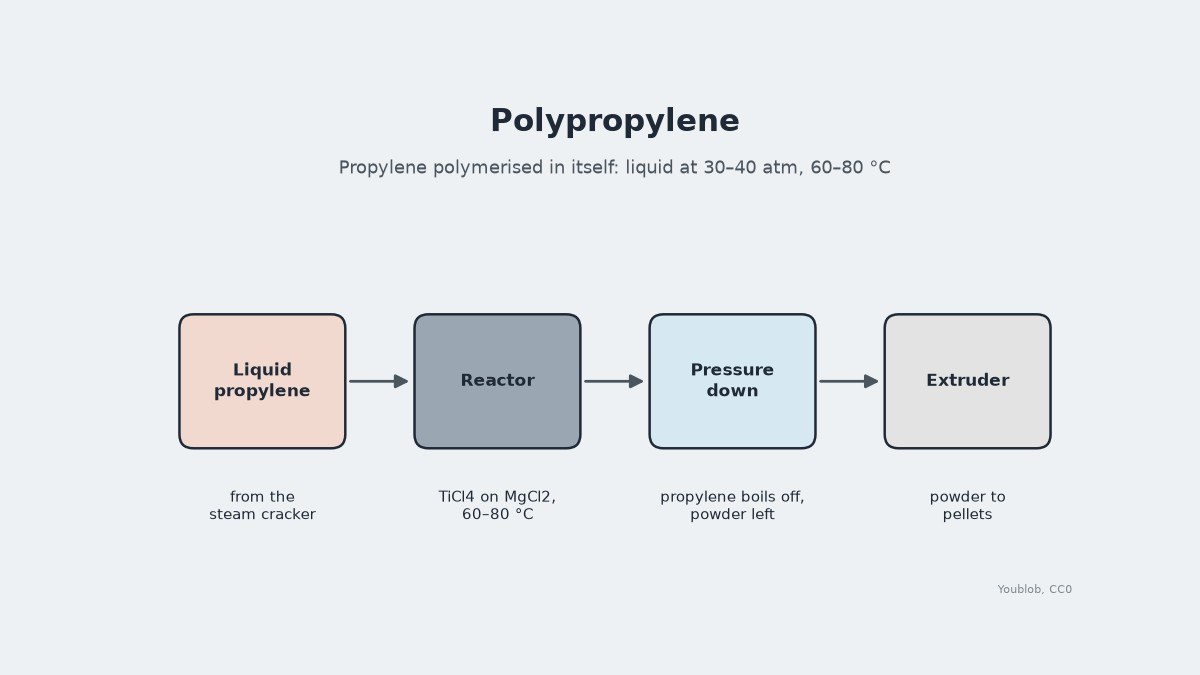


Polypropylene Pellets by Bulk Polymerisation in Liquid Propylene
Polypropylene is propylene strung into long chains. In the bulk process the propylene itself is the liquid: kept liquid at 30–40 atm, it polymerises at 60–80 °C on a catalyst of titanium tetrachloride on magnesium chloride. Letting the pressure down boils off the unreacted propylene and leaves a powder, which is extruded into pellets. Natta found the regular (isotactic) form in 1954.
The picture: our diagram of reactor, flash and pelletiser.
高级
Continuous
说明
1
1
Polymerise in liquid propylene
Polymerise in liquid propylene
Feed propylene and the TiCl4-on-MgCl2 catalyst into the reactor. Hold it at 30–40 atm so the propylene stays liquid, at 60–80 °C.
此步骤所需材料:
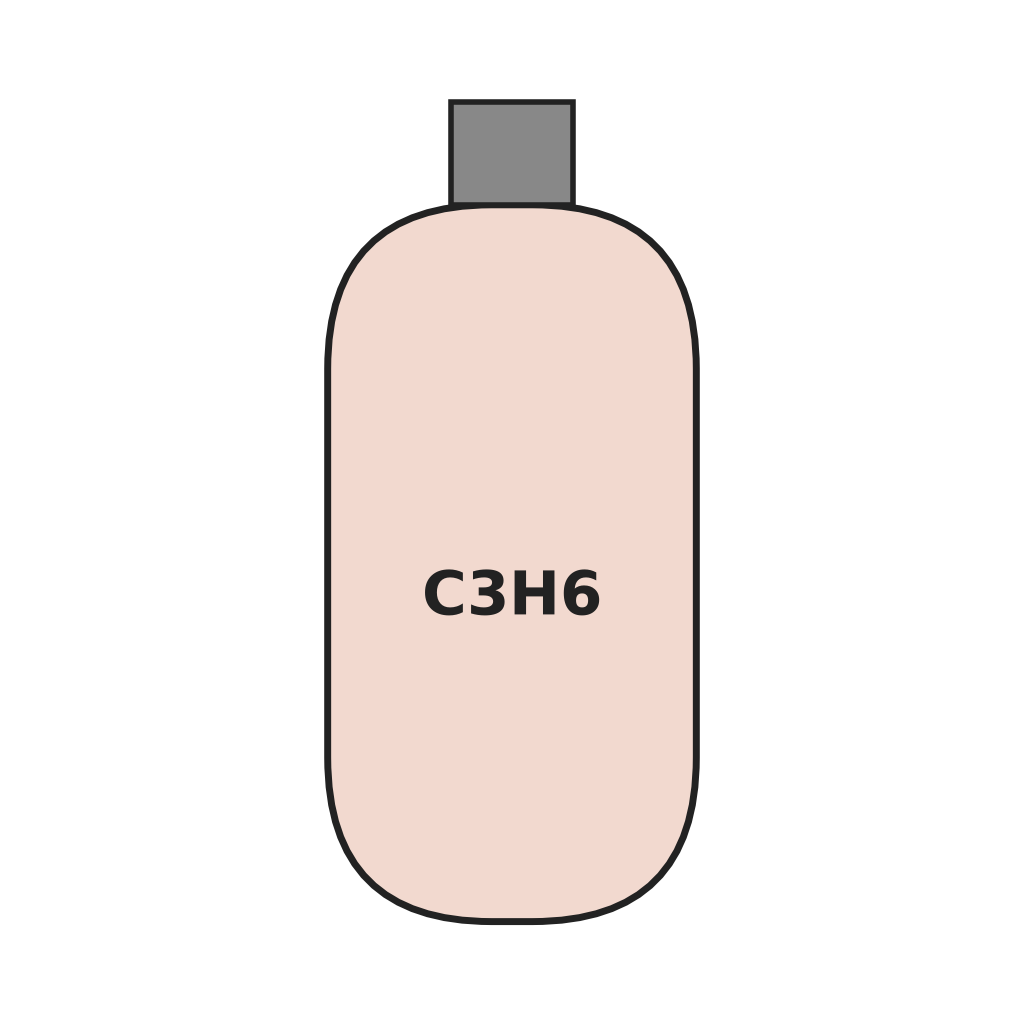 丙烯1 t
所需工具:
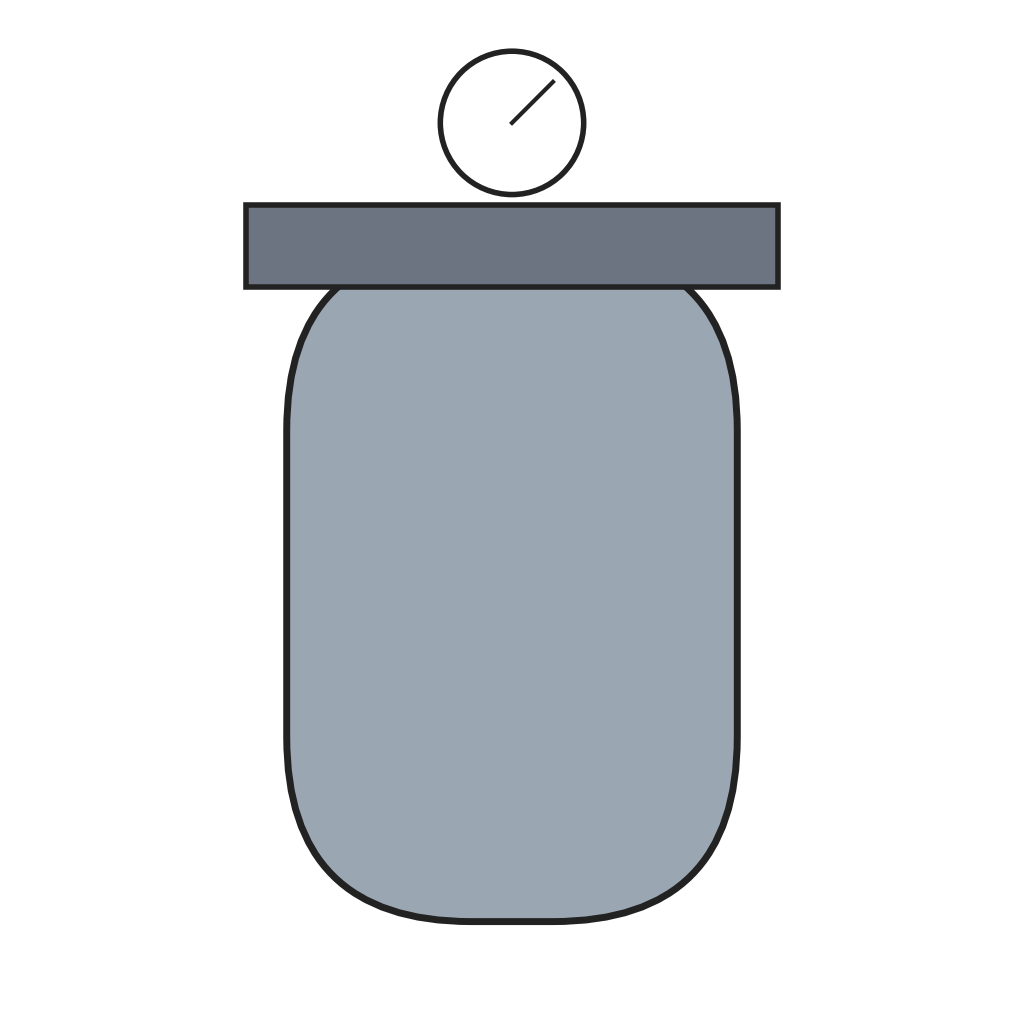 压力反应器
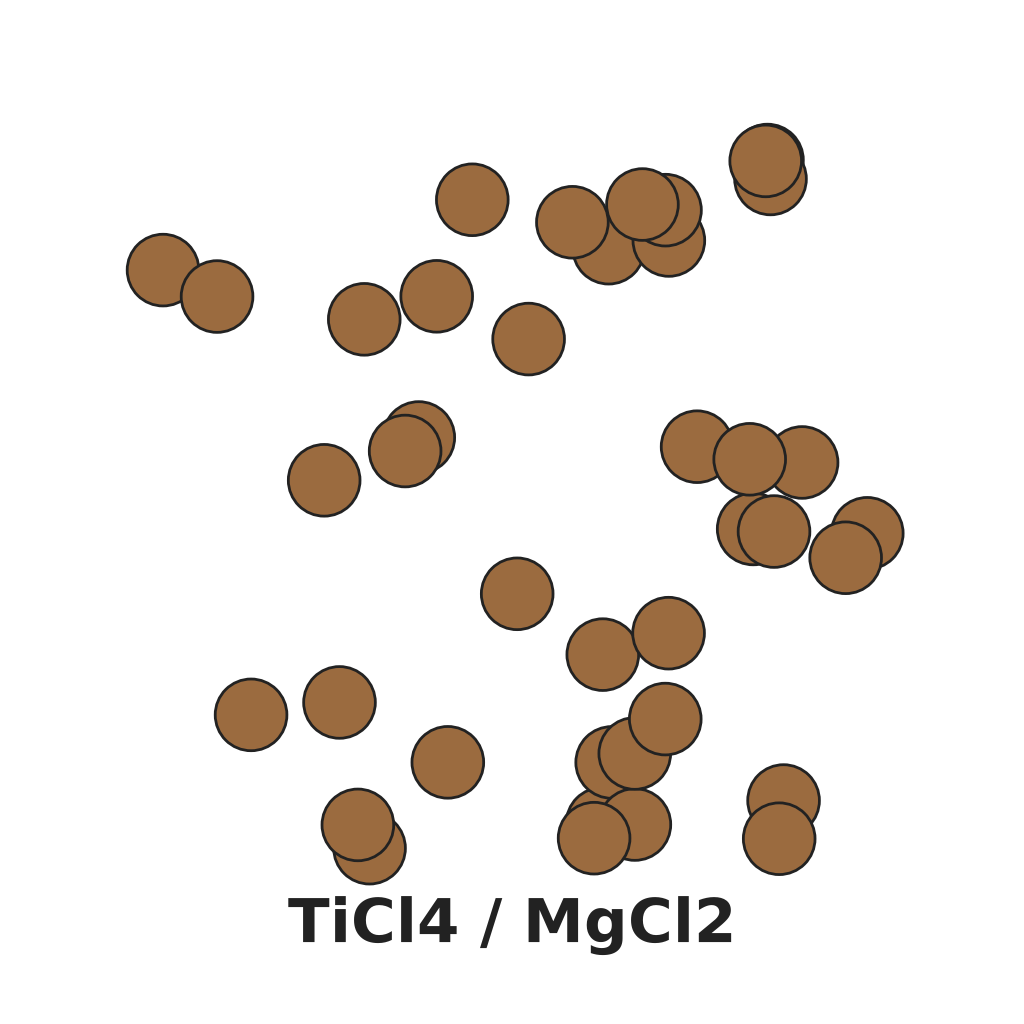 齐格勒-纳塔催化剂(MgCl2上的TiCl4)
 气体压缩机
2
2
Let the pressure down
Let the pressure down
Release the pressure: the unreacted propylene boils off and the polymer is left as a fine powder. Compress the propylene and return it.
所需工具:
气体压缩机3
3
Pelletise
Pelletise
Melt the powder in the extruder, with any additives the grade needs, and cut the strand into pellets.
所需工具:
 塑料挤出机
4
4
Pressure units
Pressure units
正在加载 Jupyter 笔记本…
此蓝图制作

CC0 公共领域
此蓝图以 CC0 协议发布。你可以自由复制、修改、分发和使用此作品,无需征得许可。
通过购买蓝图中的产品支持创客,他们将获得 创客佣金 (由供应商设定),或创建此蓝图的新版本并将其作为连接包含在你自己的蓝图中以分享收入。