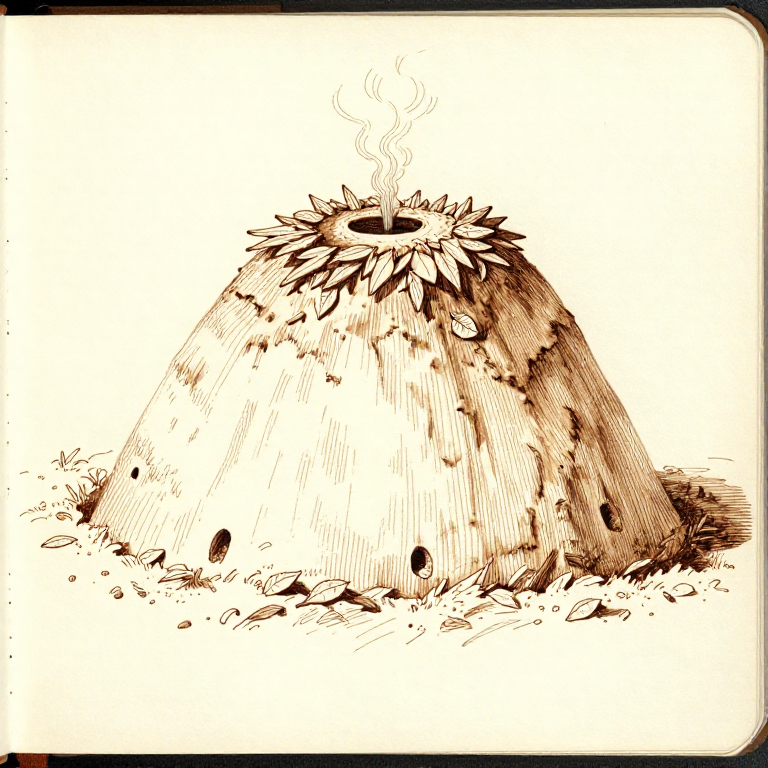


Making Charcoal in an Earth Mound — Pyrolysis in a Covered Burn
说明
Prepare and Stack the Wood
Prepare and Stack the Wood
Select dense hardwood species — oak, beech, maple, or ash produce the best charcoal due to their high carbon density. Split the wood into uniform pieces roughly 5-10 cm in diameter. Stack the wood vertically in a dome-shaped mound approximately 1-1.5 metres in diameter and 1 metre tall, leaning pieces against a central stake. Leave a hollow chimney space at the centre for ignition. All wood must be well-seasoned and dry — green wood produces excessive smoke and yields poor-quality charcoal with high moisture content.
此步骤所需材料:
 硬木原木(栎、槭、山毛榉)50-100 kg 公斤
 有机羼合料large armful for covering 个
 陶土(赤陶)enough to cover the mound 个
 干树叶与引火柴5 kg for ignition 公斤
所需工具:
 挖掘工具(石、角或木棒)
 焊接动火看护套件
 长棍
长棍Cover the Mound
Cover the Mound
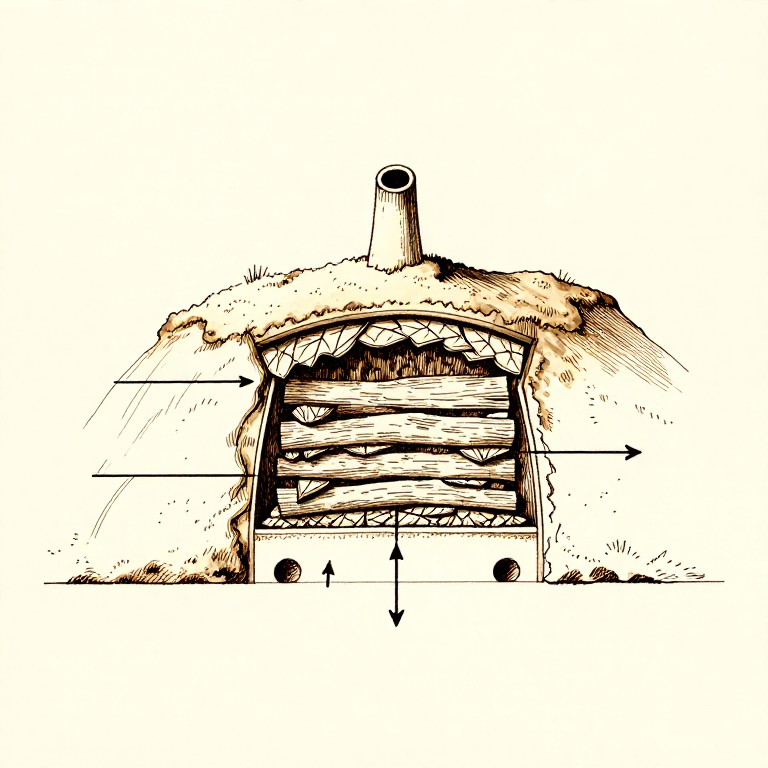
Cover the wood stack with a layer of green leaves, grass, or straw to prevent the earth covering from falling between the wood pieces. Then apply a layer of earth or clay 5-10 cm thick over the entire mound, packing it firmly. Leave the central chimney opening at the top uncovered, and poke 4-6 small air holes (about 5 cm diameter) around the base of the mound. These base holes allow limited air intake that sustains smouldering combustion while the earth seal restricts oxygen enough to prevent the wood from burning completely to ash.
Ignite and Monitor
Ignite and Monitor
Drop burning kindling down the central chimney to ignite the wood at the core of the mound. Once the fire is established (visible flames at the chimney and smoke from base holes), partially close the chimney with a flat stone, leaving a gap for smoke to escape. The burn must proceed slowly — if flames appear through the earth covering, patch those spots immediately with more earth. White or blue-grey smoke indicates active pyrolysis and water vapour being driven off. Yellow or brown smoke suggests incomplete combustion. The burn progresses outward from the centre over 6-10 hours.
Control the Burn
Control the Burn
As the burn progresses, the mound settles and may develop cracks in the earth covering. Patch all cracks promptly to maintain the oxygen-restricted environment. When smoke from the base holes transitions from thick white to thin blue-grey and finally becomes nearly transparent, the pyrolysis is nearing completion. At this point, seal all base holes and the chimney completely with earth. This stops all combustion and allows the charcoal to cool without burning to ash. The sealed mound needs 8-12 hours to cool completely.
Break Open and Sort
Break Open and Sort
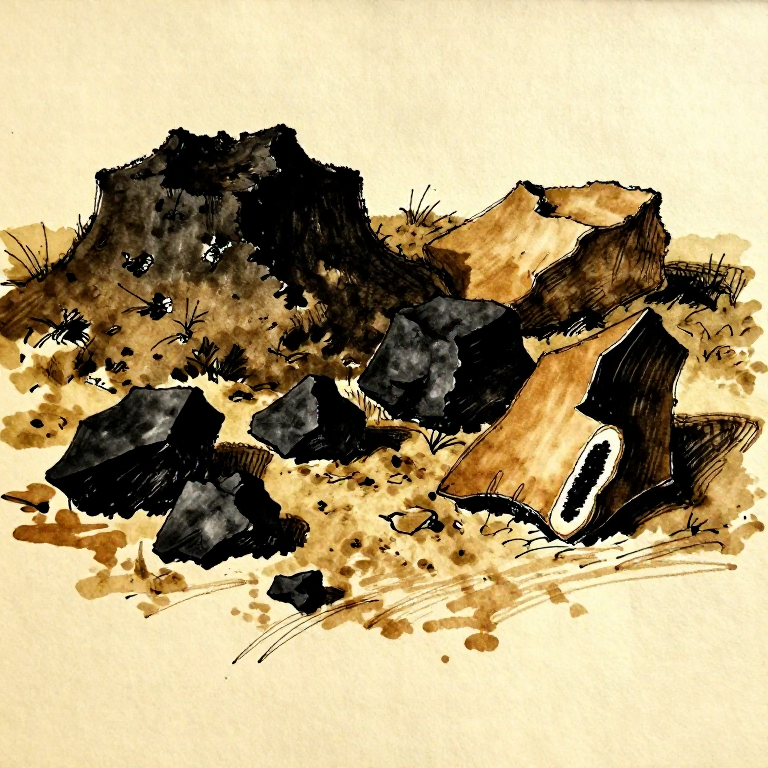
Once the mound is fully cool to the touch, carefully break open the earth shell. Well-made charcoal is jet black throughout, lightweight, and produces a metallic ring when pieces are tapped together. If pieces show brown or grey interiors, they are only partially carbonised (called brands) and should be placed in the next burn. Expect a yield of roughly 20-25 percent by weight of the original wood — 100 kg of oak produces about 20-25 kg of charcoal. Good hardwood charcoal burns at temperatures exceeding 1100 degrees C with a forced air supply, making it the essential fuel for copper and bronze smelting.
材料
6- 50-100 kg 公斤占位符
- large armful for covering 个占位符
- enough to cover the mound 个占位符
- 5 kg for ignition 公斤占位符
- enough to cover the mound 个占位符
- 1 kilogram占位符
相关蓝图
这些蓝图共享知识——技术、材料或原理

CC0 公共领域
此蓝图以 CC0 协议发布。你可以自由复制、修改、分发和使用此作品,无需征得许可。
通过购买蓝图中的产品支持创客,他们将获得 创客佣金 (由供应商设定),或创建此蓝图的新版本并将其作为连接包含在你自己的蓝图中以分享收入。