艺术
美容与健康
工艺
文化与历史
娱乐
环境
食品与饮料
逆向工程
科学
体育
技术
可穿戴设备
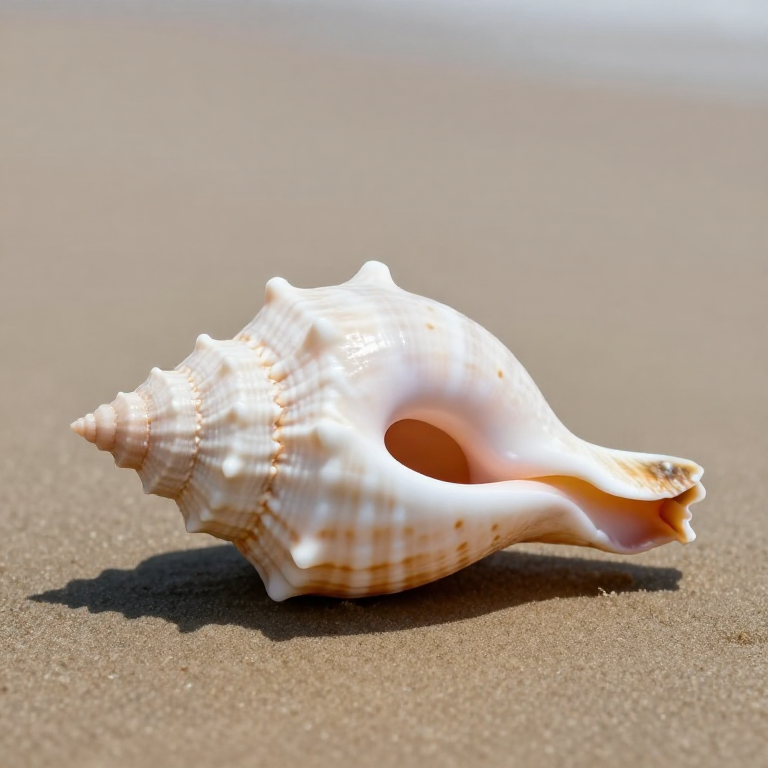


Making a Conch Shell Trumpet — A Natural Lip-Reed Horn
Cut the tip off a large conch shell, smooth the hole, and buzz your lips into it to blast a deep note that leaps up the harmonic series. A simple, buildable school project in how a natural trumpet works — the same lip-reed physics as a bugle, shofar or Andean pututu.
初学者
30 minutes
说明
1
1
A shell that sings
A shell that sings
A conch trumpet is a natural horn: buzz your lips into a hole cut in a big sea shell and the whole shell rings out with a deep, carrying blast.
2
2
Choose a large shell
Choose a large shell
Find a large conch or whelk shell with a solid, pointed spire at the tip and a wide opening at the other end.
此步骤所需材料:
 海螺壳(大)1 个
3
3
Mark the blow hole
Mark the blow hole
Mark a spot on the pointed spire about 2 to 3 cm from the very tip, where the shell wall is thick and strong.
4
4
Cut off the tip
Cut off the tip
Saw straight across the spire at your mark, opening a hole through into the hollow inside the shell.
所需工具:
 钢锯
钢锯5
5
Smooth the mouth hole
Smooth the mouth hole
File the cut edge smooth and slightly rounded, so it is comfortable and seals well against your lips.
所需工具:
 金属锉
金属锉6
6
Clear the bore
Clear the bore
Make sure the hole opens right through the inner whorls into the shell's big cavity. File away any inner wall that blocks the air path.
所需工具:
金属锉7
7
Add a wax rim (optional)
Add a wax rim (optional)
Press a small ring of beeswax around the hole to form a smooth mouthpiece that seals neatly against your lips.
此步骤所需材料:
 蜂蜡颗粒1 个
8
8
Buzz your lips
Buzz your lips
Press your lips to the hole and buzz them, like blowing a raspberry. The shell turns that buzz into a loud, deep note.
9
9
Find the lowest note
Find the lowest note
Buzz slowly with loose, relaxed lips to find the fullest, lowest note the shell naturally wants to sound.
10
10
Climb the harmonic series
Climb the harmonic series
Now buzz faster with tighter lips. The note jumps UP in steps rather than sliding, because a plain horn can only play the harmonic series.
11
11
Bend the note by hand
Bend the note by hand
Slide a hand into the wide opening to muffle and lower the note a little — the same trick horn players use to shade their sound.
12
12
Compendium — how a shell becomes a trumpet
Compendium — how a shell becomes a trumpet
A conch trumpet is a lip-reed instrument, the ancestor of the whole brass family. There is no string, reed or whistle edge — the sound source is your own lips, buzzing open and shut many times a second like a tiny valve. The hollow, roughly conical shell is a resonator that only reinforces certain frequencies: the harmonic series, meaning a fundamental note and whole-number multiples of it. That is why you cannot slide smoothly between notes — a valveless natural horn can only leap between the notes of that series, exactly like a bugle. Which harmonic you sound depends on how fast your lips buzz, which you set with lip tension, so you 'change notes' by tightening or loosening your lips rather than by covering holes. Cupping a hand in the bell shortens and shades the air column to bend the pitch. Natural trumpets are ancient and worldwide — the Indian shankha, the Andean pututu, Pacific and Mesoamerican conch horns, and the animal-horn shofar and war-horns all work the same way. Add valves or a slide many centuries later and this same idea becomes the trumpet and trombone.
此蓝图制作
CC0 公共领域
此蓝图以 CC0 协议发布。你可以自由复制、修改、分发和使用此作品,无需征得许可。
通过购买蓝图中的产品支持创客,他们将获得 创客佣金 (由供应商设定),或创建此蓝图的新版本并将其作为连接包含在你自己的蓝图中以分享收入。