

Building a Pit Kiln for Firing Pottery — Earth-Covered Open Firing
说明
Dig the Pit and Pre-Heat Vessels
Dig the Pit and Pre-Heat Vessels
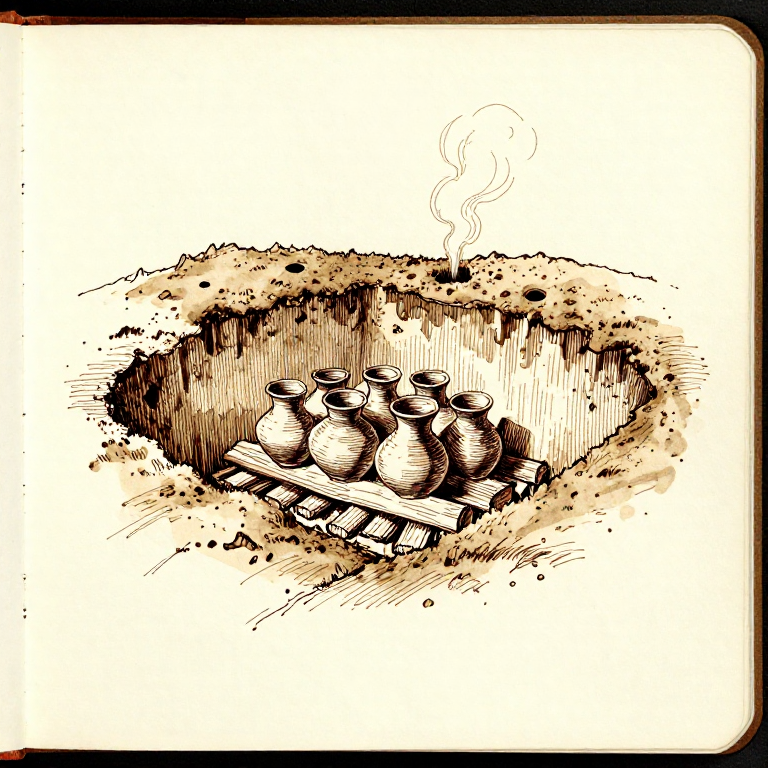
Dig a shallow pit approximately 60-80 cm deep and 1 metre in diameter. The soil should be well-drained — waterlogged ground will produce steam that shatters pots. Before firing, all clay vessels must be completely bone-dry; any residual moisture will flash to steam and cause explosive fractures. Pre-heat vessels by placing them upside down around a small warming fire for 1-2 hours, gradually bringing them up to 100-150 degrees C. This drives out the last traces of chemically bound water.
此步骤所需材料:
 硬木灰20-30 kg 公斤
 干树叶与引火柴5 kg 公斤
 草large armful 个
 野生黏土3-6 pots 个
 陶土(赤陶)enough to cap the pit 个
所需工具:
 挖掘工具(石、角或木棒)
 焊接动火看护套件
Layer the Fuel and Pottery
Layer the Fuel and Pottery
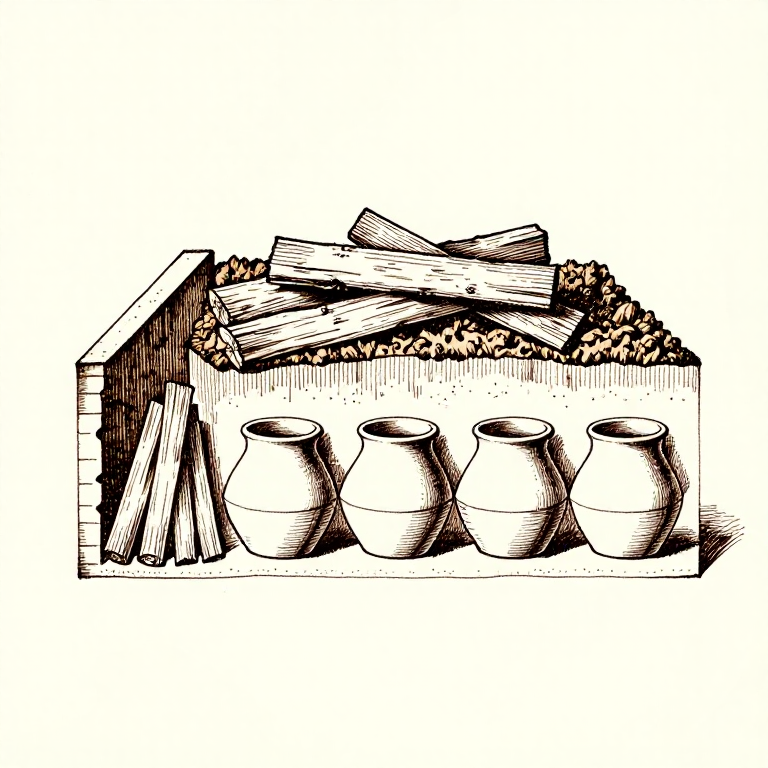
Line the bottom of the pit with a 10-15 cm bed of kindling and dry grass. Place the pre-heated vessels upside down or on their sides on top of this layer, leaving 5-10 cm gaps between each pot for air circulation. Nest smaller pots inside larger ones to save space. Fill the gaps and cover the pots with more fuel wood — split hardwood works best because it burns evenly and produces sustained heat. Build up layers until the wood rises 15-20 cm above the top of the tallest pot.
Light and Manage the Fire
Light and Manage the Fire
Light the kindling from the windward side so the breeze drives flames through the fuel bed. The fire will spread quickly through the dry grass and kindling, igniting the larger wood. At this stage, the firing is open — flames and heat rise freely. Let the fire burn vigorously for 30-45 minutes until the wood has collapsed into a bed of red-hot coals surrounding the pots. The pots will glow dull red to bright orange depending on temperature. Do not add large pieces of cold wood directly onto glowing pots — the thermal shock can crack them.
Cover and Hold Temperature
Cover and Hold Temperature
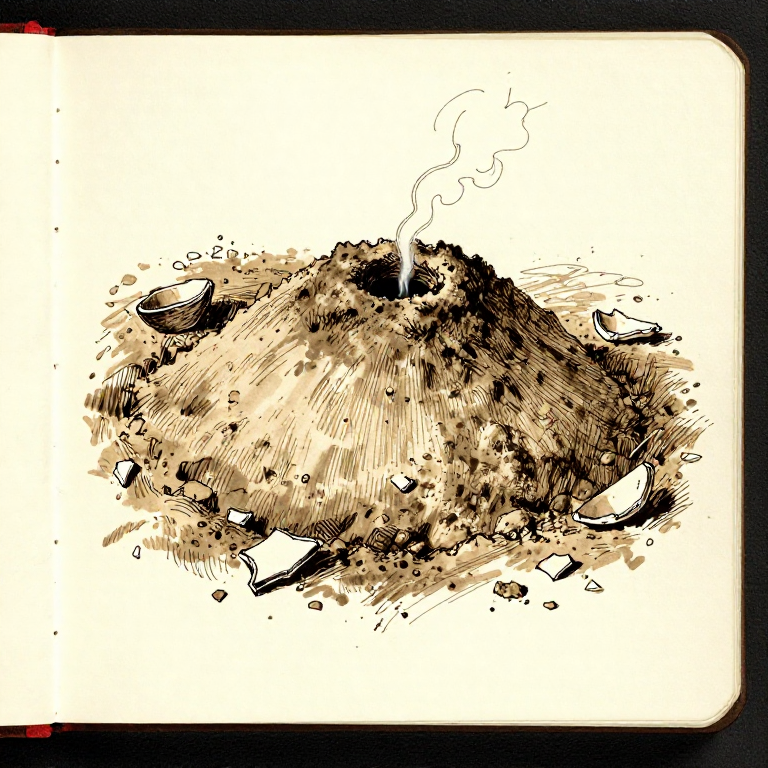
Once a thick coal bed has formed, cover the pit with a layer of earth, broken pottery shards (grog), or damp clay 5-10 cm thick. Leave 2-3 small vent holes to allow continued airflow. This covering traps heat and reduces the cooling rate, which prevents thermal shock cracking. The covered pit should smoulder for 3-5 hours. A well-sealed pit with adequate fuel reaches 700-900 degrees C — hot enough to convert clay minerals to ceramic through sintering. Smoke escaping from the vents is normal and indicates the fire is still active.
Cool and Retrieve Fired Pottery
Cool and Retrieve Fired Pottery
Allow the kiln to cool completely before uncovering — this takes 8-12 hours or overnight. Removing pots while still hot exposes them to rapid cooling that causes dunting (cracking from thermal stress). Once cool, carefully brush away the ash and earth. Successfully fired pots will ring when tapped with a knuckle, indicating the clay has fully sintered. Expect some breakage — even experienced pit-firers lose 10-20 percent of pots to cracking. Pots will have irregular colour patterns from variable oxygen exposure: dark patches where carbon was trapped (reduction) and orange-red where oxygen reached (oxidation).
材料
9- 20-30 kg 公斤占位符
- 5 kg 公斤占位符
- large armful 个占位符
- 3-6 pots 个占位符
- enough to cap the pit 个占位符
- 5 kg 个占位符
- 3-6 pots 个占位符
- enough to cap the pit 个占位符
- 1 kilogram占位符
CC0 公共领域
此蓝图以 CC0 协议发布。你可以自由复制、修改、分发和使用此作品,无需征得许可。
通过购买蓝图中的产品支持创客,他们将获得 创客佣金 (由供应商设定),或创建此蓝图的新版本并将其作为连接包含在你自己的蓝图中以分享收入。