艺术
美容与健康
工艺
文化与历史
娱乐
环境
食品与饮料
逆向工程
科学
体育
技术
可穿戴设备


Hitting a Bolt Instead of Leaning on It
A seized bolt does not care how strong you are. It cares how much torque arrives at the threads — and with a spanner, every newton-metre that reaches the bolt also reaches your wrist, your footing and whatever you are braced against.
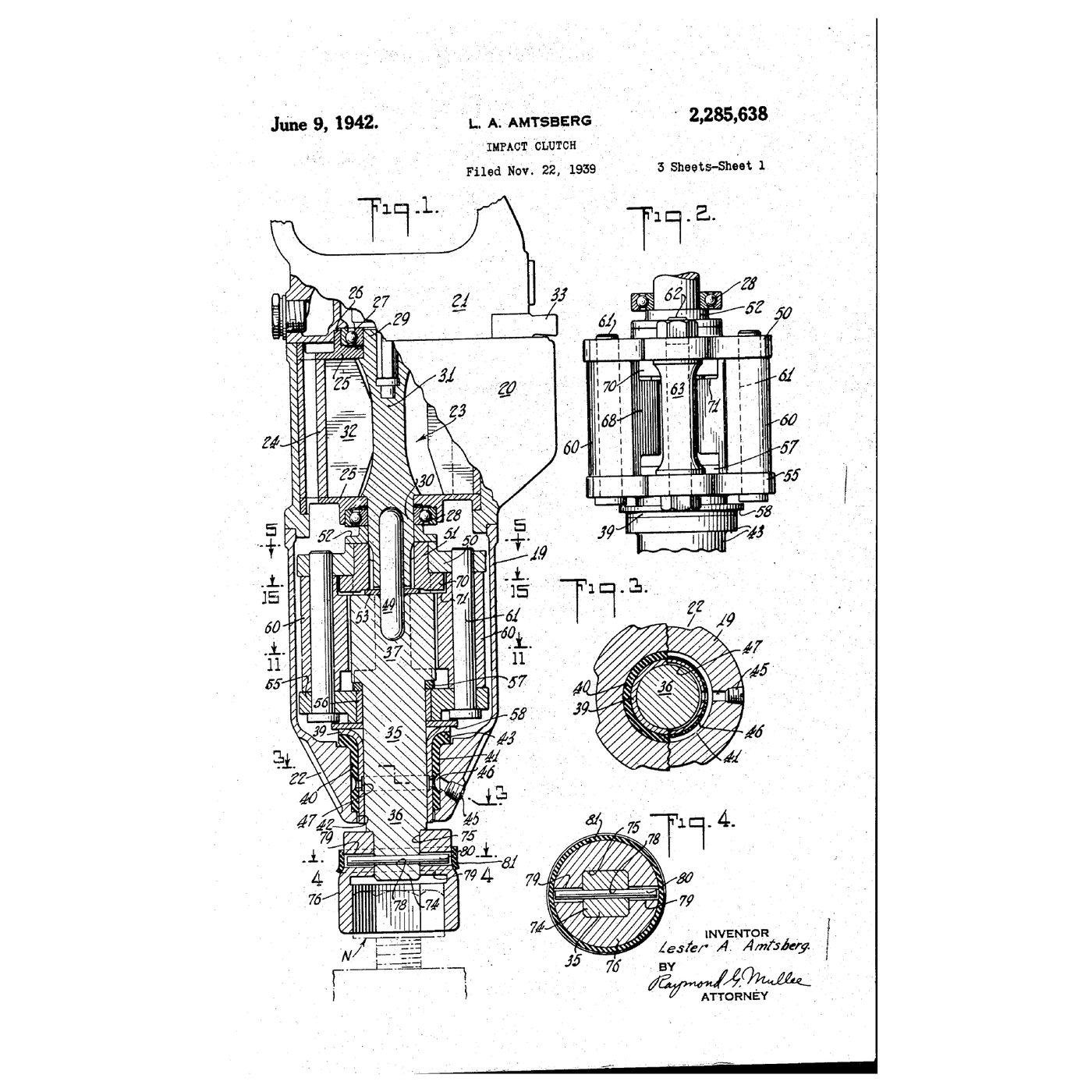
Amtsberg's impact clutch breaks that link. A hammer inside the tool is allowed to spin freely, then strike an anvil, then disengage and spin again. Each blow delivers a torque the motor could never produce continuously, and because the blow lasts under a fifth of a millisecond, almost none of it reaches the operator.
This rung is about that trade: enormous torque at the joint, a buzz in the hand, and no way for the tool to tell you what it actually achieved.
中级
About 2 hours
说明
1
1
Feel the difference before you understand it
Feel the difference before you understand it
Take a nut and bolt in the bench vise with a plain washer under the nut. Run it down with a spanner until it is snug, then keep going and note the point where your whole body is involved — feet braced, shoulder locked.
Now back it off and do the same job with the impact wrench. The tool rattles, the nut moves, and your wrist barely knows about it. That is the observation this rung explains.
Then do the thing that matters. Tighten with the impact wrench, stop, and put a torque wrench on the same nut to see what it actually reached. Write the number down. Do it three more times, with the same trigger time, on the same nut and bolt.
You will get four different answers. The impact wrench is a tool for MOVING a fastener, not for setting one, and the spread you just measured is why every critical joint is finished with a torque wrench even in a workshop full of impact tools.
此步骤所需材料:
 机械螺钉1 个
所需工具:
 冲击扳手
冲击扳手 扭力扳手
扭力扳手 套筒扳手组
套筒扳手组 扳手套装
扳手套装 台虎钳
台虎钳2
2
The squirrel cage: how the hammer engages and lets go
The squirrel cage: how the hammer engages and lets go
Amtsberg's patent is titled 'Impact clutch' and the mechanism is the reason.
The output spindle carries an **anvil** with spaced jaws. Around it, on carriers, sit **hammer dogs** that are pivoted on pins running PARALLEL to the anvil axis, so each dog can rock in and out rather than slide. The patent calls this the squirrel-cage arrangement.
A **driving cam** pushes each dog at a point offset from its own pivot. That offset is the whole design: it resolves into two components, one that drives the dog against the anvil jaw, and one that rocks the dog OUT of engagement. Which one wins depends on how much resistance the anvil offers.
So the cycle runs itself. Free-running, the dogs stay engaged and the anvil turns with the motor. The moment the joint resists, the declutching component overcomes the driving one, the dogs rock clear, the hammer assembly accelerates for most of a revolution, and complementary cam surfaces guide the dogs back into engagement for the next strike.
Nothing schedules the blows. The joint's own resistance decides when the tool starts hammering, which is why an impact wrench spins a loose nut quietly and only begins to rattle when the nut seats.
所需工具:
冲击扳手套筒扳手组3
3
Use impact sockets, and find out why on a scrap one
Use impact sockets, and find out why on a scrap one
Chrome sockets are hardened for strength and they are brittle. Impact sockets are made from a tougher, softer alloy and are visibly thicker in the wall — that is not marketing, it is a different failure mode being designed for.
Compare one of each with the caliper: measure the wall thickness at the drive end. Write both figures down. Then look at the finish — a black oxide impact socket against a bright chrome one.
A hand socket loaded steadily yields before it shatters. The same socket taking a hundred blows a second is being fatigue-loaded, and a hard brittle wall under repeated impact cracks and then throws fragments. That is the reason for the rule, and it is also the reason the retaining pin and O-ring exist on an impact socket: to keep the pieces together and on the anvil.
Safety glasses for this step and for every step where the tool is running. The hazard is not the torque, it is the fragment.
所需工具:
冲击扳手套筒扳手组 6 英寸数显卡尺
 安全眼镜
安全眼镜 护耳器
护耳器4
4
What one blow is worth, and what reaches your wrist
What one blow is worth, and what reaches your wrist
正在加载 Jupyter 笔记本…
所需工具:
扭力扳手5
5
History and context
History and context
**US 2,285,638**, Lester A. Amtsberg, assignor to Chicago Pneumatic Tool Company. Filed 22 November 1939, granted 9 June 1942, with eighteen drawings showing the mechanism at engagement, impact, declutching and re-engagement. Long expired.
Chicago Pneumatic built air tools for industry, and the impact wrench is an air-tool idea before it is an electrical one — compressed air gives a light, fast motor that suits a mechanism which spends most of its time accelerating a small mass. The electric and then cordless versions came later and kept the clutch unchanged.
Amtsberg's is not the first impact wrench; the 'swinging weight' mechanisms preceded it. What the squirrel cage bought was symmetry — dogs rocking on parallel pins stay in alignment with the anvil jaws, where a swinging weight can present itself at an angle and batter its own engagement faces.
**Honest limits.** It cannot tell you the torque it reached, as step 1 measures, so it belongs on the run-down and the break-loose, never the final setting. It is loud in a way that damages hearing quickly. It punishes any socket not made for it. And on a soft or fragile joint the same blows that free a seized nut will strip a thread or snap a stud before the operator can feel it happening.
所需工具:
扭力扳手相关蓝图
这些蓝图共享知识——技术、材料或原理
CC0 公共领域
此蓝图以 CC0 协议发布。你可以自由复制、修改、分发和使用此作品,无需征得许可。
通过购买蓝图中的产品支持创客,他们将获得 创客佣金 (由供应商设定),或创建此蓝图的新版本并将其作为连接包含在你自己的蓝图中以分享收入。