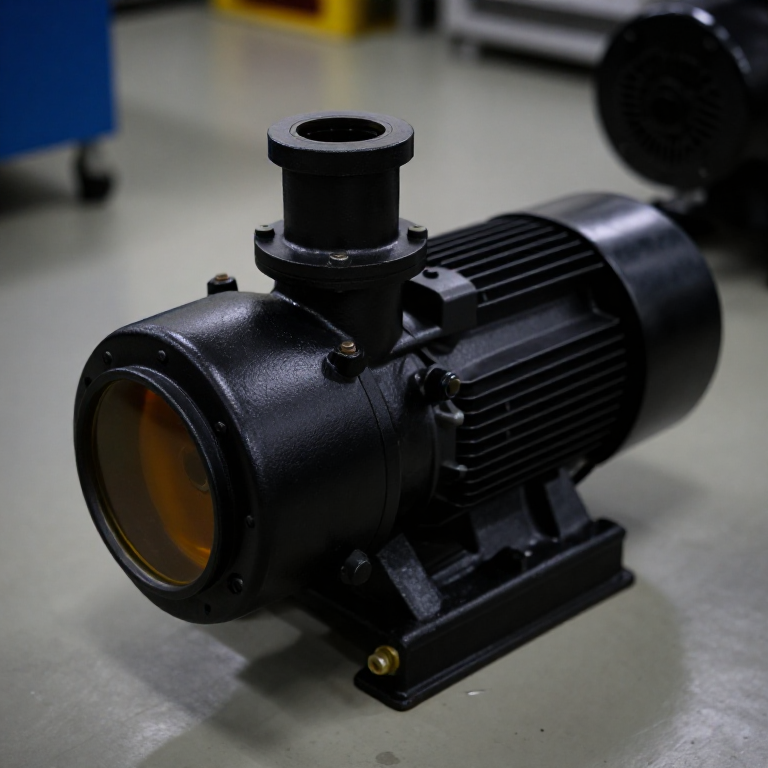


Rotary Vane Vacuum Pump
说明
Bore the stator and offset the rotor
Bore the stator and offset the rotor
The eccentricity is the pump. Everything else is containment.
- Bore a stator 60 mm diameter and 40 mm deep in aluminium.
- Turn a rotor 50 mm diameter, so it is 10 mm smaller than the bore.
- Mount the rotor's shaft OFFSET so the rotor almost touches the stator at one point and leaves a 10 mm crescent opposite.
- Set the near-contact clearance to a few hundredths — close, but not touching.
- Position inlet and outlet ports either side of that near-contact point.
The near-contact line is the seal between inlet and outlet. If it is too loose, gas leaks straight from the outlet back to the inlet and the pump achieves nothing; if it touches, it seizes. Oil bridges that gap in service, which is why an oil-sealed pump reaches a far better vacuum than a dry one of identical geometry.
Ports must sit either side of the contact line, not opposite it. Get their positions wrong and the pump moves gas in a circle without ever compressing it.此步骤所需材料:
 铝圆棒2 个
 铝板1 个
铝板1 个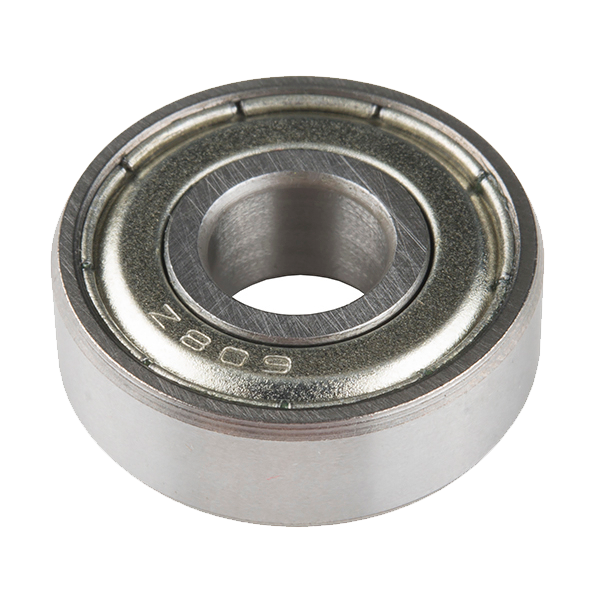 Ball Bearing - Non-Flanged (8mm Bore, 22mm OD)2 个
所需工具:
 充电式电钻
充电式电钻 钻头套装
钻头套装 锉刀套装
锉刀套装 台虎钳
台虎钳 6 英寸数显卡尺
 组合角尺
组合角尺Fit sprung vanes that follow the bore
Fit sprung vanes that follow the bore
The vanes must stay in contact all the way round despite the gap constantly changing.
- Cut two slots across the rotor's diameter, at 90 degrees to each other.
- Make vanes from hard plastic or brass to slide freely in those slots.
- Fit light springs behind each vane so they are pushed outward against the stator.
- Turn the rotor by hand and confirm each vane extends and retracts smoothly through a full revolution.
Springs start the seal; centrifugal force maintains it. At speed the vanes are flung outward hard enough to seal without help, and the springs matter mainly at start-up and low speed. That is why some designs use no springs at all and simply cannot be turned slowly by hand — a detail that surprises people servicing them.
Vanes must slide freely. A vane that sticks in its slot leaves a gap that short-circuits the pump, and the symptom is a pump that runs normally but will not pull down.此步骤所需材料:
 亚克力板1 张
 压缩弹簧套装1 套
 黄铜圆棒1 个
所需工具:
 钢丝锯(曲线锯)锉刀套装充电式电钻6 英寸数显卡尺台虎钳
Add oil and measure what it buys
Add oil and measure what it buys
Run it dry first, then wet, and the difference is dramatic.
- Assemble and run the pump DRY against a gauge. Record the ultimate pressure.
- Now introduce a few millilitres of low-vapour-pressure oil at the inlet.
- Run again and record the ultimate pressure.
- Compare, and note the change in sound.
此步骤所需材料:
 熟亚麻籽油1 瓶
 玻璃管套件1 套件
所需工具:
 秒表6 英寸数显卡尺充电式电钻
Plot the pump-down curve and find the knee
Plot the pump-down curve and find the knee
Every pump has a characteristic curve and a point where it stops improving.
- Connect to a known volume and record pressure every ten seconds from atmosphere.
- Plot pressure on a logarithmic scale against time.
- Note the straight portion, then the knee where it flattens.
- Compare the time taken with the Sprengel pump's from the previous blueprint.
此步骤所需材料:
 坐标纸1 pad
所需工具:
秒表6 英寸数显卡尺Oil as seal, lubricant and filler, and history
Oil as seal, lubricant and filler, and history
Rotary vane vacuum pumps developed through the early twentieth century as electric motors became common and laboratories wanted vacuum without mercury or hand-cranking. Wolfgang Gaede is central to this period — he produced rotary mercury and then oil-sealed designs, and went on to invent the diffusion pump later in this batch.
The oil is doing three jobs at once and that is the design's elegance. It lubricates the vanes, seals the clearances, and fills the dead volume. Any one of those alone would justify it. Using one substance for three purposes is why the design has barely changed in a century — and it explains the pump's main drawback too, since that same oil can creep back toward the vessel as vapour, contaminating what is being evacuated.
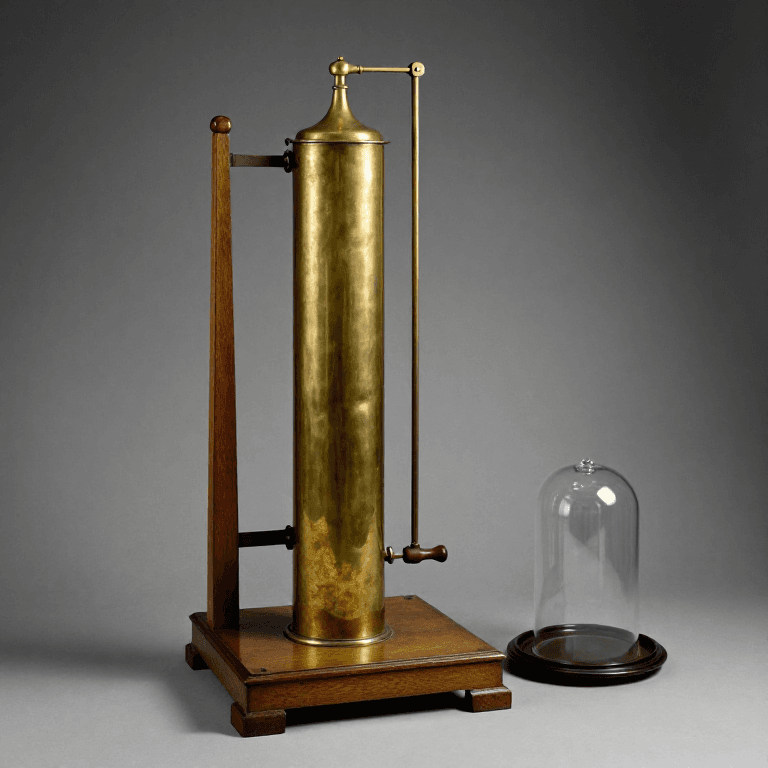
Its place in the chain: Guericke's piston is defeated by seals and dead space; Sprengel's mercury column removes both at the cost of speed and toxicity; the rotary vane pump gets the speed back and removes the mercury by using oil to defeat dead space instead. Each generation keeps the previous one's gains and attacks its specific limit.
Its honest limits: an ultimate pressure set by the oil's own vapour pressure, so it cannot reach high vacuum however long it runs; oil backstreaming into the system; and the need to change oil as it absorbs vapours and contaminants. For pressures below its floor you need a fundamentally different mechanism, which is what the diffusion pump provides.
材料
9- 2 个占位符
- 1 个占位符
- $1.27
- 1 张占位符
- 1 套占位符
- 1 个占位符
- 1 瓶占位符
- 1 套件占位符
- 1 pad占位符
所需工具
8- 1 vendor sell this, none ship to you yet占位符
- 占位符
- 占位符
- 占位符
- 占位符
- 占位符
- 占位符
- 占位符
此蓝图制作

CC0 公共领域
此蓝图以 CC0 协议发布。你可以自由复制、修改、分发和使用此作品,无需征得许可。
通过购买蓝图中的产品支持创客,他们将获得 创客佣金 (由供应商设定),或创建此蓝图的新版本并将其作为连接包含在你自己的蓝图中以分享收入。