艺术
美容与健康
工艺
文化与历史
娱乐
环境
食品与饮料
逆向工程
科学
体育
技术
可穿戴设备
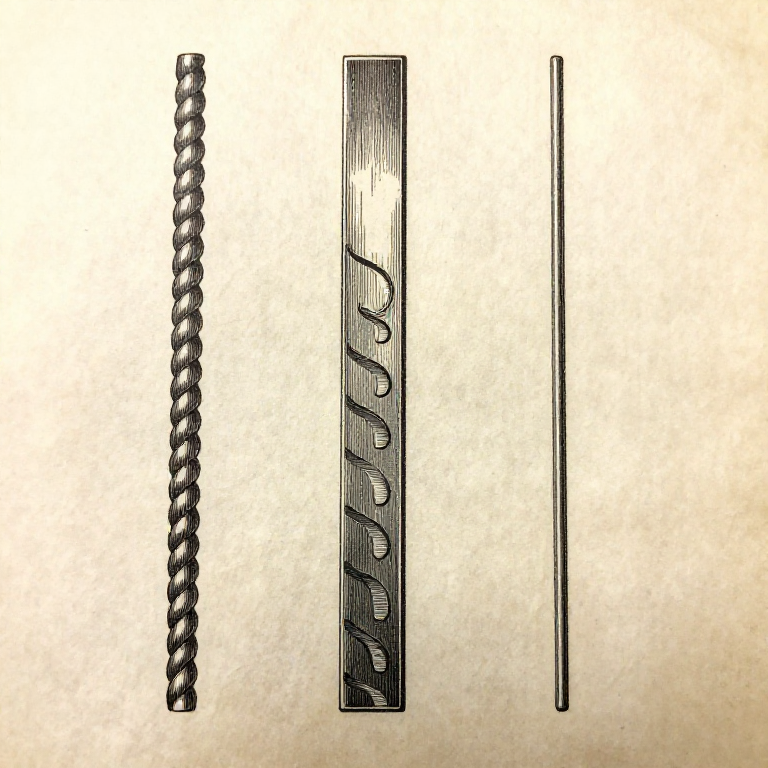


Running a Bead: Travel Speed Is Not a Matter of Taste
A bead is a line of weld metal laid down in one pass. It is the unit everything else is built out of, and it is where a welder is taught, because a bead run on a flat plate with no joint under it shows every fault without hiding any of them.
Three things are read off a finished bead: its width, its height, and the row of ripples on top. Each of those reports on one of the variables from the previous rung.
This rung also works out heat input in joules per millimetre — the number that connects current, arc voltage and travel speed, and the one that decides how far the work will pull out of shape.
初学者
4 hours
说明
1
1
What a bead is telling you
What a bead is telling you
**Width** reports arc length and weave. A bead two to three times the core diameter is a stringer, run straight. Much wider than that on a straight run means the arc is too long.
**Height** reports travel speed. Too slow and the metal piles up into a tall, narrow, rope-like bead that has barely fused into the plate beneath it. Too fast and the bead is thin, stringy and often has a crack down the middle of the crater at the end.
**The ripples** report steadiness. Even crescents, evenly spaced, all pointing backwards, mean a steady speed and a steady arc. Ripples that bunch and stretch mean a hand that is speeding up and slowing down.
A bead that is about twice as wide as it is high, flat-faced or slightly convex, blending into the plate at both toes without a sharp step, is a good one.
此步骤所需材料:
 低碳钢板2 个
 焊条1 包
焊条1 包所需工具:
 电弧焊机
电弧焊机 自动变光焊接面罩
 电焊手套
电焊手套 放大目镜
放大目镜2
2
Heat input, and why the speed is already decided
Heat input, and why the speed is already decided
正在加载 Jupyter 笔记本…
所需工具:
 台式电脑
台式电脑3
3
Stringer or weave
Stringer or weave
A **stringer** is run straight along the joint with no side-to-side movement. It puts less heat into the plate per unit length of joint, cools faster, and is what you want on thin material, on high-strength steels, and for the root run of a multi-pass weld.
A **weave** swings the rod side to side to fill a wider gap in one pass. It is slower along the joint, so it puts in much more heat, and it is the right answer for filling a wide V and for capping a multi-pass weld.
The practical limit on a weave is about two and a half to three times the core diameter of the electrode. Wider than that and the pool is too big for the arc to hold — it sags in the flat position and simply falls out in any other.
Pause very slightly at each edge of a weave. That is where the pool has to wash into the parent metal, and a weave that sweeps straight through leaves cold, unfused edges under a bead that looks fine from the top.
此步骤所需材料:
低碳钢板2 个焊条1 包所需工具:
电弧焊机自动变光焊接面罩电焊手套4
4
Starting, restarting and filling the crater
Starting, restarting and filling the crater
The two weakest points of a bead are its two ends.
**At the start** the plate is cold, so the first 10-20 mm gets less penetration than the rest. Strike about 10 mm ahead of where the weld is to begin, run back to the start, then go forward over the strike point — by the time you cross it the plate is warm.
**At a restart** the old crater must be chipped and brushed clean of slag first. Restart on the front edge of the crater, hold long enough to fill it, then move on. Restarting on top of slag is the commonest way to bury an inclusion.
**At the end** stopping dead leaves a crater — a dish of metal that has solidified last, fed by nothing, and it very often cracks down the middle. Fill it: pause, or swing back over the last 10 mm of the bead before lifting away.
此步骤所需材料:
低碳钢板2 个焊条1 包所需工具:
电弧焊机自动变光焊接面罩电焊手套 锤子
锤子 钢丝刷套装
钢丝刷套装 捅渣棒
捅渣棒相关蓝图
这些蓝图共享知识——技术、材料或原理
CC0 公共领域
此蓝图以 CC0 协议发布。你可以自由复制、修改、分发和使用此作品,无需征得许可。
通过购买蓝图中的产品支持创客,他们将获得 创客佣金 (由供应商设定),或创建此蓝图的新版本并将其作为连接包含在你自己的蓝图中以分享收入。