艺术
美容与健康
工艺
文化与历史
娱乐
环境
食品与饮料
逆向工程
科学
体育
技术
可穿戴设备
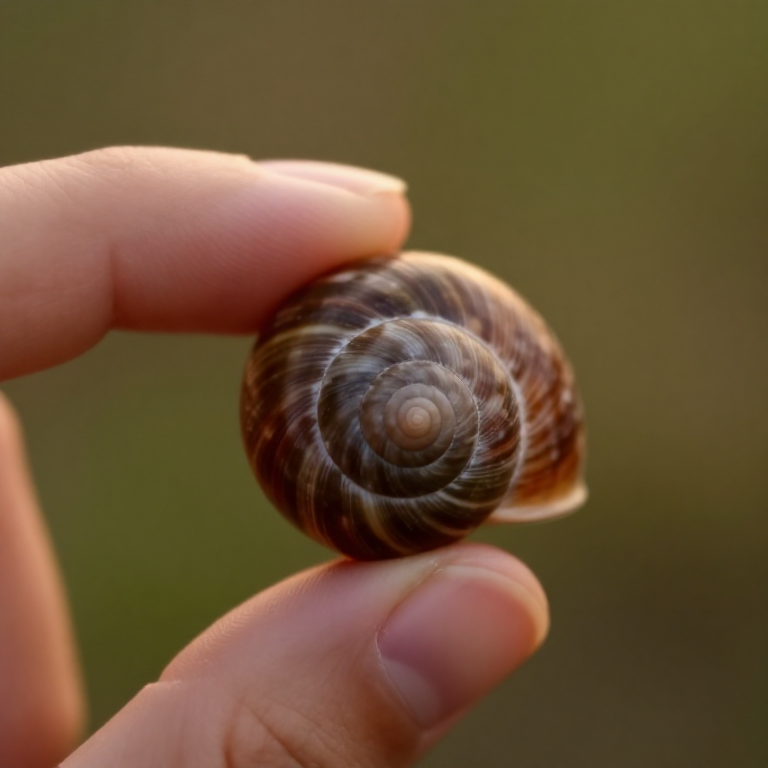


The Number e — Grow Money and Meet the Constant of Change
A hands-on maths project: 'grow' a pile of counters as interest is added more and more often, and watch the total settle on the mysterious number e = 2.71828, the constant behind all continuous growth. A Python cell reaches e two ways, and a compendium connects it to populations, cooling and calculus.
初学者
30 minutes
说明
1
1
A very special number
A very special number
Alongside pi there is a second great constant, e = 2.71828..., first glimpsed by Jacob Bernoulli in 1683 studying compound interest. It is the number of continuous growth. You will grow it with counters.
2
2
Grow one coin
Grow one coin
Start with 1 counter -- one coin earning 100% interest in a year. Paid ONCE at the year's end it becomes 2 (double). Now pay it as 50% TWICE: after the first half-year you have 1.5, and 50% of that added gives 2.25 -- more! Lay out the counters and work it through.
此步骤所需材料:
 玻璃珠1 个
 纸1 张
纸1 张所需工具:
 计算器
计算器3
3
Pay more and more often
Pay more and more often
Pay the interest monthly (12 small additions) and you reach about 2.61; daily gives 2.714; every second, almost 2.71828. The total does NOT run away to infinity -- it settles onto e = 2.71828. That settling point is what 'continuous growth' means. Record each result and watch it close in.
4
4
Reach e two ways
Reach e two ways
正在加载 Jupyter 笔记本…
所需工具:
 台式电脑计算器
5
5
Compendium: the number behind change
Compendium: the number behind change
What your growing pile teaches. (1) Splitting growth into ever-smaller steps does not give ever-more money; it converges on e. (2) A far faster route to e is the endless sum 1 + 1/1! + 1/2! + 1/3! + ..., which nails it in a handful of terms. (3) e appears wherever things grow or fade smoothly: populations, radioactive decay, a cooling cup of coffee, charging batteries, continuously compounded money. (4) Its function e-to-the-x is the one curve that is its own rate of change, which makes it the natural language of calculus -- and in Euler's identity it binds e, pi, i, 1 and 0 in a single line often called the most beautiful in mathematics.
相关蓝图
这些蓝图共享知识——技术、材料或原理

CC0 公共领域
此蓝图以 CC0 协议发布。你可以自由复制、修改、分发和使用此作品,无需征得许可。
通过购买蓝图中的产品支持创客,他们将获得 创客佣金 (由供应商设定),或创建此蓝图的新版本并将其作为连接包含在你自己的蓝图中以分享收入。