
Slip Casting
说明
Make the plaster mould
Make the plaster mould
Everything depends on the plaster being genuinely absorbent.
- Mix plaster of Paris to the recommended water ratio and pour it around a model.
- Let it set, remove the model, and dry the mould completely — a day or more.
- Test it: a drop of water on the surface should soak in within seconds.
此步骤所需材料:
 熟石膏2 公斤
Mix slip with a deflocculant
Mix slip with a deflocculant
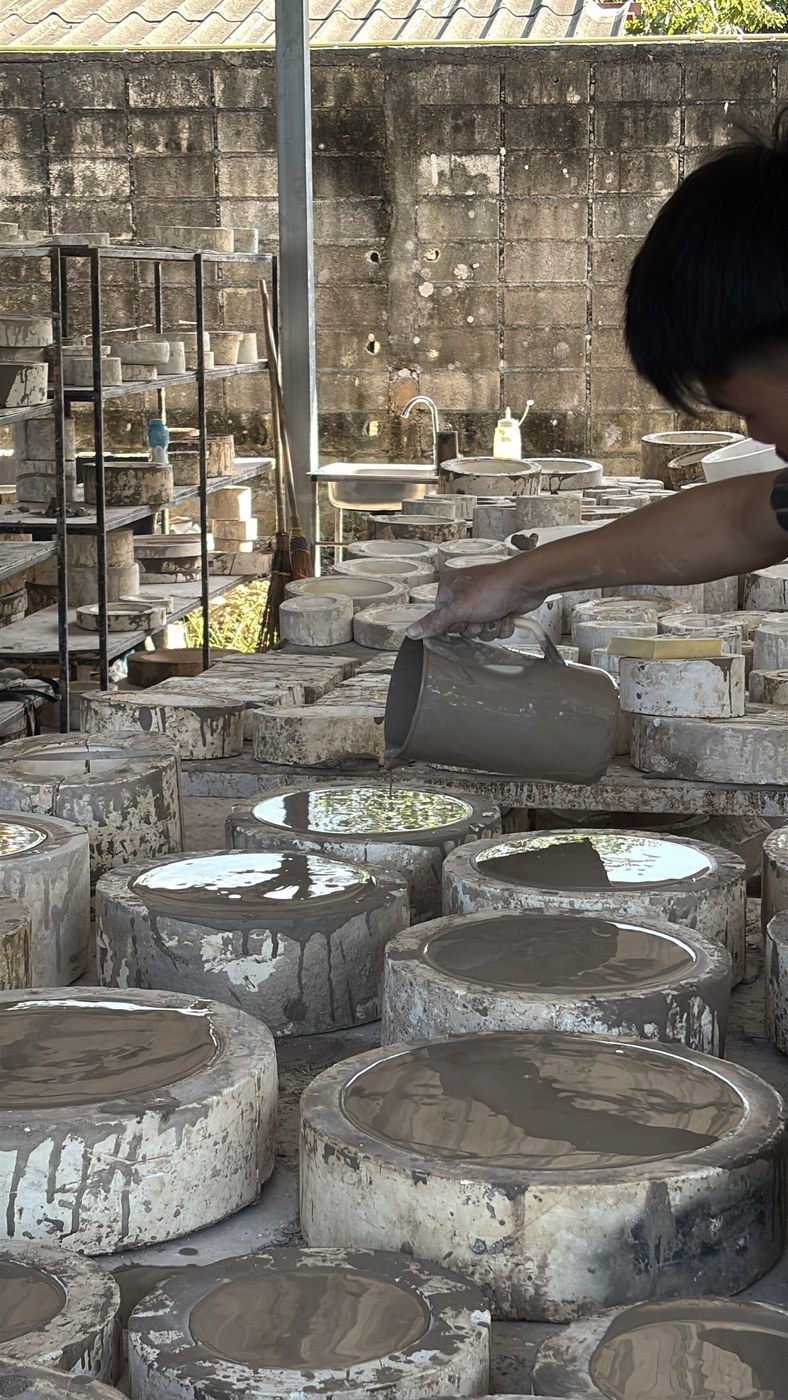
The trick is to make clay flow with as little water as possible.
- Blend clay and water to a pourable consistency and note how much water it took.
- Now make a second batch, adding a few drops of sodium silicate as you go.
- Compare — the deflocculated slip pours freely with markedly less water.
此步骤所需材料:
 瓷土2 公斤
 数字厨房秤1 个
Cast and time the wall
Cast and time the wall
Wall thickness is set by nothing but the clock.
- Fill the mould to the top with slip.
- Top it up as the level drops — the mould is absorbing water and the slip is shrinking.
- After a measured interval, pour the liquid centre back out and invert the mould to drain.
此步骤所需材料:
 秒表1 个
秒表1 个 直尺1 个
直尺1 个Release, fettle and dry
Release, fettle and dry
The cast releases itself if you let it.
- Leave the mould until the cast has stiffened and pulled away from the walls.
- Open the mould and lift the piece out.
- Trim the pouring rim and smooth the mould seams with a damp sponge.
History and context
History and context
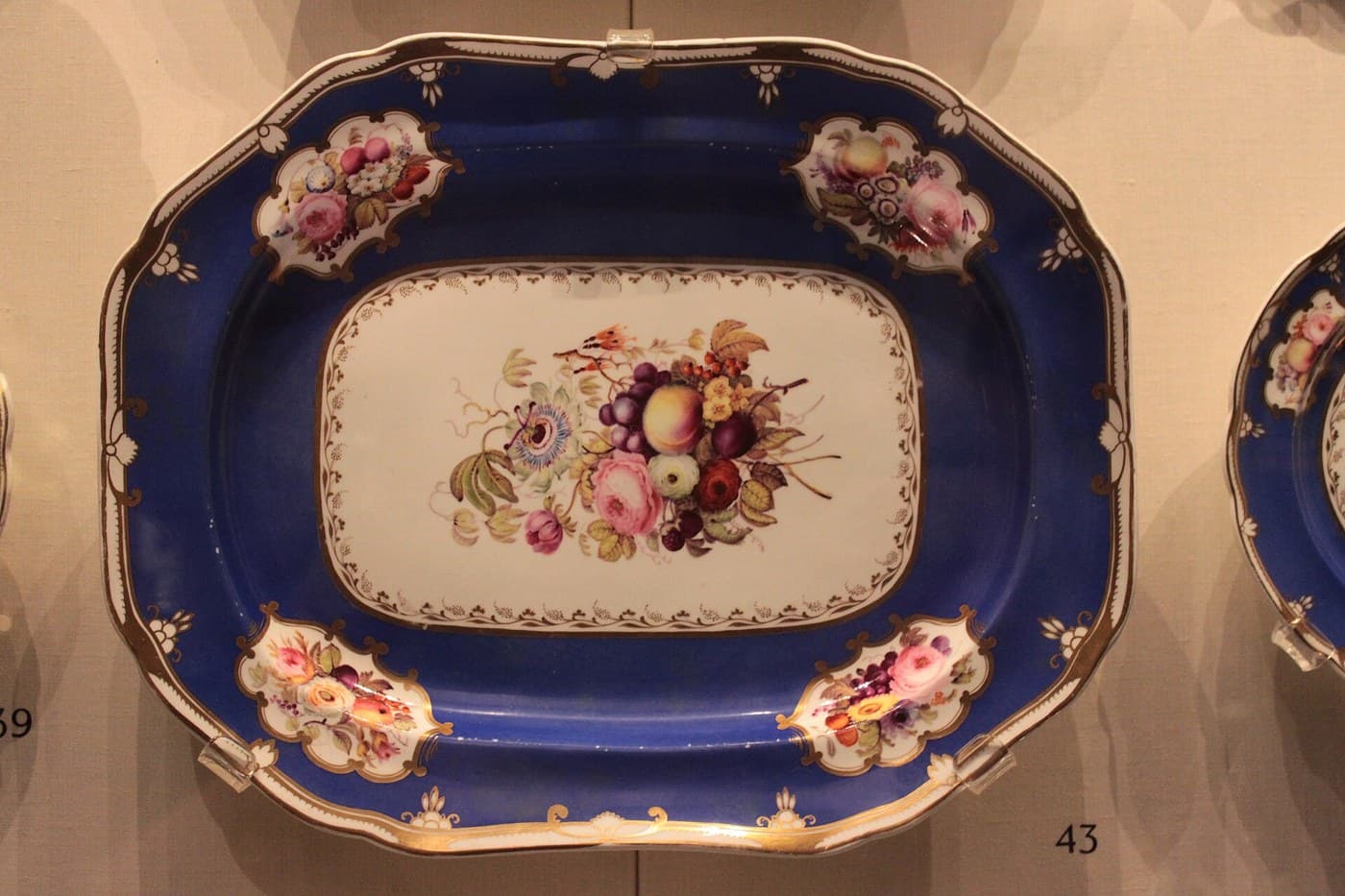
Slip casting emerged in the eighteenth century as European factories chased complex porcelain shapes, and became central to the Staffordshire potteries. It solved a problem throwing cannot: a thrown pot is necessarily a body of revolution, and anything else has to be assembled from parts.
What it changed commercially is reproducibility. A mould makes the same object every time, so quality no longer depended on which thrower was on shift, and unskilled labour could produce complex ware. That was a large part of the economics of industrial pottery — and, as with most such shifts, it displaced the skill it replaced.
The plaster is a consumable. Moulds absorb salts and clay particles into their pores and gradually stop drawing; a working mould has a life of perhaps a few dozen to a couple of hundred casts. Potteries therefore keep master models to make replacement moulds, which is why the model — not the mould — is the valuable object.
Still the standard method. Toilets, basins, teapots, figurines and technical ceramics are slip cast. Modern industrial versions use pressure casting, forcing slip into porous resin moulds at several bar, which cuts a twenty-minute wait to a couple of minutes — the same physics, hurried along.
CC0 公共领域
此蓝图以 CC0 协议发布。你可以自由复制、修改、分发和使用此作品,无需征得许可。
通过购买蓝图中的产品支持创客,他们将获得 创客佣金 (由供应商设定),或创建此蓝图的新版本并将其作为连接包含在你自己的蓝图中以分享收入。