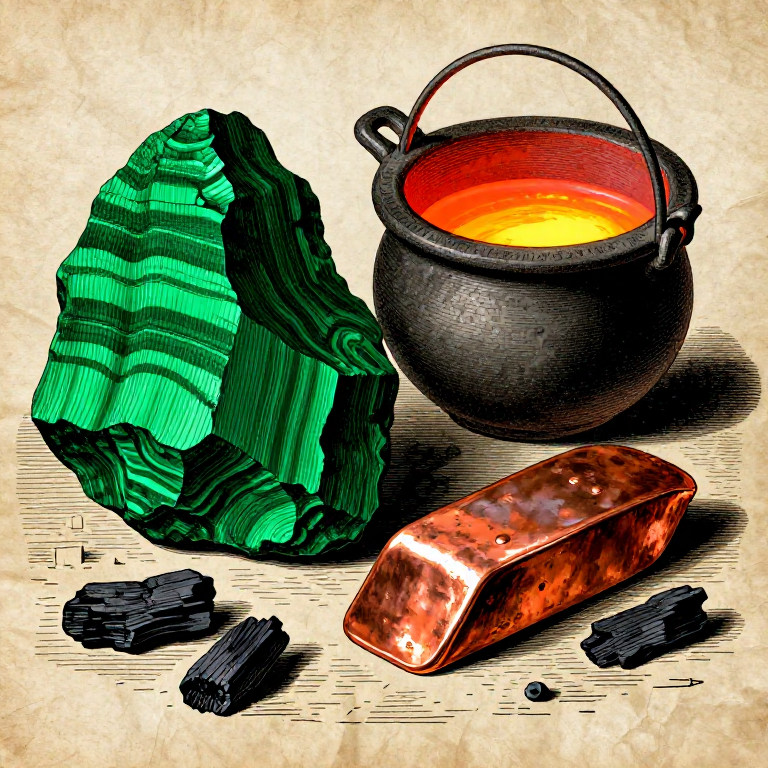

Smelting Copper from Malachite — From Green Ore to Red Metal
说明
了解化学原理
了解化学原理
孔雀石加热时会分解:Cu₂CO₃(OH)₂ → 2CuO + CO₂ + H₂O(约300°C)。生成的氧化铜(CuO)随后被燃烧木炭产生的一氧化碳还原:CuO + CO → Cu + CO₂。铜的熔点为1085°C。纯孔雀石的铜产率约为57.5%。
粉碎孔雀石
粉碎孔雀石
使用锤子和砧座将孔雀石敲碎成小于1厘米的碎块。碎得越细,还原反应越快越完全。如有研钵和杵,可用于最后的粉碎。目标是豌豆大小或更小的碎片。
此步骤所需材料:
 孔雀石矿石2 kilogram
所需工具:
 地质锤
地质锤 研钵与研杵
研钵与研杵准备坩埚
准备坩埚
使用能承受1200°C以上高温的陶瓷坩埚。石墨-粘土坩埚最为理想。坩埚容量应至少为500毫升。如需自制,将耐火粘土与砂以2:1的比例混合,在窑中缓慢加热至1000°C后使用。预烧过的坩埚不易开裂。
此步骤所需材料:
 耐火黏土坩埚1 个
Layer ore and charcoal in the crucible
Layer ore and charcoal in the crucible
Place a 2 cm layer of charcoal pieces at the bottom of the crucible. Add a layer of crushed malachite (2-3 cm). Top with another layer of charcoal. The charcoal both provides carbon for reduction and protects the copper from re-oxidation. Fill to about 2/3 full.
此步骤所需材料:
 木炭5 kilogram
Build or prepare the forge
Build or prepare the forge
You need a forge or furnace capable of reaching 1100-1200°C. A simple charcoal forge with forced air (bellows or blower) works well. The crucible sits in a bed of burning charcoal with additional charcoal piled around and above it. The air supply must be controllable.
此步骤所需材料:
 木炭圆片20 kilogram
所需工具:
 风箱
风箱Put on safety equipment
Put on safety equipment
Copper smelting involves extreme heat, toxic fumes, and molten metal. Wear: leather apron, leather gauntlet gloves, face shield, safety boots (no synthetic materials). Work outdoors or in a well-ventilated space. Copper oxide fumes cause metal fume fever if inhaled. Keep a bucket of dry sand nearby for spill containment.
所需工具:
 皮革围裙
皮革围裙 长袖皮手套
长袖皮手套 面屏
面屏 干沙桶
干沙桶Light the forge and preheat
Light the forge and preheat
Light the forge charcoal and bring it to full heat over 30-45 minutes with gentle bellows action. Place the loaded crucible into the forge once the coals are glowing white-hot. Pack charcoal tightly around the crucible. Increase bellows speed gradually.
Maintain temperature for 2-3 hours
Maintain temperature for 2-3 hours
Keep the forge at 1100-1200°C for 2-3 hours. The malachite first decomposes (green changes to black CuO at ~300°C), then the CuO reduces to copper as temperature climbs. Add charcoal to the forge as needed to maintain heat. The crucible contents will shrink as CO₂ gas escapes.
Check for completion
Check for completion
After 2-3 hours, carefully lift the crucible lid with tongs and peek inside. You should see a bright orange-red pool of molten copper beneath a layer of slag (glassy dark material). If you see unmelted green or black chunks, continue heating for another 30 minutes.
所需工具:
 长柄夹钳
长柄夹钳Prepare the ingot mold
Prepare the ingot mold
While the copper melts, prepare a sand mold or a flat stone depression for pouring. Preheat the mold with a torch to prevent thermal shock cracking. A simple bar-shaped mold carved into a sandstone block works well. Ensure the mold is completely dry — any moisture causes explosive splattering of molten metal.
所需工具:
 砂岩锭模
砂岩锭模Pour the copper
Pour the copper
Using crucible tongs, lift the crucible from the forge. Tilt slowly to pour molten copper into the mold. The dark glassy slag floats on top and can be held back with a stick while the copper flows under it. Pour steadily — interrupted pours create cold shuts (weak seams).
所需工具:
 坩埚钳
坩埚钳Let the ingot cool
Let the ingot cool
Allow the copper ingot to cool in the mold for at least 30 minutes. Do not quench in water — rapid cooling makes copper brittle with internal stresses. Air cooling produces a softer, more workable metal. The copper surface oxidizes to a dark red-brown as it cools.
Remove and clean the ingot
Remove and clean the ingot
Once cool enough to handle (below 100°C), remove the ingot from the mold. Brush off adhering sand and slag with a wire brush. The ingot should have the characteristic salmon-pink color of fresh copper on freshly exposed surfaces. Any dark patches are trapped slag or oxide inclusions.
所需工具:
 钢丝刷套装
钢丝刷套装Weigh and assess yield
Weigh and assess yield
Weigh the clean copper ingot. From 2 kg of good malachite ore, expect 800-1000 g of copper (40-50% yield, accounting for slag losses and impurities). Pure malachite would yield 1150 g, but field-collected ore is rarely pure. Record the yield for future optimization.
所需工具:
 数字厨房秤
数字厨房秤Test the copper quality
Test the copper quality
Hammer the edge of the ingot on an anvil. Good copper deforms plastically without cracking — it is one of the most malleable metals. If it cracks, it contains too much slag or oxide. File a small area to expose fresh metal — pure copper is salmon-pink. A green tinge indicates incomplete reduction.
所需工具:
 金属锉
金属锉Store the copper ingot
Store the copper ingot
Copper oxidizes slowly in air (forming green patina over months). For short-term storage, keep dry. For long-term, coat with a thin layer of oil. Label with date, source ore, and weight. This copper is ready for casting, hammering into sheet, or alloying with tin to make bronze.
已连接蓝图材料
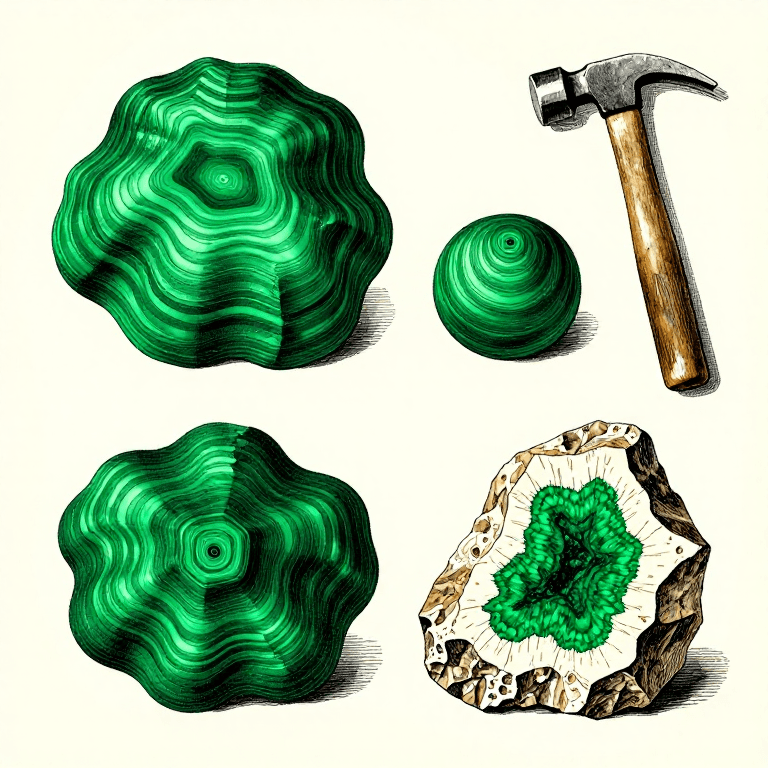
Identifying and Collecting Malachite — Copper Carbonate Ore from the Earth
Peter 创作
金属加工
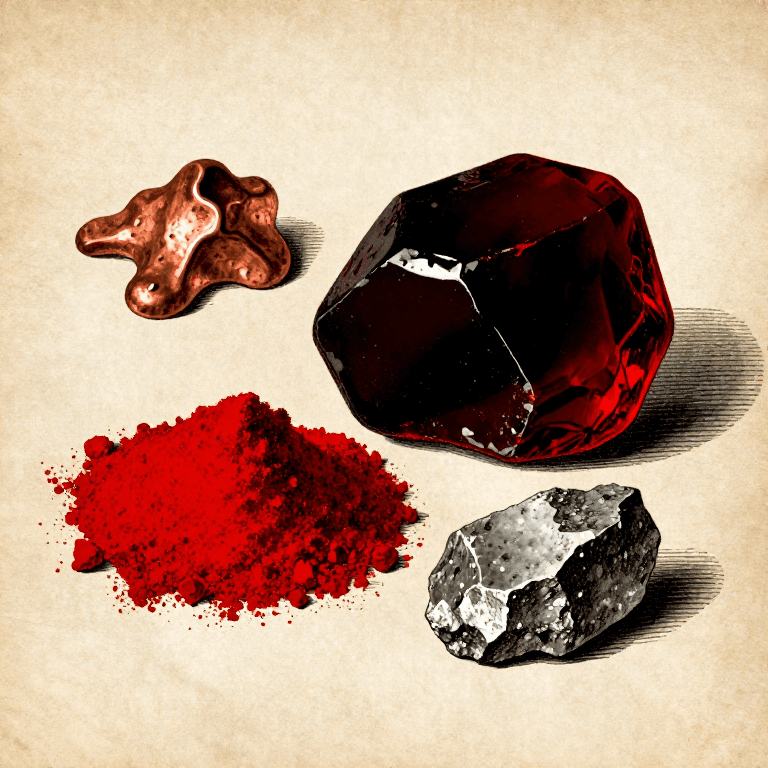
Recovering Selenium from Copper Refinery Anode Slime — The Photoconductor That Sees Light
Peter 创作
采矿

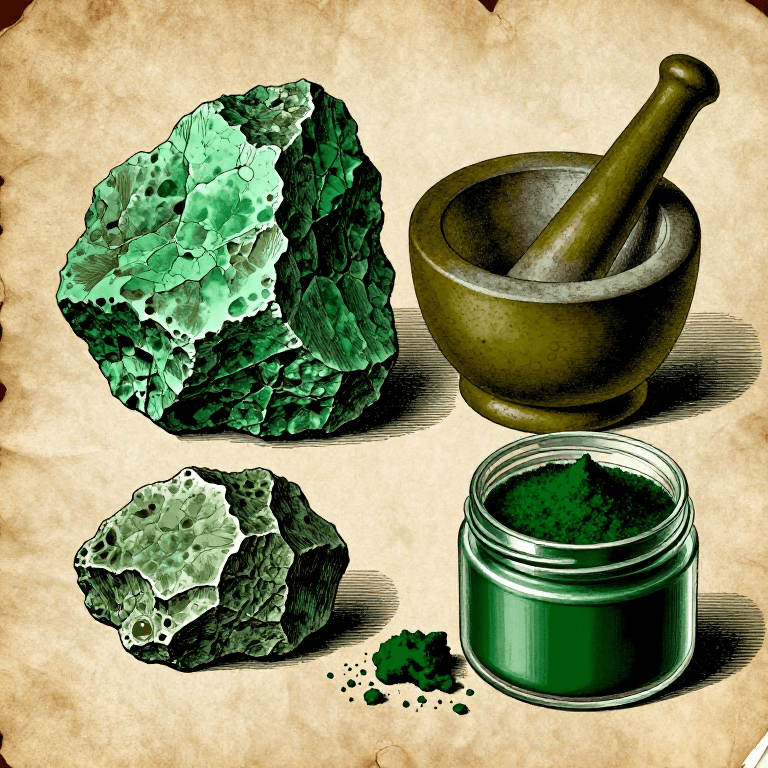
Making Malachite Green Pigment — Grinding the Copper Mineral into Painter's Green
Charlie 创作
艺术
此蓝图制作

相关蓝图
这些蓝图共享知识——技术、材料或原理
CC0 公共领域
此蓝图以 CC0 协议发布。你可以自由复制、修改、分发和使用此作品,无需征得许可。
通过购买蓝图中的产品支持创客,他们将获得 创客佣金 (由供应商设定),或创建此蓝图的新版本并将其作为连接包含在你自己的蓝图中以分享收入。