艺术
美容与健康
工艺
文化与历史
娱乐
环境
食品与饮料
逆向工程
科学
体育
技术
可穿戴设备


One Way Only: The Check Valve and the Bang It Makes
Every pump in the catalogue depends on one: Ctesibius' force pump has two, the hydraulic ram works by slamming one shut, and the backwater valve is one scaled up and buried. A check valve is the simplest active component in fluid power — it has no handle, no actuator and usually one moving part — and it is the one that most often causes a problem.
It has to open at almost no pressure, seal completely against reverse flow, and close at exactly the right moment. Close it too slowly and the flow reverses through it before it shuts; close it too fast and you stop a moving column of water dead, which generates a pressure spike four times your working pressure.
This rung builds one, measures its cracking pressure, and then makes the bang on purpose so the number stops being theoretical.
中级
About 3 hours
说明
1
1
Build three kinds and find their cracking pressure
Build three kinds and find their cracking pressure
Three geometries cover almost everything, and all three can be made or bought cheaply.
**A ball check.** A ball resting in a tapered seat. Flow lifts it, reverse flow drives it home. Make one: a short clear tube, a seat filed or turned into a fitting, a ball bearing or a glass marble, and a cross-pin above to stop the ball escaping. The clear tube is the whole point — you can watch it work.
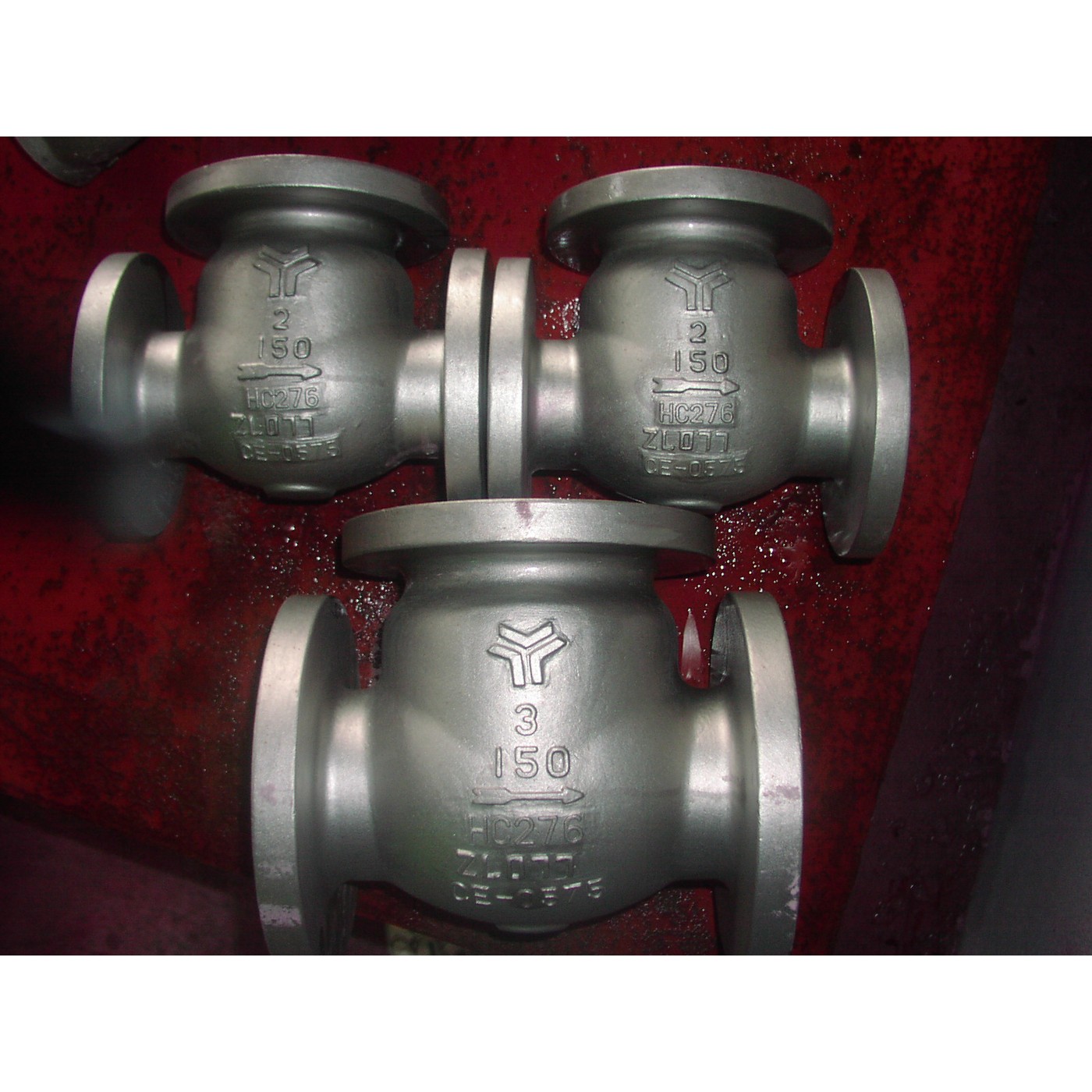
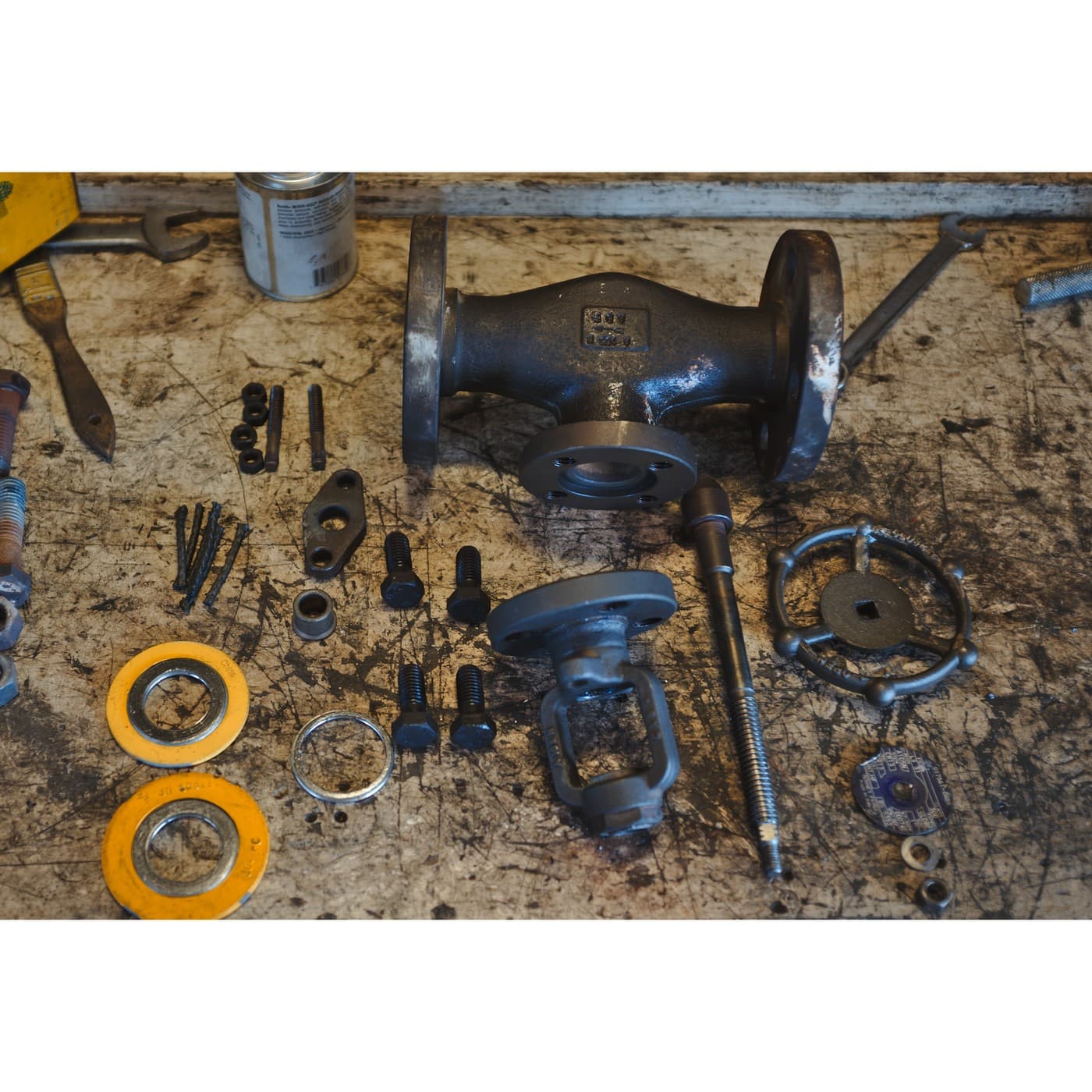
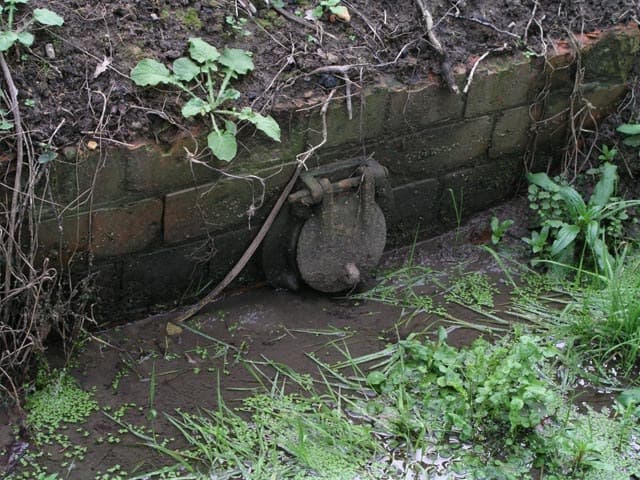
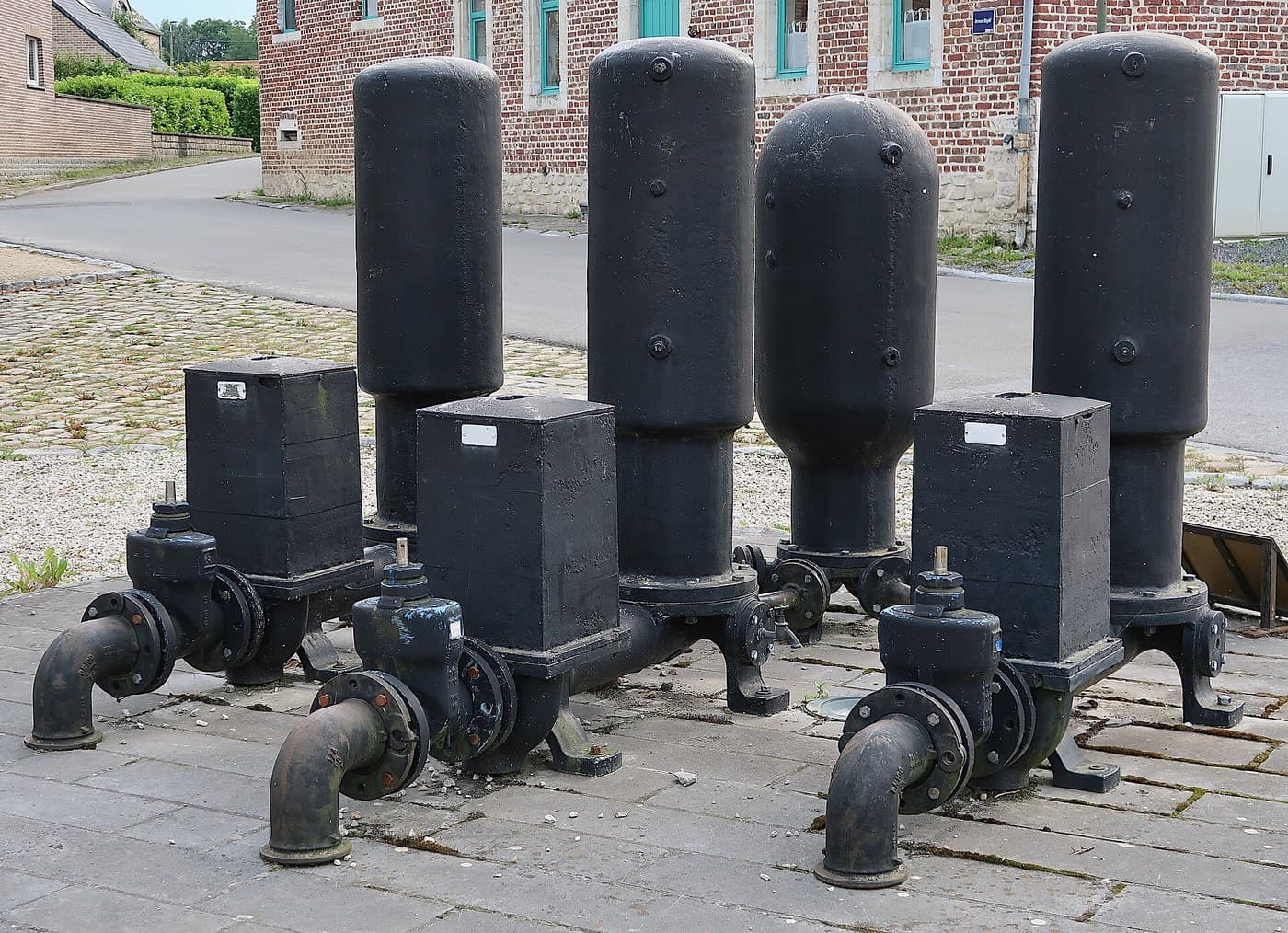
**A swing check.** A disc on a hinge at the top. It only has to *swing*, not lift, so it opens at almost nothing. The photograph on this page is three of these.
**A duckbill or flap.** A flat elastomer flap or a moulded rubber slit that pressure opens and back-pressure pinches shut. Cut one from silicone sheet and clamp it over a port.
Now measure **cracking pressure** for each. Stand the valve vertically with a clear tube above it, and add water slowly until flow just starts. The height of the column at that moment is the cracking pressure, in metres of water. Convert with 1 m ≈ 9.8 kPa.
You will find the ball check needs the most, the swing check far less, and the duckbill almost nothing. Step 4 shows why the numbers come out where they do — it is the closing element's own weight divided by the area it sits on, and geometry decides how much of that weight the flow has to lift.
此步骤所需材料:
 硅橡胶板1 个
 L 型铜管 1/2 英寸1 个
 O 形圈组合套件1 个
所需工具:
 止回阀
止回阀 硅胶管
硅胶管 量筒
量筒 镀锌钢管
镀锌钢管 台虎钳
台虎钳 锉刀(手用锉)
 去毛刺刀
去毛刺刀 6 英寸数显卡尺
 秒表
秒表 丁腈手套
丁腈手套 透明安全眼镜
2
2
Prove it leaks, and find out where
Prove it leaks, and find out where
A check valve that opens is only half a check valve. Test the other half.
Fit each valve **backwards** in a vertical clear tube, fill above it, and watch. Time how long a measured head takes to fall. A good valve holds indefinitely; a poor one weeps.
Then find out where it leaks, because there are only two places:
1. **Past the seat** — the sealing face is dirty, scored or not round. Clean it, look at it under the microscope, and try again. A single hair or a grain of grit across a seat will defeat it completely, which is why a check valve on a dirty system needs a strainer in front of it.
2. **Through the body** — a gasket or a threaded joint, not the valve function at all. Rung 7 covers that.
Now the important variation: test each valve **horizontally** as well as vertically. A ball check laid on its side loses the gravity that seats it and may not close at all. A swing check laid vertically with flow downward cannot close either — its disc hangs open.
**Orientation is part of the specification**, and this is the commonest way a correctly chosen check valve fails in service: somebody fitted it the way it fitted.
所需工具:
止回阀硅胶管量筒 数码显微镜秒表
 水桶丁腈手套透明安全眼镜
3
3
Make the bang
Make the bang
Water hammer is the reason check valves are specified with such care, and hearing it once teaches more than the arithmetic.
Run a length of **rigid** pipe — copper or steel, not soft hose, because a flexible hose absorbs the surge and hides the effect — from a tap, through the valve, to an open end. Get a good flow going, then shut the tap **as fast as you can**.
You will hear and feel a knock through the pipe. That is a pressure wave travelling at about 1,200 m/s, reflecting off the closed end and coming back. Step 4 computes its magnitude: at two metres a second it is around twenty-four bar, four times a domestic system's working pressure.
Now do three things that change it, and note which help:
- **Close slowly.** The surge falls away almost completely. Stopping the column gradually never stores the energy in the first place.
- **Shorten the pipe.** The knock gets sharper and higher-pitched — the wave's round trip is shorter — but the peak pressure is unchanged, because the Joukowsky pressure does not depend on length at all. Only the *duration* does.
- **Add a cushion.** Cap a short vertical stub off the line and leave air trapped in it. The surge nearly disappears. That is an arrestor, and it is the same trick as the catalogue's hydraulic accumulator.
Keep the pressure domestic, use rigid pipe rated for it, secure every joint, and wear eye protection. A fitting that lets go under a surge does so without warning.
此步骤所需材料:
L 型铜管 1/2 英寸2 个 PTFE 螺纹密封带1 个
所需工具:
止回阀 压力表镀锌钢管
 螺纹管件
螺纹管件 管钳
管钳 活动扳手水桶透明安全眼镜丁腈手套
4
4
Cracking pressure, and the size of the surge
Cracking pressure, and the size of the surge
正在加载 Jupyter 笔记本…
5
5
History and context
History and context
**Attribution, stated honestly.** No patent is claimed. The check valve is among the oldest machine elements there is: Ctesibius' force pump of the third century BC — already in the catalogue — has two of them, and they are the reason it works at all. A pump without check valves is a device for pushing water back and forth.
**Why it is the quiet foundation of fluid power.** Every positive-displacement pump, every compressor, every hydraulic circuit and every heart contains them. The hydraulic ram in the catalogue is the extreme case: it does not merely tolerate water hammer, it is **powered by** it, using the surge from one slamming check valve to lift water far above its source. The same phenomenon that bursts a domestic pipe is that machine's entire operating principle.
**The idea to keep.** A check valve is a component with no input but the flow itself — it decides what to do from the thing it is controlling. That class of device, where the controlled quantity is also the control signal, keeps recurring: the governor, the thermostat, the float valve, the pressure regulator two rungs from here. They are cheap, they need no power, and they fail in ways that are hard to see because nothing is instrumented.
**Honest limits.** Orientation matters and is frequently got wrong. Every check valve is a restriction even when fully open — step 4 of rung 1 puts a swing check at twenty times a ball valve's resistance. They are intolerant of dirt, because a single particle across the seat defeats them completely. And the slam problem has no free fix: a valve that closes fast enough to prevent reverse flow is a valve that closes fast enough to cause a surge, so the engineering is always a compromise between the two rather than a solution to either.
相关蓝图
这些蓝图共享知识——技术、材料或原理

CC0 公共领域
此蓝图以 CC0 协议发布。你可以自由复制、修改、分发和使用此作品,无需征得许可。
通过购买蓝图中的产品支持创客,他们将获得 创客佣金 (由供应商设定),或创建此蓝图的新版本并将其作为连接包含在你自己的蓝图中以分享收入。