合作
艺术
美容与健康
工艺
文化与历史
娱乐
环境
食品与饮料
逆向工程
科学
体育
技术
可穿戴设备
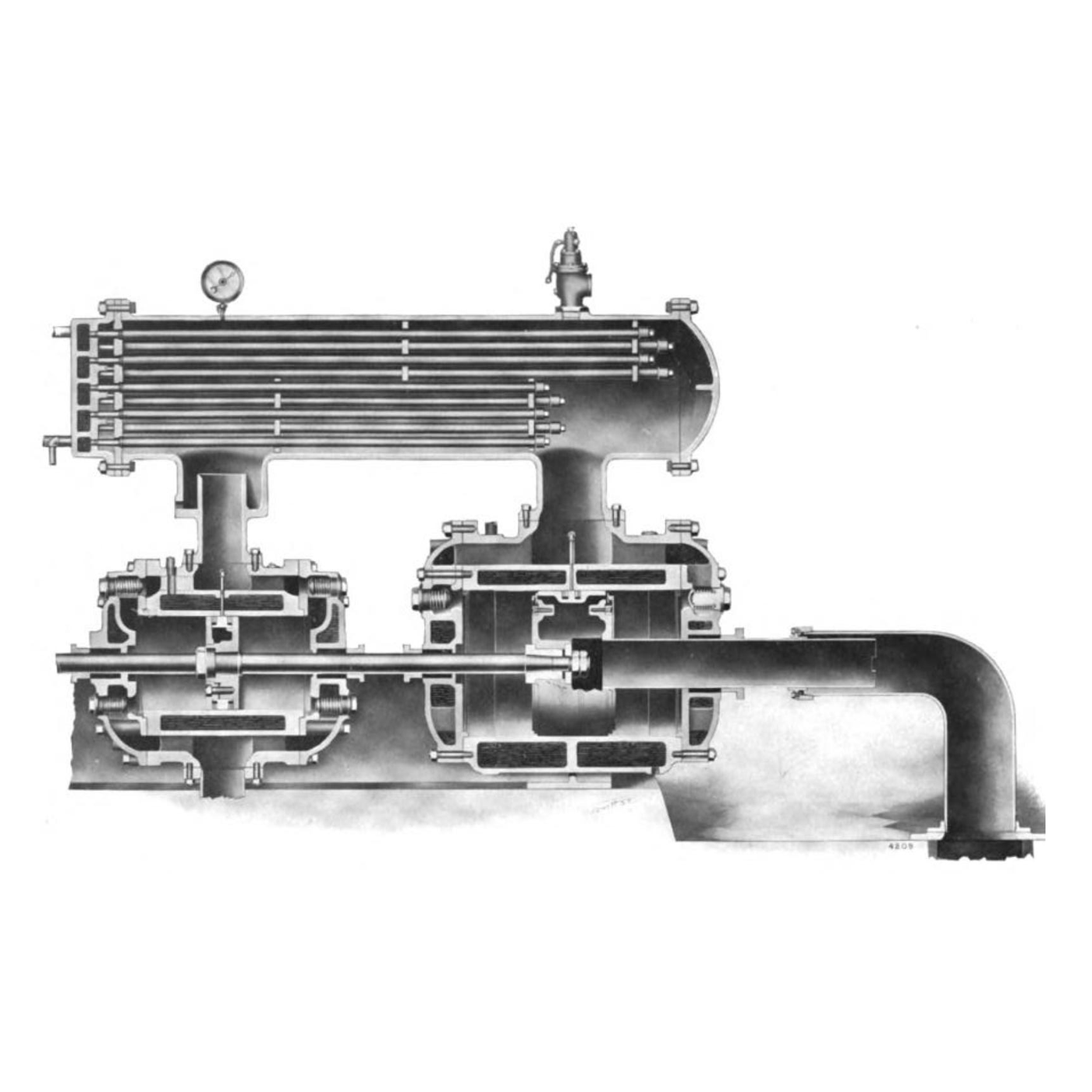

The Heat of Compression: Why Compressed Air Is Hot and Wet
Every compressor in this batch — scroll, liquid ring, screw, and the piston compressor in a workshop — does two things it was not asked to do. It heats the air, and it wrings water out of it.
The heat is not a defect: squeezing a gas does work on it, and the work appears as temperature. The water is not a leak: air carries vapour, and compressed and cooled air can carry much less of it. Both follow from a few lines of physics, and both decide how a real air system is laid out — two stages with an intercooler, a tank with a drain, a pipe that falls towards a trap.
This rung measures them on a workshop compressor: its real delivery by a pump-up test, its discharge temperature, and the water in its tank.
初学者
About 3 hours
说明
1
1
How hot, and what it costs
How hot, and what it costs
正在加载 Jupyter 笔记本…
2
2
Measure the discharge temperature
Measure the discharge temperature
Clamp the thermocouple's tip against the discharge pipe where it leaves the compressor pump with a hose clip — not with plastic tape, which softens on a pipe this hot — and start with the tank empty. Log the temperature every 30 seconds as the tank fills, with the tank pressure beside it. Aim the infrared thermometer at the cylinder head fins at the same moments.
The discharge pipe will climb well past boiling on most small piston compressors as the pressure rises — nowhere near the notebook's adiabatic ceiling, because the cylinder loses heat through its fins, but enough to burn. That is why the pipe to the tank is metal and often finned, and why a plastic hose must never be fitted there.
Do not touch the head or the discharge pipe while it runs, or for several minutes after.
所需工具:
 空气压缩机
 带读数的热电偶
 红外测温仪
 秒表
 皮革工作手套
 护耳器(耳罩,SNR 30 dB)
 活动扳手
 软管夹组合
3
3
The pump-up test: what does it really deliver?
The pump-up test: what does it really deliver?
The litres per minute printed on a compressor are usually displacement — the swept volume of the piston — not the air it actually delivers. The pump-up test measures the real figure, the **free air delivery**.
Read the tank volume off its plate. Drain the tank, close the drain and all outlets, and start the compressor. Time how long the gauge takes to climb from 4 bar to 6 bar — somewhere in the middle, well away from the cut-out.
Free air delivered = tank volume × (6 − 4) ÷ 1.013 ÷ time. A 24 L tank that takes 40 seconds to go from 4 to 6 bar gains 47 litres of free air: 71 L/min. Expect a figure well below the displacement on the label. The tank air is warm when you read it; for a closer figure, repeat after it has cooled and compare.
所需工具:
空气压缩机 压力表秒表
4
4
Where the water comes from
Where the water comes from
正在加载 Jupyter 笔记本…
5
5
Drain the tank and weigh the water
Drain the tank and weigh the water
Note the room humidity on the hygrometer before a working session. At the end, with the tank still under a little pressure, put a measuring jug under the drain and open it slowly: water and rusty sludge come out first, then air.
Weigh the water and compare with the notebook's estimate for your delivery, run time and humidity. It will be lower — some of the water left as mist with the air, some is still on the tank walls — but it will be the same order.
Then lay the air system out to deal with it: the main line falling slightly away from the tank towards a low point with a drain, and each tool taken off the TOP of the main so water running along the bottom does not go down to the tool.
所需工具:
 量杯壶
 精密数字天平
 湿度计活动扳手
6
6
Water at the tool: find where it gets through
Water at the tool: find where it gets through
The usual reasons compressed air arrives wet, in the order to check them.
Flow
Loading...
7
7
Context
Context
This is a practice rung: the physics underneath every compressor in this batch, measured on the one most makers own. It carries no patent; the relations are those of ideal-gas thermodynamics.
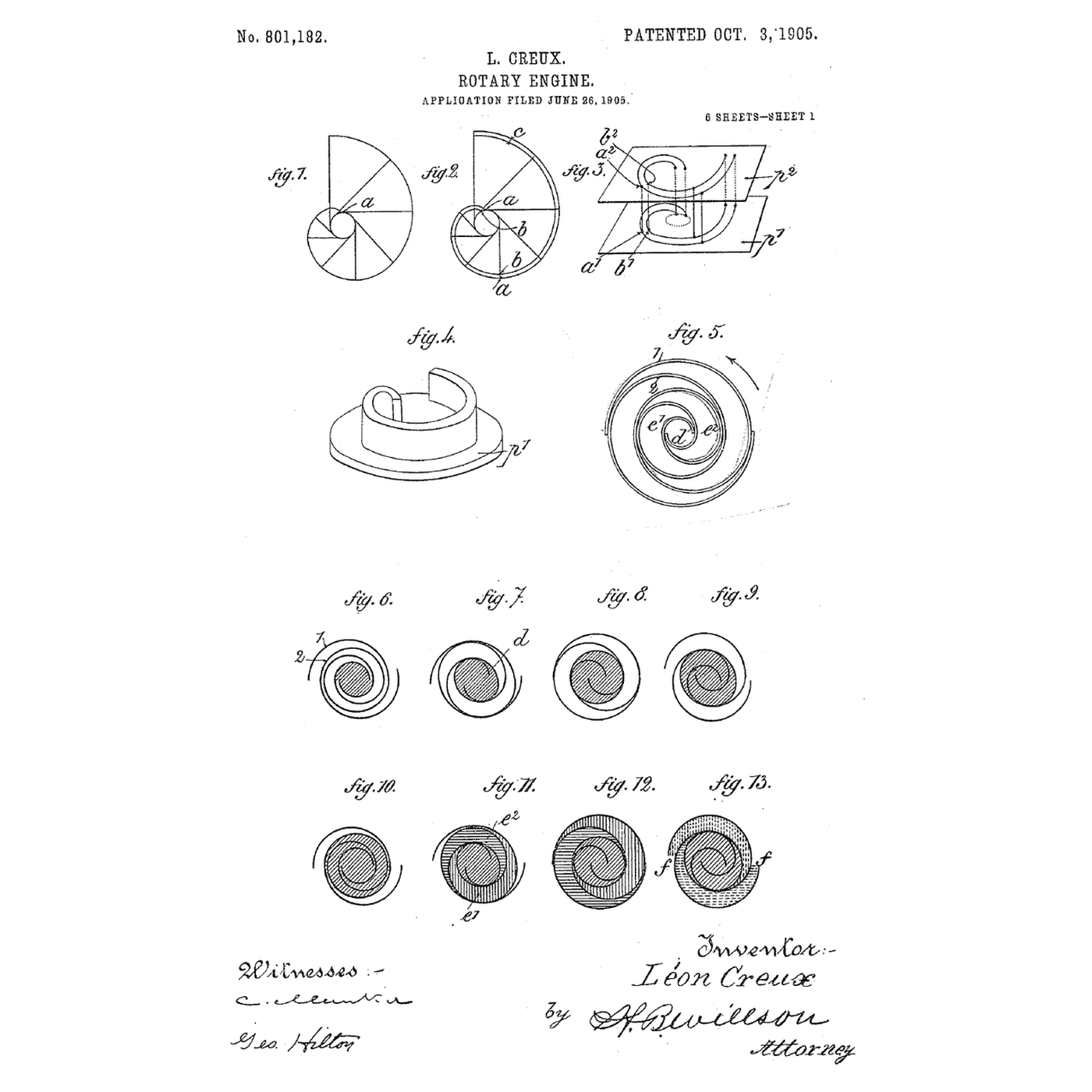
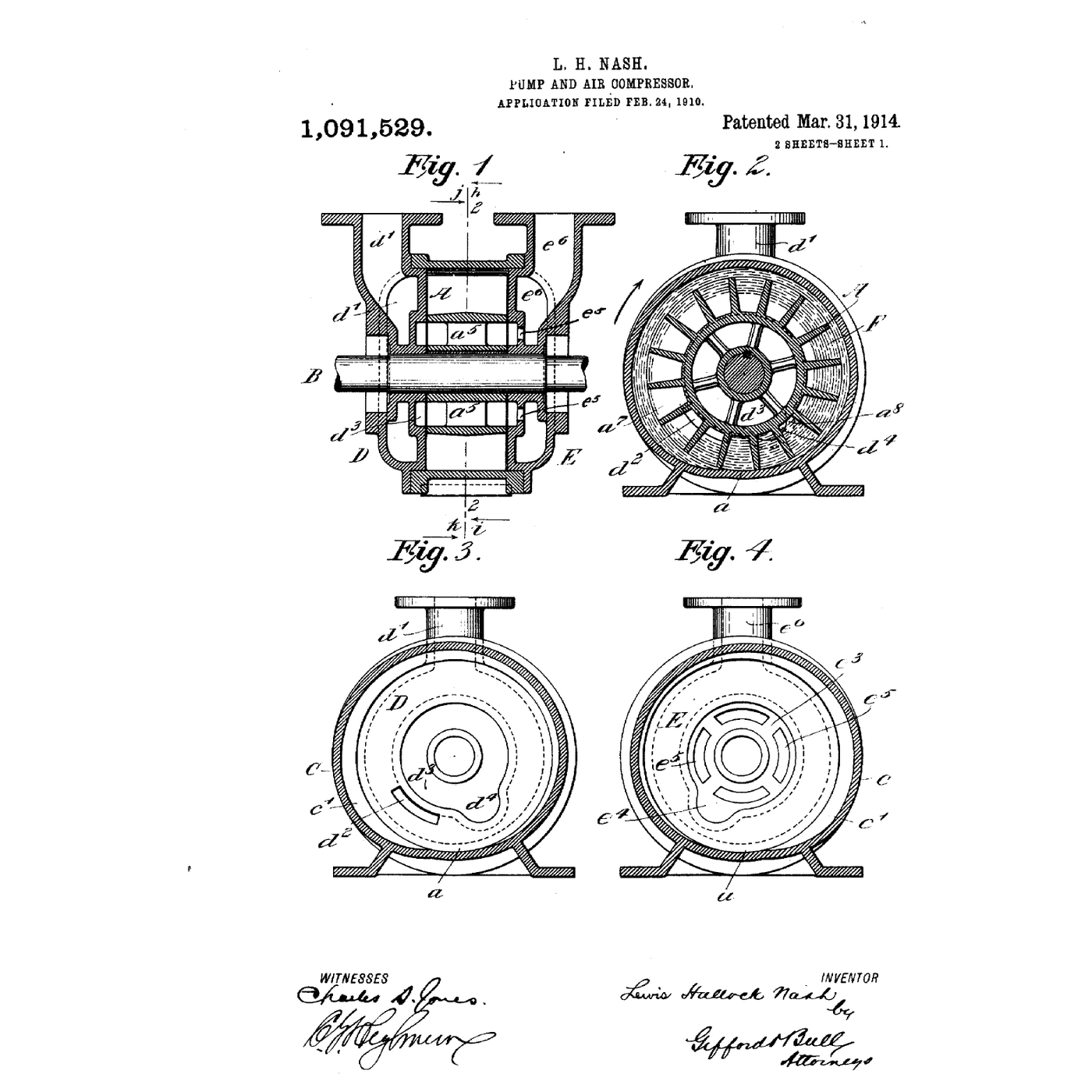
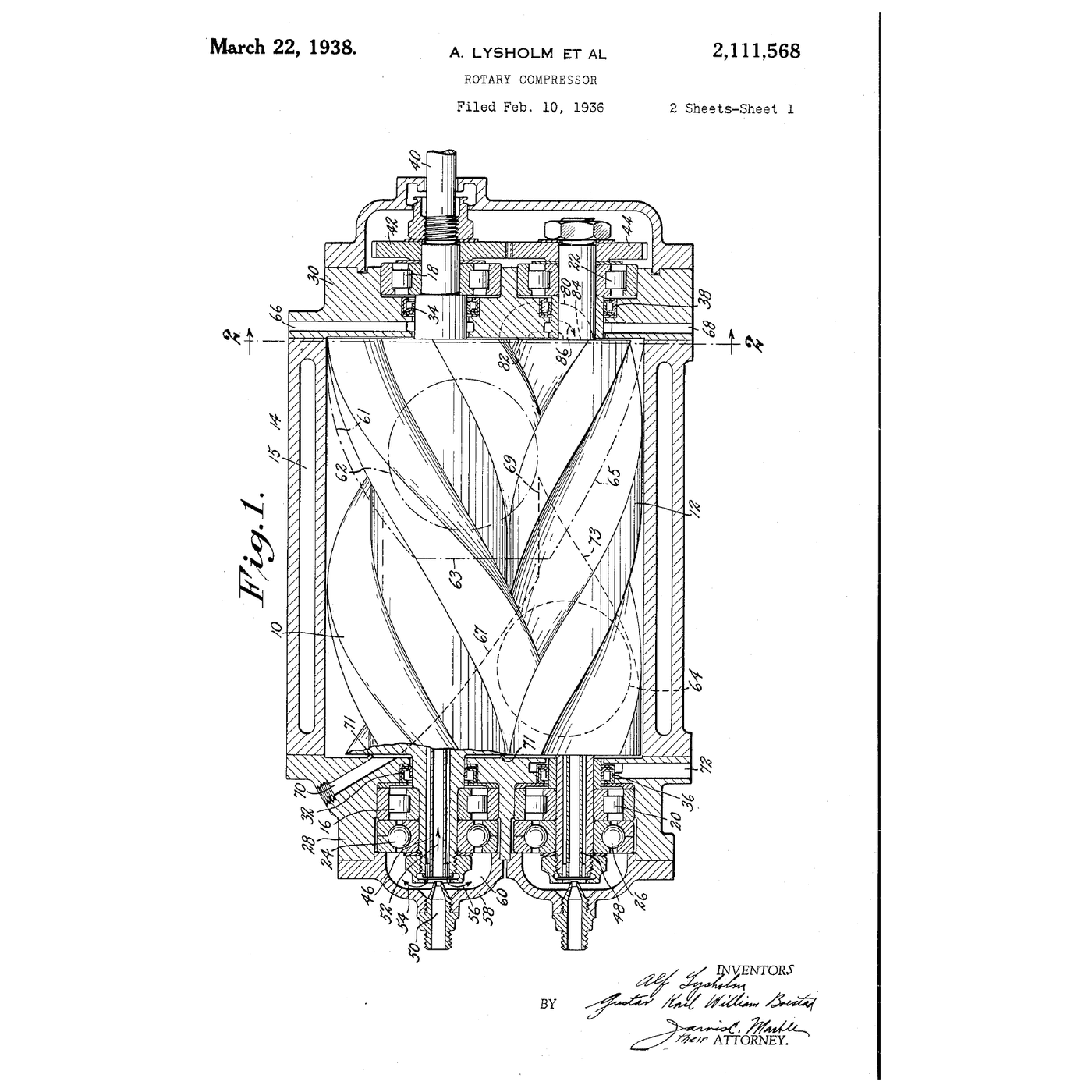
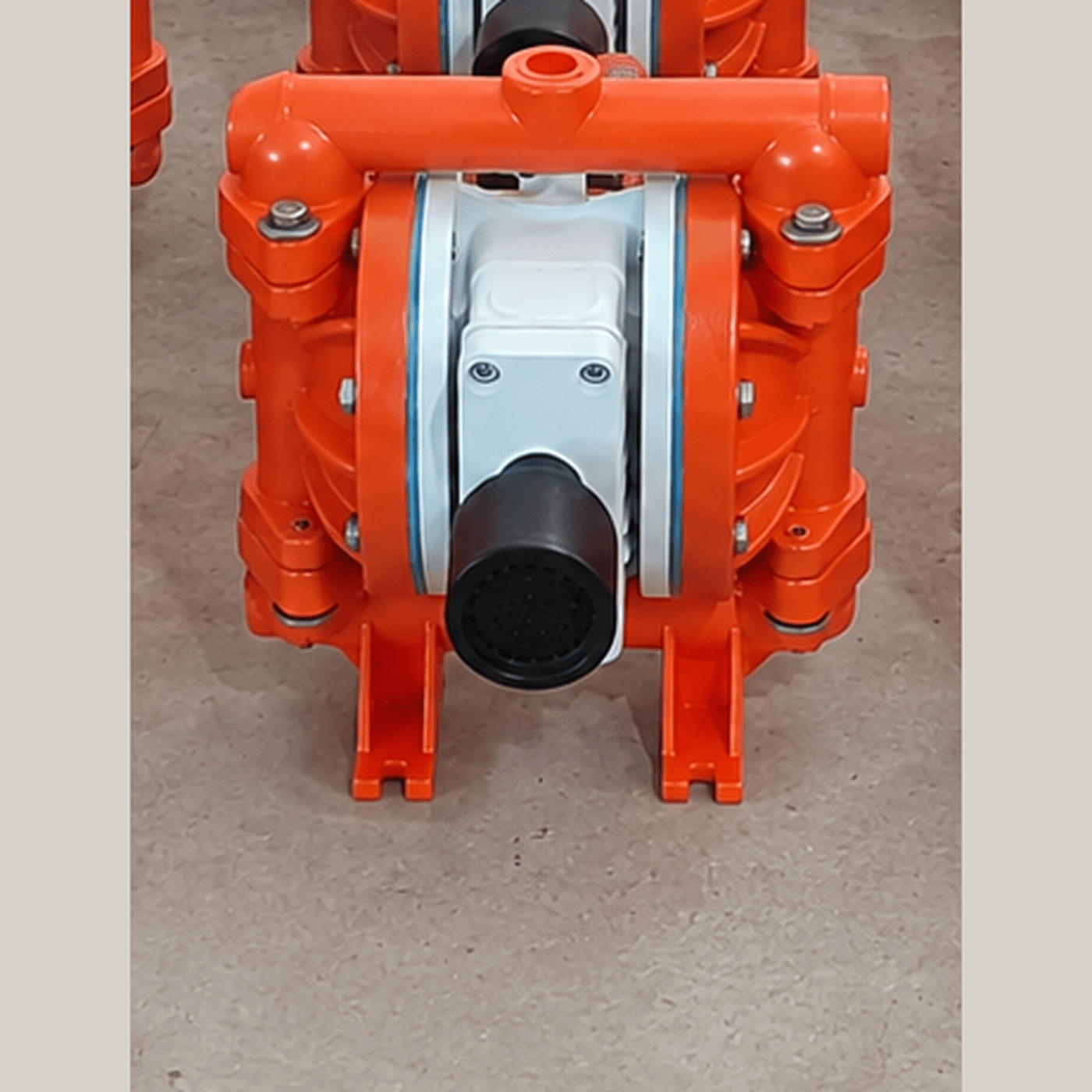
What it explains in the machines before it: the **liquid-ring pump** stays cool because its ring swallows the heat as fast as it is made — close to the isothermal floor. The **oil-flooded screw** does the same with oil. The **scroll** and the dry **screw** compress with little cooling and run hot. And the **air-operated diaphragm pump** throws its compressed air away through the exhaust, cold, which is why it can ice up.
**Honest limits of the numbers.** The temperatures are ideal adiabatic ceilings; real machines lose heat through their walls and run cooler. The condensate figures assume the air is cooled back to intake temperature — warm air in the tank holds more, and drops it later, downstream, in the pipes.
相关蓝图
这些蓝图共享知识——技术、材料或原理
Boyle's Law — Squeeze a Syringe of Air
Charlie 创作
化学
54
0
0
0
2
0
Guericke Air Pump
Penny 创作
技术
67
0
0
0
0
0
Holding a Pressure: The Reducing Regulator
Martin 创作
力学
40
0
0
0
0
0
Watt Indicator Diagram
Martin 创作
技术
71
0
0
0
0
0
The Scroll Compressor: Two Spirals, One Orbiting, No Valves
Emma 创作
力学
40
0
0
0
0
0
The Liquid-Ring Pump: The Water Is the Piston
Martin 创作
力学
45
0
0
0
0
0
The Screw Compressor: A Built-In Ratio, and the Cost of the Wrong One
Martin 创作
力学
39
0
0
0
0
0
The Air-Operated Double-Diaphragm Pump: It Stalls Instead of Bursting
Emma 创作
力学
30
0
0
0
0
0
CC0 公共领域
此蓝图以 CC0 协议发布。你可以自由复制、修改、分发和使用此作品,无需征得许可。
通过购买蓝图中的产品支持创客,他们将获得 创客佣金 (由供应商设定),或创建此蓝图的新版本并将其作为连接包含在你自己的蓝图中以分享收入。