艺术
美容与健康
工艺
文化与历史
娱乐
环境
食品与饮料
逆向工程
科学
体育
技术
可穿戴设备
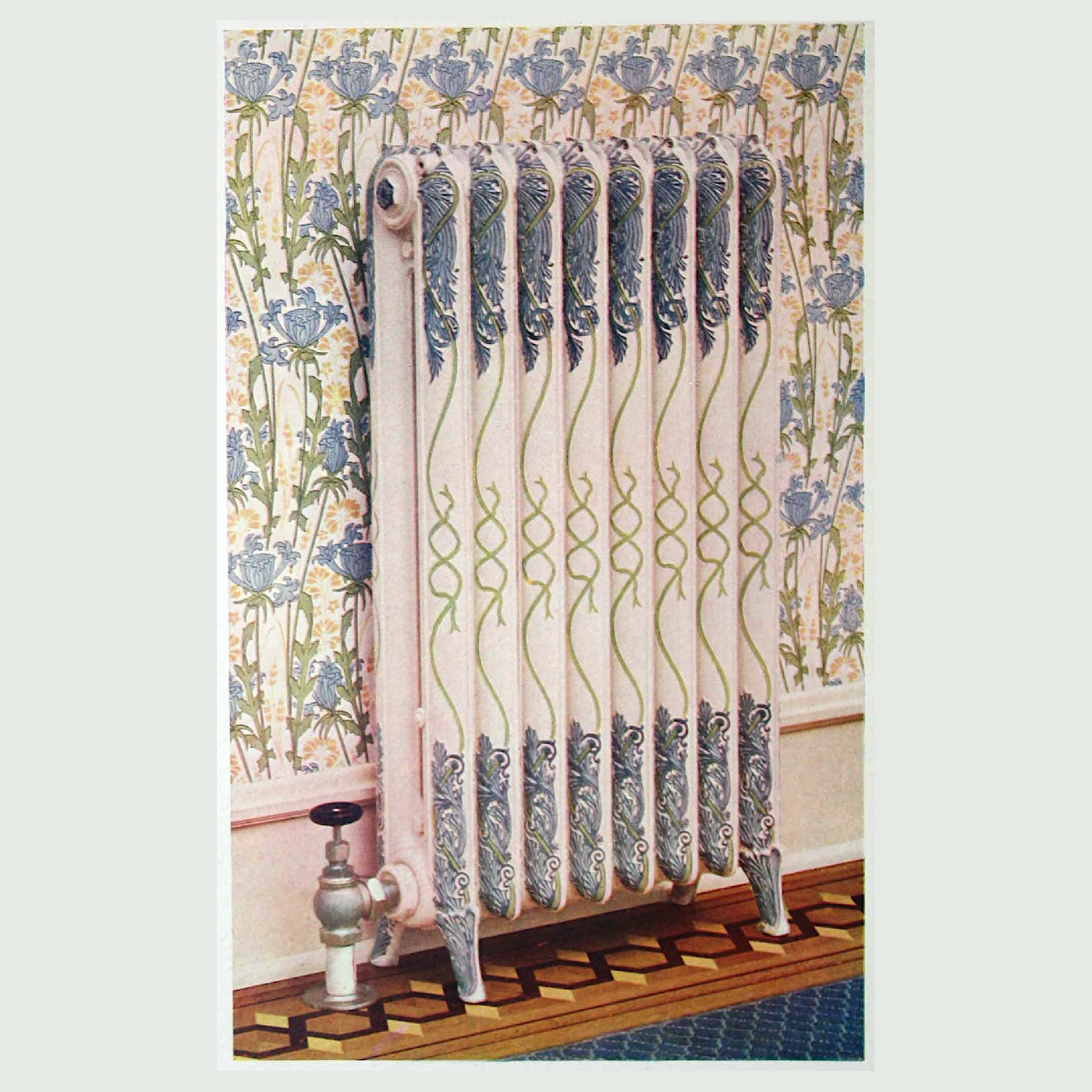


The Radiator: Mostly Convection, and Why Temperature Is Everything
Hot water from a boiler, pumped round a house, gives up its heat through radiators. The cast-iron sectional radiator — sections screwed or pinned together side by side, so one pattern could make any size — came out of the 1870s, the Bundy loop of 1872 among the first.
Two facts about radiators decide whether a heating system works. Their output depends steeply on water temperature, so a radiator sized for a hot boiler gives less than a third of its rating on the cooler water of a heat pump. And despite the name, even a flat face gives only about half its heat as radiation, and a column or finned panel radiator gives the larger part as rising warm air.
This rung works out both, measures a real radiator's output, and gives the fault tree for the radiator that stays cold.
初学者
About 2 hours
说明
1
1
Output against temperature, and the radiation myth
Output against temperature, and the radiation myth
正在加载 Jupyter 笔记本…
2
2
Measure a working radiator
Measure a working radiator
Find the radiator's catalogue rating at ΔT 50 on its label or the maker's sheet, and its dimensions. With the heating running steadily, read with the infrared thermometer: the flow pipe where it enters, the return pipe where it leaves, the top and bottom of the radiator face, and the room air a metre away with the thermometer.
Work out ΔT from the flow and return readings and the room, and put it into the notebook's formula: that is what the radiator is actually giving now. Shiny pipes read low on an infrared thermometer — stick a piece of masking or electrical tape on them and read the tape.
Now hold a strip of tissue a hand's width above the top of the radiator: it lifts in the rising air. Hold it the same distance in front of the face: it barely moves, but your hand still feels the warmth. That is the two halves of the heat, separated.
此步骤所需材料:
 暖气片1 个
所需工具:
 红外测温仪
红外测温仪 厨房温度计
厨房温度计 卷尺
卷尺3
3
Bleed it and balance it
Bleed it and balance it
A radiator that is warm at the bottom and cold at the top is full of air at the top. With the heating off and the system cool, hold a cloth under the bleed valve at the top corner and open it a quarter turn with a radiator key or a flat screwdriver: air hisses out, then water spits. Close it. On a sealed system, top the pressure back up at the boiler afterwards.
A system where the radiators nearest the boiler are hot and the far ones lukewarm needs **balancing**: the lockshield valve on each near radiator is closed down a little so that water is pushed on to the far ones. Balance for a temperature drop across each radiator of about 10 K — the flow and return readings from step 2.
所需工具:
 一字螺丝刀红外测温仪
4
4
A radiator stays cold: find out why
A radiator stays cold: find out why
The usual causes, in the order to check them.
Flow
Loading...
5
5
History and context
History and context
Hot-water and steam heating with pipes and radiating surfaces grew through the nineteenth century; the cast-iron sectional radiator made it cheap enough for ordinary buildings, because one cast section could be assembled into any size. **Nelson H. Bundy's 'Bundy loop' of 1872** is one of the early, much-copied designs. No patent number is asserted here.
Steel panel radiators replaced cast iron in most new work in the twentieth century, and underfloor heating — a very large, very cool radiator — is the logical end of the notebook's first table.
**Honest limits.** Output collapses at low water temperature. A radiator under a window or behind furniture loses much of its convection. And a system is only as good as its balancing: an unbalanced system burns fuel to overheat the rooms nearest the boiler.
相关蓝图
这些蓝图共享知识——技术、材料或原理


CC0 公共领域
此蓝图以 CC0 协议发布。你可以自由复制、修改、分发和使用此作品,无需征得许可。
通过购买蓝图中的产品支持创客,他们将获得 创客佣金 (由供应商设定),或创建此蓝图的新版本并将其作为连接包含在你自己的蓝图中以分享收入。