艺术
美容与健康
工艺
文化与历史
娱乐
环境
食品与饮料
逆向工程
科学
体育
技术
可穿戴设备
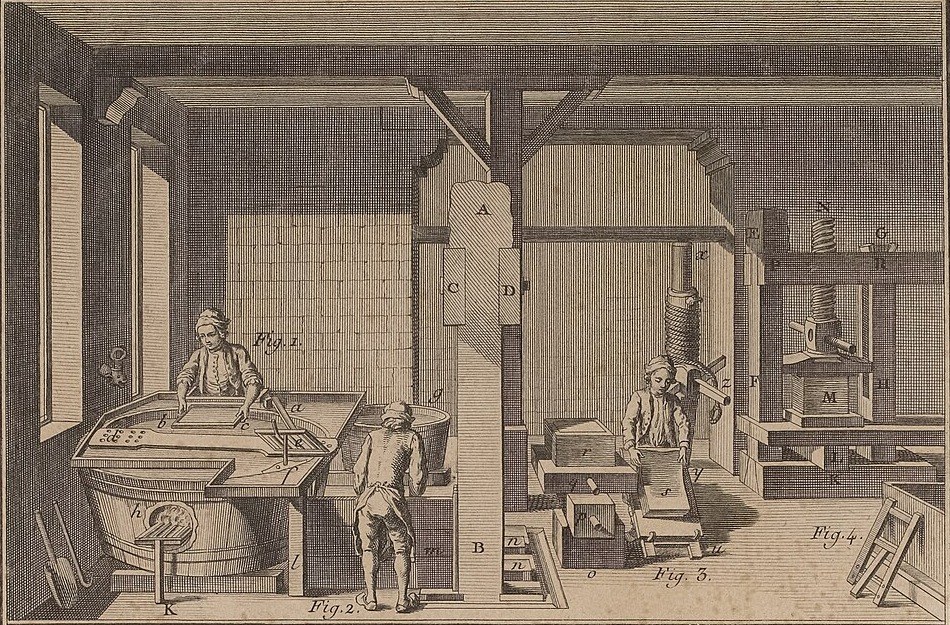


Tracing Paper: Flax Tow Beaten to a Clear Pulp, Ure 1839
Tracing paper is paper you can see through. Andrew Ure (1839) says the best, sometimes called vegetable paper, is made from the refuse of the flax mills, the tow, beaten without fermenting into a semi-transparent paste that dries into a transparent sheet.
The picture: the vat room of an 18th-century paper mill, the vatman forming a sheet and the press behind (Diderot's Encyclopédie).
中级
Two days
说明
1
1
Cut and soak the tow
Cut and soak the tow
Cut flax tow into short lengths and soak it in clean water. Do not let it ferment (Ure).
此步骤所需材料:
 亚麻短麻500 克
 水20 升
水20 升所需工具:
 重型金属剪
重型金属剪 木制大桶
木制大桶2
2
Beat to a clear pulp
Beat to a clear pulp
Beat the wet tow for much longer than for ordinary paper, until it forms a semi-transparent paste (Ure). Ure's mills used the beating engine; by hand it takes hours.
所需工具:
 木槌木制大桶
3
3
Form the sheets
Form the sheets
Dilute the pulp in the vat and form thin, even sheets on the mould, couching them onto felts as for rag paper.
所需工具:
 造纸抄纸帘与帘框
 羊毛毡片木制大桶
4
4
Press and dry with care
Press and dry with care
Press the stack, then dry each sheet in the press between sheets of blotting paper, changing them several times so the thin sheets do not crease, as Ure describes for bank-note paper of the same stuff.
所需工具:
 平压木板(一对)
 吸墨纸
吸墨纸 压纸机(书籍压式)
此蓝图制作
相关蓝图
这些蓝图共享知识——技术、材料或原理
CC0 公共领域
此蓝图以 CC0 协议发布。你可以自由复制、修改、分发和使用此作品,无需征得许可。
通过购买蓝图中的产品支持创客,他们将获得 创客佣金 (由供应商设定),或创建此蓝图的新版本并将其作为连接包含在你自己的蓝图中以分享收入。