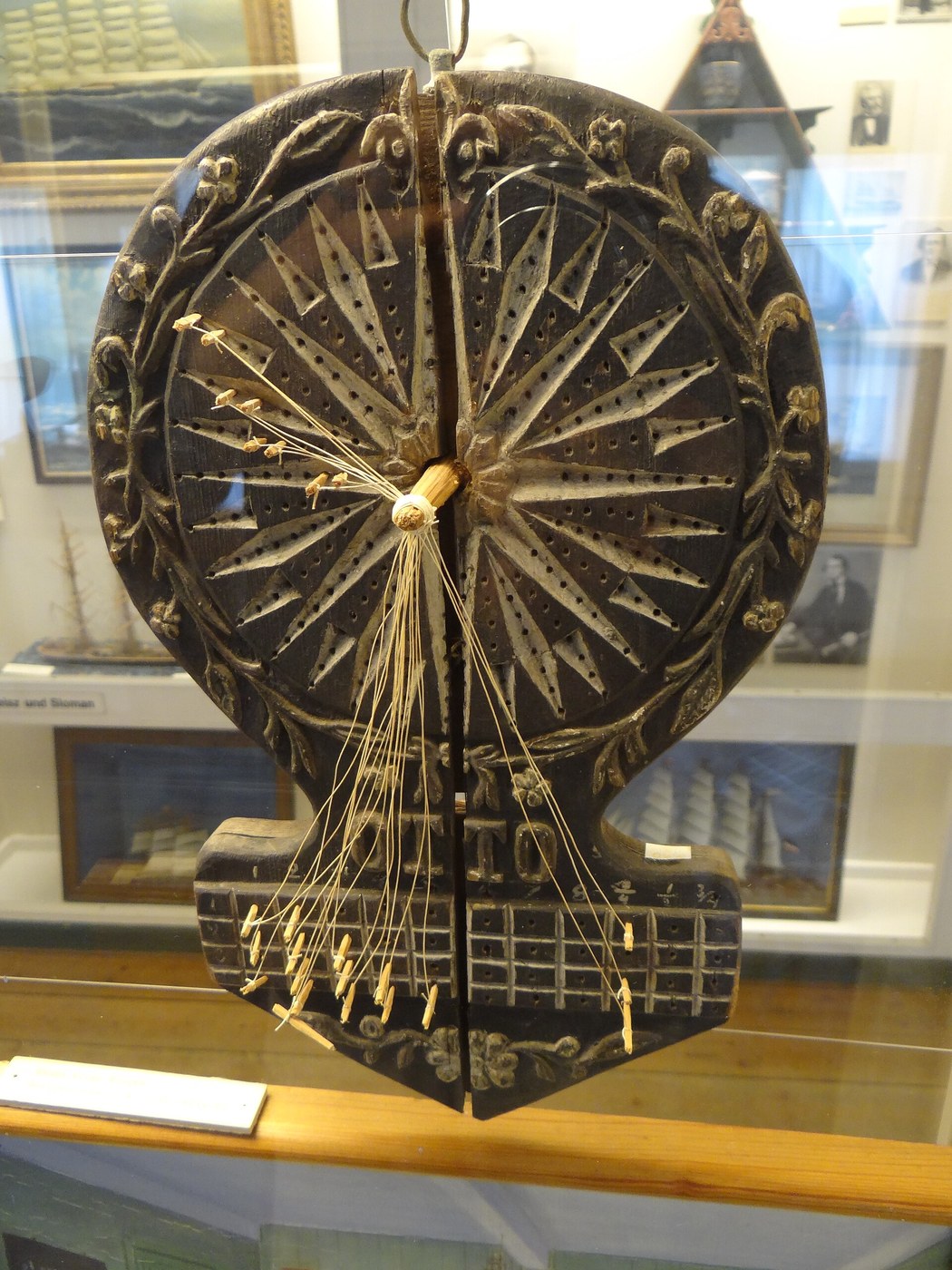


Traverse Board
说明
Lay out the compass rose
Lay out the compass rose
Thirty-two points, not 360 degrees.
- Draw a circle and divide it into 32 equal points — 11.25 degrees each.
- Label them in the traditional order: North, North by East, North-north-east, and so on.
- Drill eight holes along each radius, from centre outward.
此步骤所需材料:
 松木板1 board
 量角器1 个
Add the speed section
Add the speed section
A separate grid below the rose records what the log said.
- Rule a grid of rows and columns beneath the rose.
- Columns are speed in knots; rows are the successive half-hours.
- Drill a hole at each intersection and attach pegs on lanyards.
此步骤所需材料:
 棉线绳1 卷
 木榫条1 个
Keep a watch
Keep a watch
Run a simulated watch and fill the board.
- Every half-hour, peg the heading actually steered.
- Peg the speed from your log reading.
- Work outward from the centre so the sequence is unambiguous.
此步骤所需材料:
 指南针1 个
Work up the average course
Work up the average course
Turn eight headings and eight speeds into one position change.
- For each half-hour, resolve the run into north-south and east-west components.
- Sum each component over the watch.
- The totals give the distance made good and the course made good.
此步骤所需材料:
 石墨铅笔套装1 套
History and context
History and context
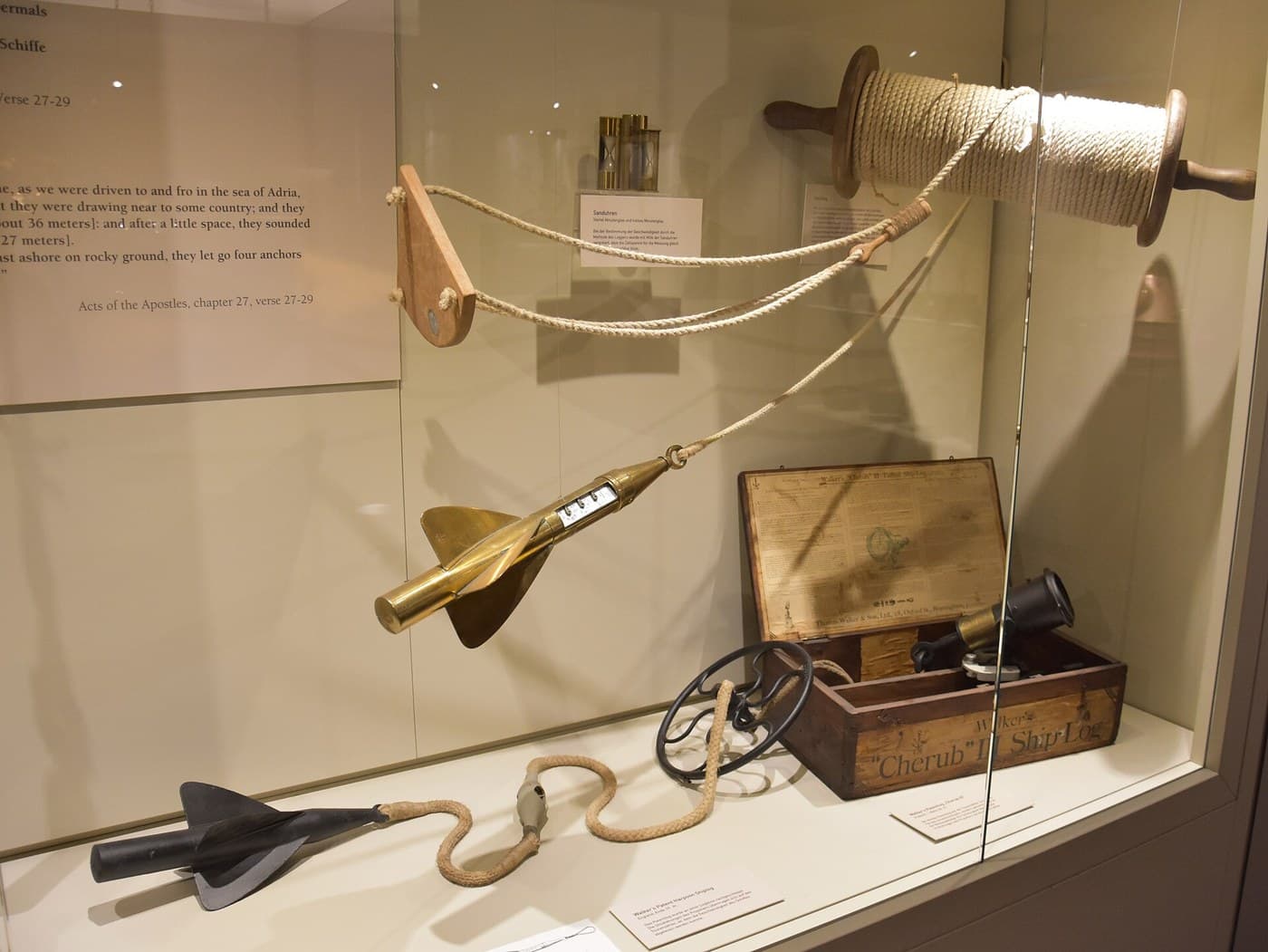
Traverse boards are documented from around the fifteenth century and were standard on European vessels for centuries. They belong to dead reckoning: from a known position, apply course and distance to get the next position. The chip log supplied speed, the compass supplied heading, the glass supplied time, and the board held the record between them.
The design assumes an illiterate user, deliberately. Ordinary seamen were often unable to read, and the helmsman was the only person who knew what had actually been steered. A pegboard lets that person record data accurately without writing, and lets the mate — who could write — read it off at the end of the watch. It is an interface designed around who is actually operating it, which is not a modern idea.
Errors accumulated relentlessly. Leeway from the wind pushing the hull sideways, currents, a helmsman's average error, and the chip log reading slightly low all compound over days out of sight of land. Dead reckoning was good enough for coastal work and terrifying for ocean crossings, which is the whole reason the longitude problem attracted a national prize.
Boxing the compass survives as a phrase, and the 32-point system persists in wind and swell descriptions. The board itself was displaced by the deck log book as literacy became general — and the underlying method, integrating heading and speed over time to update a position, is exactly what an inertial navigation system does now with gyroscopes and a processor.
此蓝图制作

CC0 公共领域
此蓝图以 CC0 协议发布。你可以自由复制、修改、分发和使用此作品,无需征得许可。
通过购买蓝图中的产品支持创客,他们将获得 创客佣金 (由供应商设定),或创建此蓝图的新版本并将其作为连接包含在你自己的蓝图中以分享收入。