艺术
美容与健康
工艺
文化与历史
娱乐
环境
食品与饮料
逆向工程
科学
体育
技术
可穿戴设备
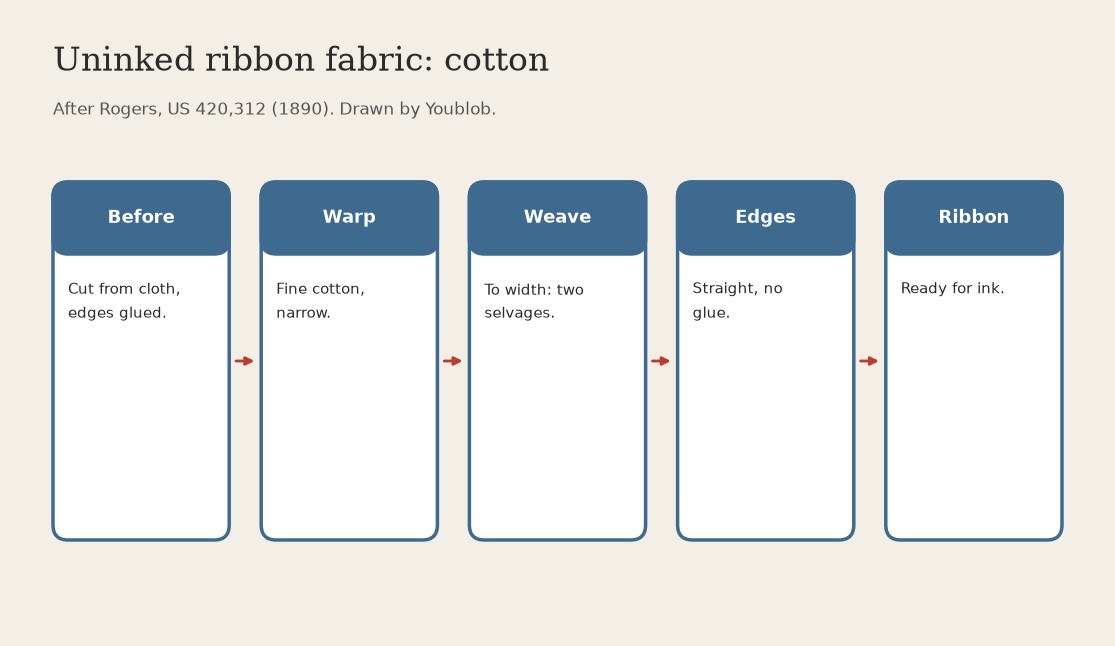


Uninked Ribbon Fabric: Narrow Woven Cotton Strip with Two Selvages (Rogers, US 420,312, 1890)
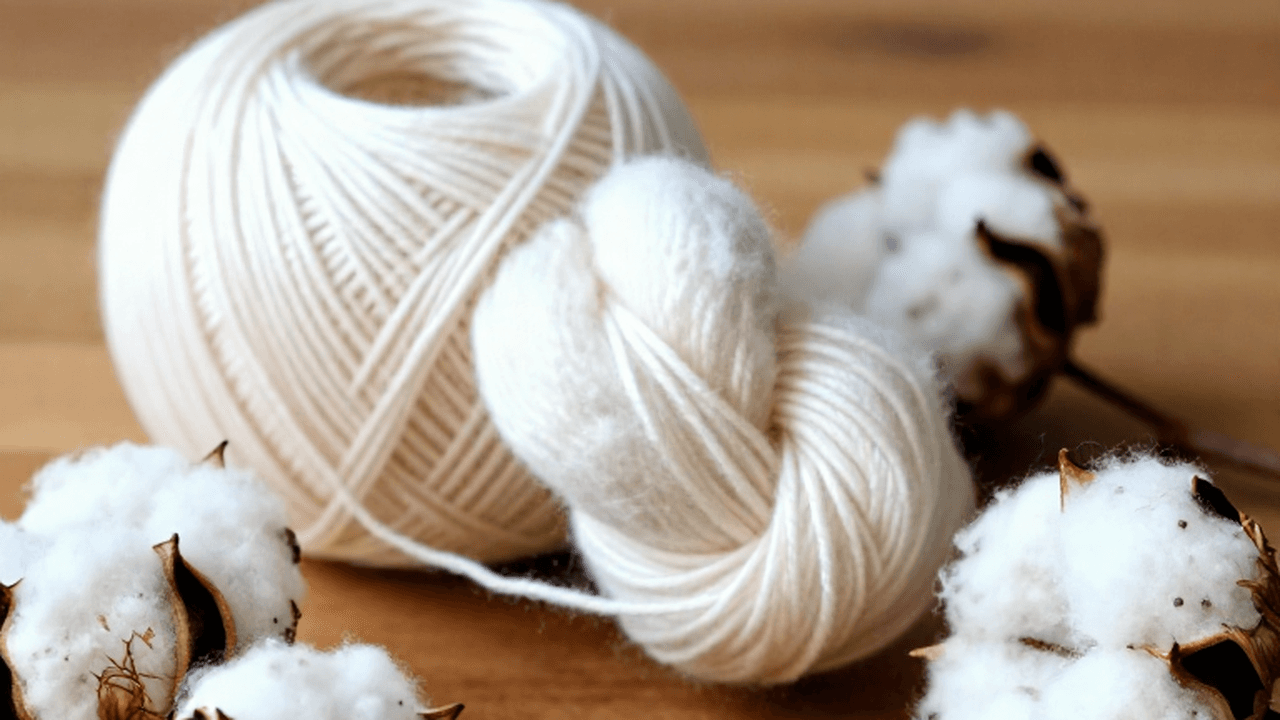
Early typewriter ribbons were cut from a roll of fine cotton cloth and the cut edges glued; the edges came out zigzag and the glue spoiled the inking surface. Rogers wove the ribbon to width instead, so it has two true selvages and needs no glue.
Result: a narrow cotton ribbon with straight woven edges, ready for inking.
Source: Rogers, US 420,312 (1890). He chose cotton over silk: silk cost more, held less ink and sagged in the middle. Not given: width, thread count. Picture drawn by Youblob.
中级
Factory process
说明
1
1
Warp a narrow loom with fine cotton
Warp a narrow loom with fine cotton
Set up the loom for a ribbon of typewriter width, not a wide bolt. Rogers used fine cotton; width and thread count: not given. Ours: a power loom (Rogers built his own machinery).
此步骤所需材料:
 棉线1 as required
所需工具:
 动力织机
2
2
Weave the ribbon to width
Weave the ribbon to width
Weave the strip at its final width so both edges are selvages: straight, unravelling-free, with no cut edge to glue.
此步骤所需材料:
棉线1 as required所需工具:
动力织机3
3
Wind it off for inking
Wind it off for inking
Take the woven ribbon off the loom; its whole surface is free for ink. Rogers then inks it on one side only.
所需工具:
动力织机此蓝图制作

CC0 公共领域
此蓝图以 CC0 协议发布。你可以自由复制、修改、分发和使用此作品,无需征得许可。
通过购买蓝图中的产品支持创客,他们将获得 创客佣金 (由供应商设定),或创建此蓝图的新版本并将其作为连接包含在你自己的蓝图中以分享收入。