艺术
美容与健康
工艺
文化与历史
娱乐
环境
食品与饮料
逆向工程
科学
体育
技术
可穿戴设备
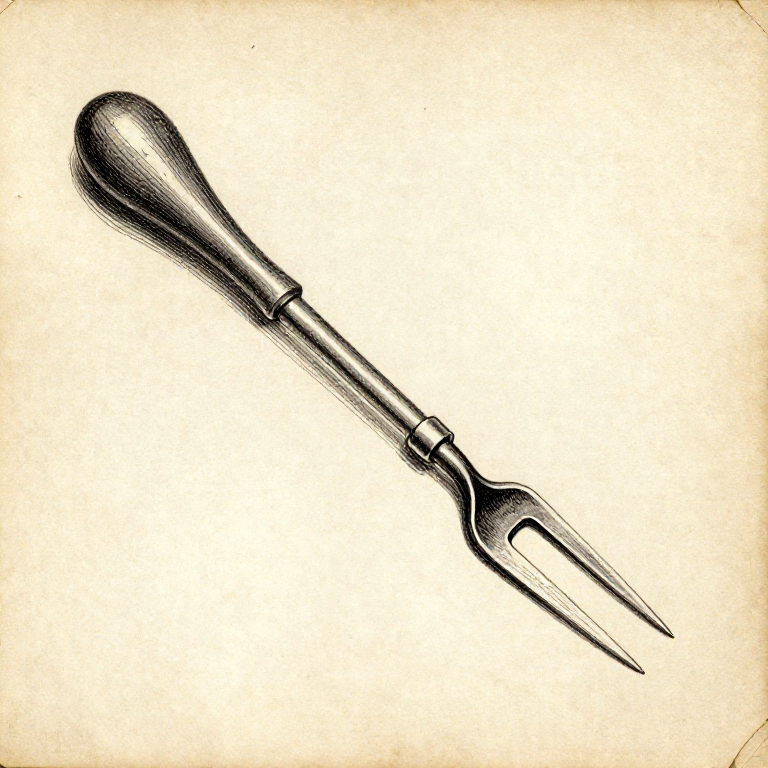


Unpicking: A Normal Step, Not an Admission of Failure
Every experienced sewer unpicks constantly. It is part of the process — you tack, you check, you unpick, you adjust — and treating it as a mistake is what leads people to leave a seam they know is wrong.
The skill is unpicking without damaging the cloth, because a seam ripper driven through fabric leaves a hole that no amount of re-sewing hides.
It is also how you take garments apart to reuse the material, which is worth far more than the technique suggests: an old coat is several square metres of good cloth and a set of patterns.
初学者
2 hours
说明
1
1
The ripper's parts, and which one cuts
The ripper's parts, and which one cuts
A seam ripper has a long sharp prong, a short prong usually tipped with a small ball, and a curved blade in the crook between them. The BLADE cuts; the prongs get it into position.
Slide the long prong under a single stitch, so the thread lies in the crook, and push gently. The blade severs that one thread. The ball on the short prong is there to stop it catching the fabric as it travels.
What it is not is a knife to run along a seam. Doing that cuts threads and fabric indiscriminately, and it is why so many unpicked seams end up with a row of small nicks along them.
此步骤所需材料:
 亚麻布2 个
所需工具:
 拆线器
拆线器 放大目镜
放大目镜2
2
Cut every few stitches, then pull the thread out
Cut every few stitches, then pull the thread out
Cut one stitch every five or six along the seam, from one side. Then turn the work over and pull the thread from the other side — it lifts out in lengths, leaving the fabric untouched.
This is far faster than cutting each stitch, and much safer, because most of the work is pulling rather than cutting. The stitches you did not cut simply come away with the rest.
Work on the side where the stitches are most accessible, and on the seam allowance rather than the visible surface where you can choose. A slip of the blade in the allowance is invisible in the finished piece.
此步骤所需材料:
亚麻布2 个所需工具:
拆线器 裁布剪
裁布剪3
3
Get the lint out, and press the holes closed
Get the lint out, and press the holes closed
Unpicking leaves a row of short thread ends embedded in the weave. Brush them out with a piece of tape or a stiff brush — left in, they show through the new seam as flecks of the old colour.
Then press. The needle holes from the old stitching are still there, and steam plus pressure closes most of them by swelling the fibres back into place. On wool they usually disappear entirely; on tightly woven synthetics they may not.
Check before re-sewing. If the old holes are still obvious, place the new seam a couple of millimetres away rather than through the same perforations — sewing through them weakens the line exactly where it needs to be strong.
此步骤所需材料:
亚麻布2 个 棉布1 个
棉布1 个所需工具:
 铁放大目镜拆线器
4
4
Taking a garment apart for its cloth and its pattern
Taking a garment apart for its cloth and its pattern
Before unpicking anything you intend to reuse, photograph it and label each piece — front, back, left sleeve — with chalk or a pinned note. Once it is a pile of flat shapes, working out which was which is genuinely difficult.
The pieces then ARE a pattern. Press them flat, draw round them, and you have the shapes for a garment that already fitted someone — which is far more useful than a commercial pattern in a nominal size.
Cut around worn areas rather than discarding a whole piece. Elbows, cuffs and collars wear out while the back and skirts of a garment are often barely touched, and that is where the reusable cloth is.
此步骤所需材料:
亚麻布2 个所需工具:
拆线器 裁缝划粉裁布剪
相关蓝图
这些蓝图共享知识——技术、材料或原理
CC0 公共领域
此蓝图以 CC0 协议发布。你可以自由复制、修改、分发和使用此作品,无需征得许可。
通过购买蓝图中的产品支持创客,他们将获得 创客佣金 (由供应商设定),或创建此蓝图的新版本并将其作为连接包含在你自己的蓝图中以分享收入。