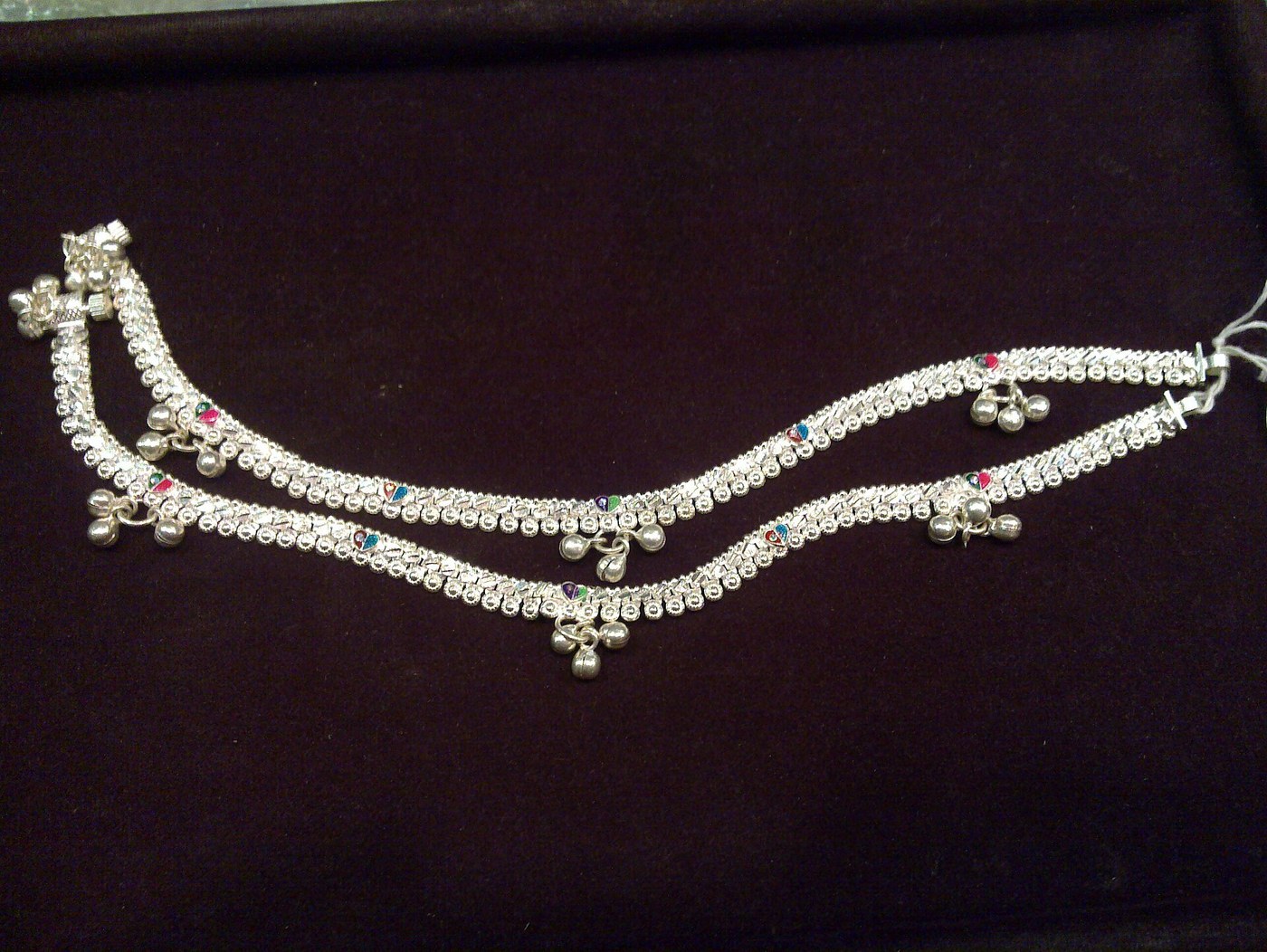

వెండి పట్టీలు — గజ్జెల అందె
అందె వెండితోనే ఎందుకు చేస్తారు? కారణం ఒకటే కాదు. వెండి మెత్తగా ఉంటుంది, కాలికి తగిలినా గీసుకోదు. తుప్పు పట్టదు. ఆపైన — ఇదే ముఖ్యం — వెండి బాగా మోగుతుంది.
అందెకు గజ్జెలు కడతారు. నడిచినప్పుడు అవి మోగుతాయి. ఇంట్లో ఎవరు ఎక్కడ ఉన్నారో శబ్దంతో తెలుస్తుంది — ఇది అలంకారం మాత్రమే కాదు, ఒక సంకేతం కూడా.
ఇక్కడ ఒక విషయం గుర్తుంచుకోండి. మన సంప్రదాయంలో బంగారం నడుము పైన, వెండి నడుము కింద అని ఒక ఆచారం ఉంది. అందుకే కాలికి ఎప్పుడూ వెండే. ఇది ప్రాంతాన్ని బట్టి మారుతుంది, కానీ చాలా చోట్ల ఇదే నియమం.
说明
కాలి కొలత తీసుకోండి
కాలి కొలత తీసుకోండి
చీలమండ చుట్టూ కొలవండి. దానికి 20 మిల్లీమీటర్లు కలపండి. అందె వదులుగా ఉండాలి — బిగుతుగా ఉంటే నొప్పి, మోగదు కూడా.
వెండి తీగను కాల్చి మెత్తబరచండి
వెండి తీగను కాల్చి మెత్తబరచండి
16 గేజ్ వెండి తీగను మసక వెలుతురులో ఎర్రగా కాలేవరకు వేడి చేయండి — 600 నుంచి 650 డిగ్రీలు. పది సెకన్లు గాలిలో చల్లారనిచ్చి, తర్వాత నీళ్లలో ముంచండి.
此步骤所需材料:
 925 银圆线 16 号0.5 米
所需工具:
 丙烷喷灯
丙烷喷灯 耐火砖
耐火砖ఎర్రగా ఉన్నప్పుడే నీళ్లలో ముంచవద్దు
ఎర్రగా ఉన్నప్పుడే నీళ్లలో ముంచవద్దు
ఎర్రగా ఉండగానే నీళ్లలో వేస్తే వెండి పగిలిపోతుంది. కాస్త చల్లారాక మాత్రమే ముంచాలి.
నిమ్మ ఉప్పు నీళ్లలో శుభ్రం చేయండి
నిమ్మ ఉప్పు నీళ్లలో శుభ్రం చేయండి
ఒక భాగం సిట్రిక్ యాసిడ్, ఐదు భాగాల నీళ్లు. అందులో ఐదు నిమిషాలు ఉంచండి. కాల్చినప్పుడు వచ్చిన నల్లటి పొర పోతుంది.
此步骤所需材料:
 柠檬酸100 克
గజ్జెలకు రెండు అర్ధగోళాలు చేయండి
గజ్జెలకు రెండు అర్ధగోళాలు చేయండి
వెండి రేకు నుంచి 8 మిల్లీమీటర్ల గుండ్రని ముక్కలు కోసి, గుంట ఉన్న దిమ్మెలో కొట్టి గిన్నెలా చేయండి. ఒక్కో గజ్జెకు రెండు.
此步骤所需材料:
 925 银板 0.5 毫米1 张
所需工具:
 珠宝锯
珠宝锯లోపల చిన్న గుండు వేయండి
లోపల చిన్న గుండు వేయండి
ఒక అర్ధగోళంలో చిన్న ఉక్కు గుండు వేయండి. ఇదే లోపల కొట్టుకుని శబ్దం చేస్తుంది.
此步骤所需材料:
 滚珠轴承12 个
గజ్జెకు కోత పెట్టండి
గజ్జెకు కోత పెట్టండి
రెండు అర్ధగోళాలు కలిపే ముందు, ఒకదానిలో సన్నని కోత పెట్టండి. మూసిన గజ్జె మోగదు — శబ్దం బయటికి రావాలంటే కోత తప్పనిసరి.
所需工具:
 什锦锉套装
什锦锉套装రెండు భాగాలు అతికించండి
రెండు భాగాలు అతికించండి
రెండు అర్ధగోళాలను కలిపి వెండి కరుగుతో అతికించండి. తక్కువ వేడితో పని చేయండి — ఎక్కువైతే గజ్జె కరిగిపోతుంది.
此步骤所需材料:
 银焊料套装(低温/中温/高温)1 套
 焊膏助焊剂(松香基)1 个
所需工具:
丙烷喷灯పన్నెండు గజ్జెలు చేయండి
పన్నెండు గజ్జెలు చేయండి
ఇలాగే పన్నెండు గజ్జెలు చేయండి. ఒక్కొక్కటి కాస్త వేరుగా మోగుతుంది — అదే బాగుంటుంది. అన్నీ ఒకేలా మోగితే శబ్దం చప్పగా ఉంటుంది.
తీగను వంచి అందె చేయండి
తీగను వంచి అందె చేయండి
తీగను గుండ్రంగా వంచండి. కొక్కెం, రింగు పెట్టి తెరుచుకునేలా చేయండి. కాలికి పైనుంచి తొడగలేము కాబట్టి తెరుచుకోవడం అవసరం.
所需工具:
 首饰钳套装
首饰钳套装గజ్జెలను సమానంగా కట్టండి
గజ్జెలను సమానంగా కట్టండి
చిన్న వెండి రింగులతో గజ్జెలను తీగకు సమాన దూరంలో కట్టండి. ఒకచోట గుమిగూడితే బరువు ఒకవైపు పడి అందె తిరిగిపోతుంది.
మోగించి చూడండి
మోగించి చూడండి
కాలికి పెట్టుకుని నడవండి. ప్రతి అడుగుకూ శబ్దం రావాలి. రాకపోతే గజ్జె బిగుతుగా కట్టి ఉంది — రింగు కాస్త వదులు చేయండి.
చరిత్ర మరియు నేపథ్యం
చరిత్ర మరియు నేపథ్యం
వెండి ఎందుకు, బంగారం ఎందుకు కాదు. భారతదేశంలోని చాలా ప్రాంతాల్లో ఒక ఆచారం ఉంది — బంగారం నడుము పైన ధరించాలి, వెండి నడుము కింద. అందుకే కాలి ఆభరణాలు దాదాపు ఎప్పుడూ వెండివే. దీనికి కారణాలు ప్రాంతాన్ని బట్టి వేర్వేరుగా చెబుతారు, కాబట్టి ఒకే కారణం ఖచ్చితమని చెప్పడం సరికాదు. కానీ ఆచారం మాత్రం విస్తృతంగా ఉంది.
శబ్దమే ముఖ్యం. గజ్జెల అందె కేవలం అలంకారం కాదు. నడిచేటప్పుడు వచ్చే శబ్దం ఇంట్లో ఎవరు ఎక్కడ ఉన్నారో తెలియజేస్తుంది. కొత్త కోడలు ఇంట్లోకి వచ్చినప్పుడు ఆమె కదలికలు వినిపించాలనే ఉద్దేశం ఉందని కొందరు చెబుతారు; పిల్లలకు కట్టడం వెనుక కారణం స్పష్టంగా ఇదే — శబ్దం వినిపిస్తే పిల్లవాడు ఎక్కడ ఉన్నాడో తెలుస్తుంది.
కోత లేకపోతే శబ్దం లేదు. ఏడో అడుగు చాలా ముఖ్యం. పూర్తిగా మూసిన గుండ్రటి గజ్జె లోపల గుండు కొట్టుకున్నా శబ్దం బయటికి రాదు. కోత ఉంటేనే గాలి కంపించి శబ్దం వినిపిస్తుంది. ప్రపంచవ్యాప్తంగా అన్ని గంటలు, గజ్జెలు ఇదే సూత్రంతో పని చేస్తాయి.
వెండి బాగా మోగడానికి కారణం. లోహాల్లో వెండికి కంపనం ఎక్కువసేపు నిలిచే గుణం ఉంది. అందుకే గంటలు, గజ్జెలు వెండితో చేస్తే స్వరం స్పష్టంగా, ఎక్కువసేపు వినిపిస్తుంది. అలంకారం, ఆచారం, శాస్త్రం — మూడూ ఒకే వైపు చూపిస్తున్నాయి.
ఎంతో పాతది. కాలి ఆభరణాలు సింధు నాగరికత కాలం నాటి శిల్పాల్లో కనిపిస్తాయి. ఆకారం, ధరించే విధానం శతాబ్దాలుగా పెద్దగా మారలేదు — ఎందుకంటే సమస్య మారలేదు: కాలికి తగిలేలా మెత్తగా ఉండాలి, మోగాలి, తుప్పు పట్టకూడదు.
材料
6- 0.5 米占位符
- 100 克占位符
- 占位符
- 占位符
- 占位符
- 1 个占位符
此蓝图制作
CC0 公共领域
此蓝图以 CC0 协议发布。你可以自由复制、修改、分发和使用此作品,无需征得许可。
通过购买蓝图中的产品支持创客,他们将获得 创客佣金 (由供应商设定),或创建此蓝图的新版本并将其作为连接包含在你自己的蓝图中以分享收入。