艺术
美容与健康
工艺
文化与历史
娱乐
环境
食品与饮料
逆向工程
科学
体育
技术
可穿戴设备


What a Glue Joint Is: Why a Good One Breaks Everywhere Except the Glue
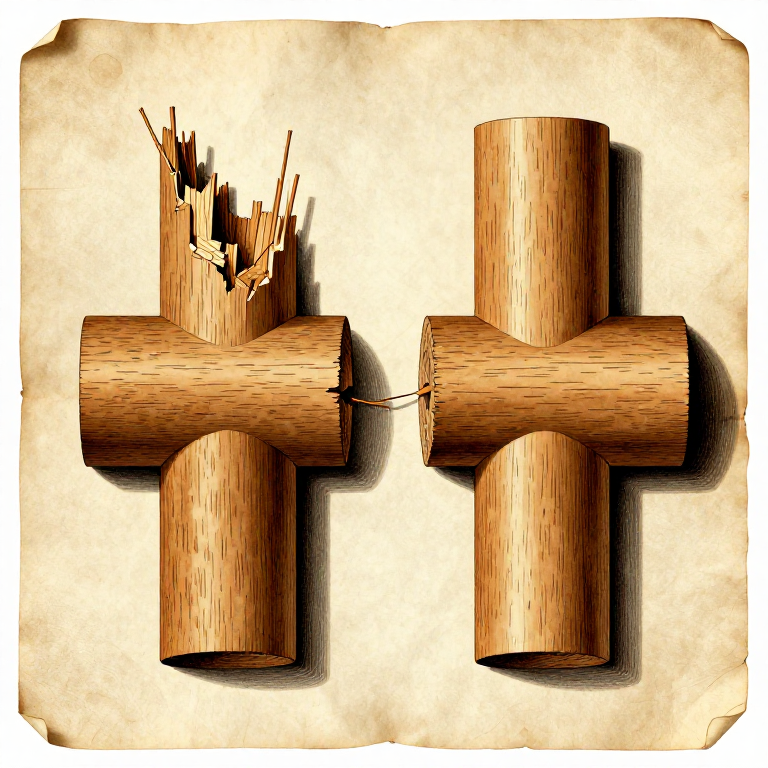
A properly glued wood joint is stronger than the wood beside it. Break one and the fracture runs through the timber, not along the glue line — there are wood fibres stuck to both faces.
That single test tells you everything. If a joint fails cleanly at the glue line, leaving two bare surfaces, the glue never bonded — and the cause is almost always surface preparation, the wrong adhesive, or a starved joint, in that order.
264 published blueprints on Youblob use clamps and 193 use an adhesive. Not one explained how to make the joint hold. This is the first of eight rungs.
初学者
2 hours
说明
1
1
Adhesion and cohesion are two different failures
Adhesion and cohesion are two different failures
ADHESION is the glue sticking to the material. COHESION is the glue sticking to itself. A joint can fail either way and the break tells you which.
Glue left on both faces after a break means the glue tore internally — a cohesive failure, so the adhesive was too weak or not fully cured. Bare surfaces with the glue all on one side, or none at all, means an adhesive failure: it never gripped, and that is a preparation problem.
Wood fibres on both faces means neither failed — the WOOD did, which is the result you want. Break a test joint deliberately before committing to a real one; it is five minutes and it answers a question guessing cannot.
此步骤所需材料:
 干燥软木板2 个
 PVA 木工胶1 个
所需工具:
 C 形夹
C 形夹 放大目镜
放大目镜2
2
Most wood glue needs a thin film, not a thick one
Most wood glue needs a thin film, not a thick one
PVA and hide glue are strongest as a very thin layer between two surfaces that are already touching. They have almost no gap-filling ability: a thick glue line is weaker than a thin one, not stronger.
So the strength comes from the FIT. Two faces that meet cleanly along their whole area, with a film you can barely see, give a joint stronger than the timber. Two faces with a visible gap filled with glue give a joint that will fail at the gap.
Epoxy and polyurethane are the exceptions and that is exactly what they are for — the adhesive rung covers when the gap is unavoidable and a gap-filling glue is the right answer rather than an excuse.
此步骤所需材料:
干燥软木板2 个PVA 木工胶1 个 双组分环氧胶1 个
所需工具:
 涂胶刷
涂胶刷 直尺规
直尺规3
3
End grain drinks glue, and it is the weakest joint there is
End grain drinks glue, and it is the weakest joint there is
Wood fibres are tubes. Cut across them and you have thousands of open straws that wick the glue away from the surface, leaving the joint starved — and even when fed properly, an end-grain butt joint is a fraction of the strength of a long-grain one.
The fix is SIZING: brush on a thin coat of diluted glue, let it soak in and go tacky, then glue normally. The straws are already full, so the second coat stays where it is needed.
But the real answer is usually to change the joint. A mortise and tenon, a dovetail or a spline converts an end-grain connection into long-grain contact — which is precisely why those joints exist, and why the published joinery blueprints are shaped the way they are.
此步骤所需材料:
 硬木板2 个PVA 木工胶1 个
所需工具:
涂胶刷放大目镜4
4
Test the joint by breaking it
Test the joint by breaking it
Glue two offcuts of the same timber with the same adhesive, clamp as you intend to, leave it as long as you intend to, then put it in the vice and break it.
Look at the broken faces. Wood on both sides means your whole process is sound and you can proceed with confidence. Bare glue line means something in the process is wrong and you have found out on a scrap rather than on the work.
Do this whenever anything changes — a new glue, an unfamiliar timber, a cold workshop, a joint you have not made before. It is the only direct evidence available, and every other check in this batch is a proxy for it.
此步骤所需材料:
硬木板2 个PVA 木工胶1 个所需工具:
 重型台钳放大目镜C 形夹
相关蓝图
这些蓝图共享知识——技术、材料或原理


CC0 公共领域
此蓝图以 CC0 协议发布。你可以自由复制、修改、分发和使用此作品,无需征得许可。
通过购买蓝图中的产品支持创客,他们将获得 创客佣金 (由供应商设定),或创建此蓝图的新版本并将其作为连接包含在你自己的蓝图中以分享收入。