艺术
美容与健康
工艺
文化与历史
娱乐
环境
食品与饮料
逆向工程
科学
体育
技术
可穿戴设备
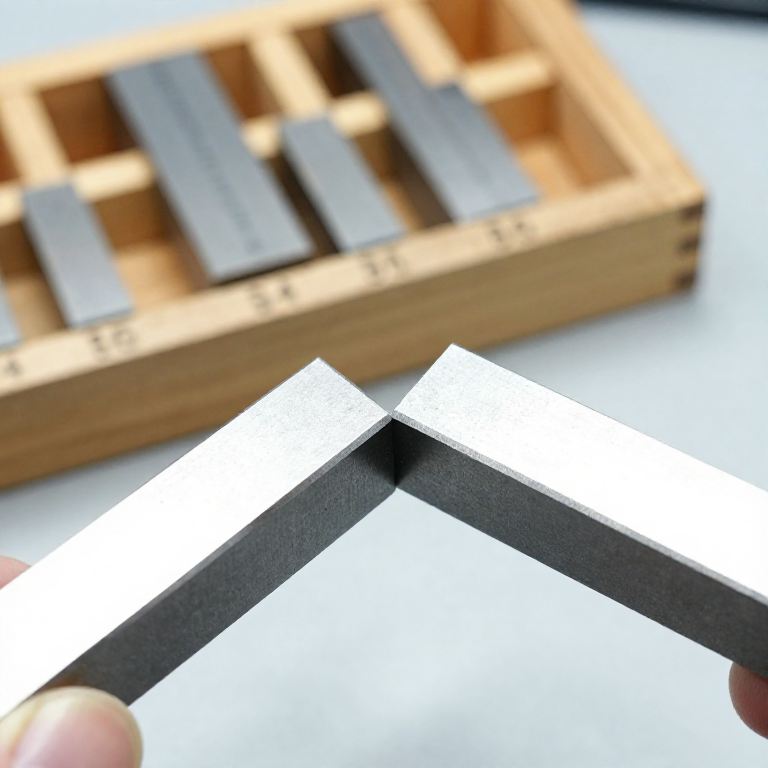


Wringing Gauge Blocks: Building Any Length from a Box of Them
Gauge blocks are the reason any of the other numbers mean anything. A micrometer tells you what it thinks; a stack of gauge blocks tells you what is true, and is how you find out whether the micrometer is lying.
The remarkable part is that they combine. Slide two lapped blocks together with a small twist and they stick hard enough to lift the box, and the pair behaves as one block of the summed length — the joint contributes so little that it is normally treated as nothing at all. A boxed set of 81 or so blocks therefore becomes tens of thousands of lengths.
The blueprint for the blocks themselves is already published here. This is what you do with them.
中级
3 hours
说明
1
1
Clean is not a suggestion
Clean is not a suggestion
Wipe each block with a lint-free cloth and a little isopropyl alcohol, and handle them as briefly as you can. Do not touch the lapped faces with bare fingers if you can avoid it.
A fingerprint is a few micrometres of oil and salt. On a block whose length is certified to a fraction of a micrometre, that is a large error sitting directly in the measuring path — and the salt will etch the surface within days, which turns a temporary error into a permanent one.
A trace of oil is wanted for wringing; a fingerprint is not the same thing. The difference is a uniform film you put there on purpose versus a lumpy one you left by accident.
此步骤所需材料:
 99% 异丙醇1 个
所需工具:
 陶瓷量块组
陶瓷量块组 棉布
棉布2
2
Wring two blocks together
Wring two blocks together
Lay one block across the other at right angles so only a small area touches, press lightly, and rotate one onto the other while keeping the pressure up. You will feel it take hold.
Done properly the pair will not fall apart under its own weight, and you can pick the box up by the top block. If it slides without gripping, or grips in one spot and rocks, take it apart and clean both faces again — a bad wring is dirt nine times out of ten.
Never leave blocks wrung together for long. The same forces that hold them will, given days, make them very difficult to separate, and forcing them apart damages the faces. Slide them apart the way you slid them together, never prise.
所需工具:
陶瓷量块组棉布3
3
Build a stack with as few blocks as possible
Build a stack with as few blocks as possible
正在加载 Jupyter 笔记本…
所需工具:
陶瓷量块组 计算器
计算器4
4
Use the stack to find out whether your micrometer is honest
Use the stack to find out whether your micrometer is honest
Build stacks at four or five sizes spread across the micrometer's range — near zero, a quarter, a half, three quarters and full — and measure each on the ratchet exactly as you would measure work. Record the error at each size, with its sign.
What you now have is a CALIBRATION, not a pass or fail. A micrometer reading consistently 0.004 mm large across the range is a perfectly useful instrument with a known offset. One that reads correct at zero, small in the middle and large at the top has a worn thread and is useful only for comparisons.
Write the errors on a card and keep it with the micrometer. An uncalibrated instrument is not wrong — it is unknown, which is worse, because unknown reads exactly like right.
所需工具:
陶瓷量块组 千分尺
千分尺5
5
Put them away properly
Put them away properly
Separate every stack, wipe each block, apply a thin film of the oil supplied with the set, and return each to its own place in the case.
Steel blocks rust, and a rusted lapped face cannot be recovered by cleaning. Ceramic blocks do not rust and are far more forgiving of a wet workshop, which is most of the reason to own them.
Returning each to its own numbered recess is not tidiness. It is how you notice one is missing before it turns up under a machine, and how the next person finds the block the algorithm asked for without reading every label in the box.
所需工具:
陶瓷量块组棉布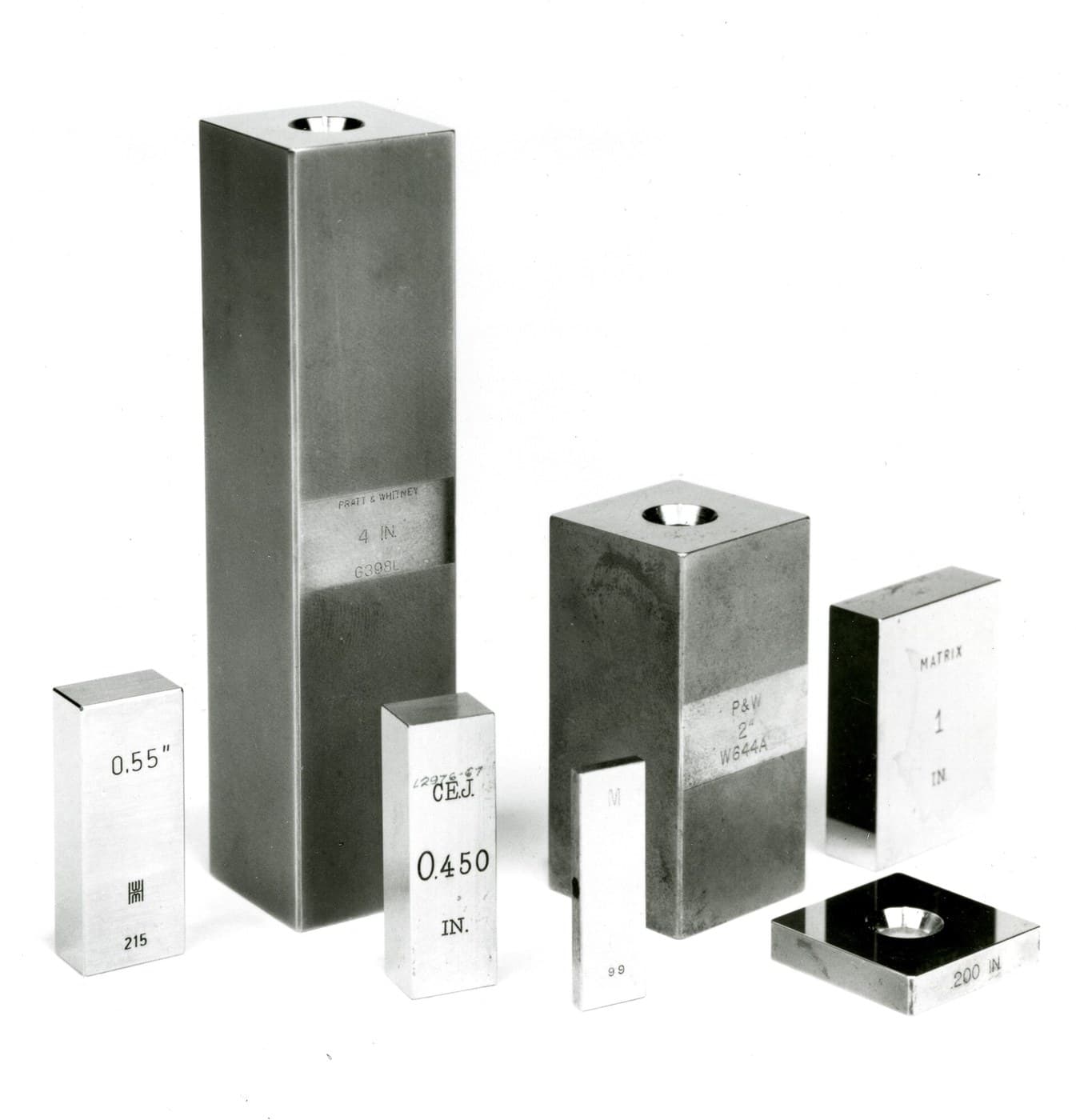

CC0 公共领域
此蓝图以 CC0 协议发布。你可以自由复制、修改、分发和使用此作品,无需征得许可。
通过购买蓝图中的产品支持创客,他们将获得 创客佣金 (由供应商设定),或创建此蓝图的新版本并将其作为连接包含在你自己的蓝图中以分享收入。