KUNST
SCHÖNHEIT & WELLNESS
HANDWERK
KULTUR & GESCHICHTE
UNTERHALTUNG
UMFELD
ESSEN & GETRÄNKE
REVERSE ENGINEERING
WISSENSCHAFTEN
SPORT
TECHNOLOGIE
WEARABLES
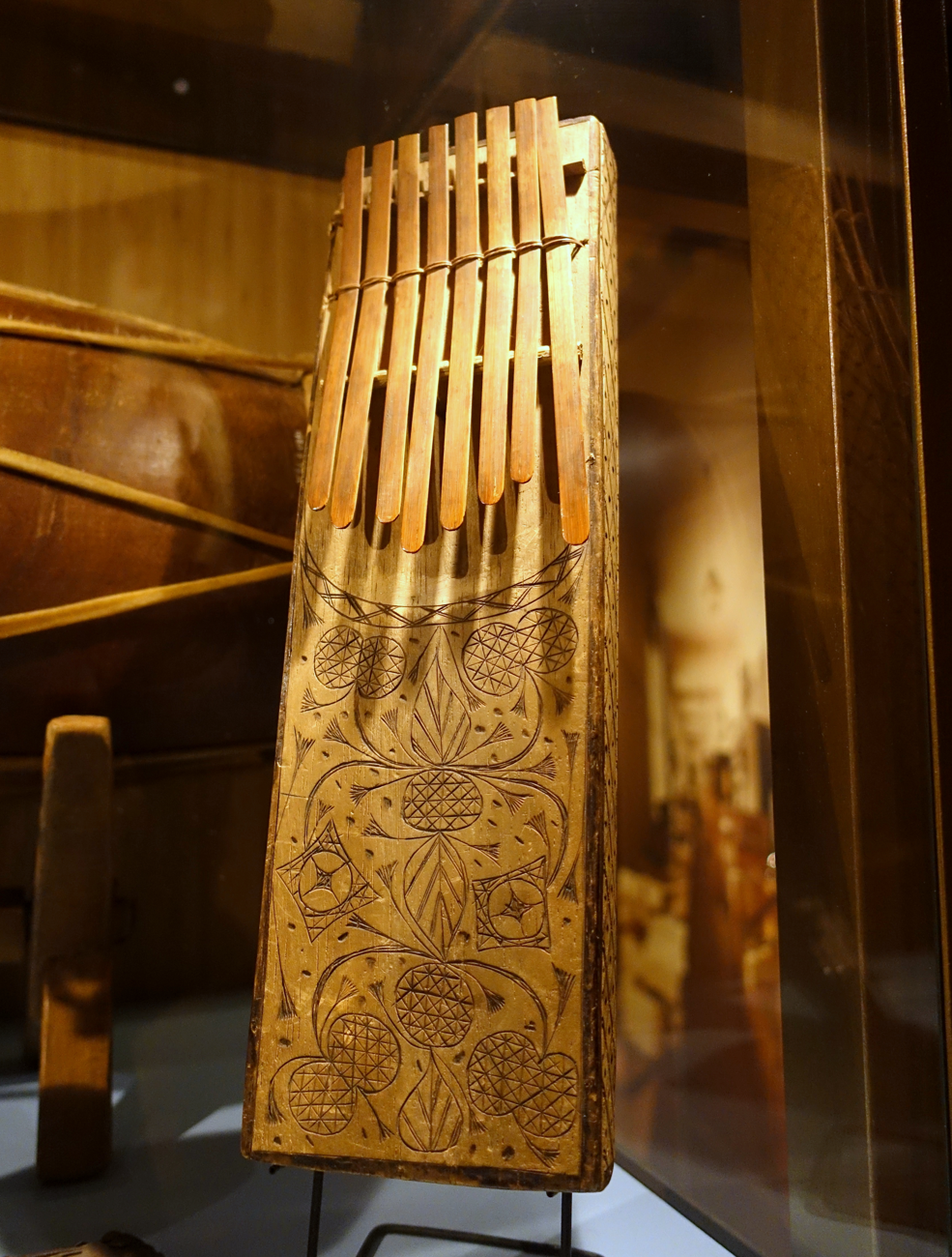
Etnografiska museet, Stockholm · CC0 1.0 (Public Domain Dedication)


Making an Mbira — The African Thumb Piano
Make an mbira: a hardwood board fitted with a row of tuned metal tongues you pluck with your thumbs, often set in a gourd with rattling buzzers. Cut and tune the metal keys, mount them over a bridge, and play. A buildable project in the plucked metal tongue — many jaw-harp tongues made into a keyboard.
Fortgeschritten
A few hours over a couple of sessions
Anweisungen
1
1
Tongues you pluck with your thumbs
Tongues you pluck with your thumbs
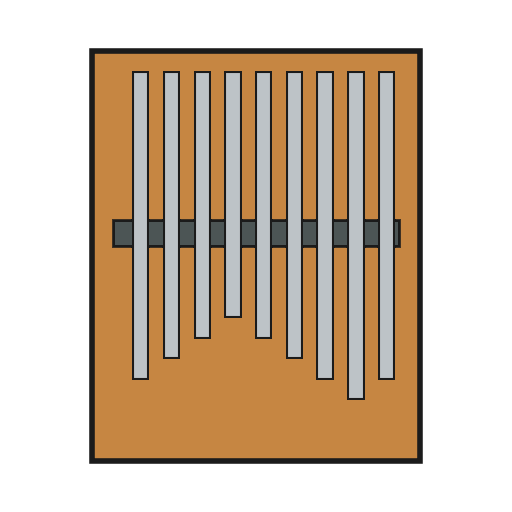
The mbira is a hardwood board carrying a row of tuned metal tongues (keys). You press each key down with a thumb and let it spring back, plucking out the note — many springy tongues laid out like a keyboard.
2
2
Prepare the soundboard
Prepare the soundboard
Shape a flat hardwood soundboard — the harder and more resonant the wood, the brighter the ring.
Materialien für diesen Schritt:
 Hartholzbrett1 Stück
Benötigte Werkzeuge:
 Sloyd-Schnitzmesser
3
3
Make the metal keys
Make the metal keys
Cut and flatten springy steel into a set of thin tongues (keys) of graduated length — longer keys for low notes, shorter for high. File the tips smooth.
Materialien für diesen Schritt:
 Federstahlband2 Stück
Benötigte Werkzeuge:
 Metallfeile
4
4
Build the bridge and pressure bar
Build the bridge and pressure bar
Fix a hardwood bridge across the board and a straight pressure bar just above it. The keys clamp between them, held down at one end and free to spring at the other.
Materialien für diesen Schritt:
 Federstahldraht 0,032 Zoll1 Stück
Benötigte Werkzeuge:
 Ahle
Ahle5
5
Mount and tune the keys
Mount and tune the keys
Slide each key under the pressure bar. Push a key IN (shorter free end) to raise its note, or OUT (longer free end) to lower it — that is how you tune an mbira, by sliding not filing.
6
6
Add a gourd and buzzers
Add a gourd and buzzers
Rest the board in a big hollow gourd to make it louder, and fix loose bottle-caps or shells to the board so they buzz — the shimmering rattle is part of the mbira's voice.
Materialien für diesen Schritt:
 Reifer Flaschenkürbis1 Stück
7
7
Play with your thumbs
Play with your thumbs
Hold the mbira in both hands and pluck the keys downward with your thumbs (and one key up with a finger), weaving the interlocking patterns of Shona music.
8
8
Compendium — the plucked tongue, multiplied
Compendium — the plucked tongue, multiplied
The mbira is a lamellophone: an instrument of thin tongues (lamellae) fixed at one end and free to vibrate at the other. Pluck a tongue and it springs back and forth at a pitch set by how long, thick and stiff its free part is — short, stiff tongues buzz fast and sound high; long ones vibrate slowly and sound low. That is exactly the tongue of the jaw harp, only here there is a whole tuned SET of them side by side, so instead of one drone you have a keyboard you can play melodies and interlocking parts on. You tune each key not by filing but by sliding it under the pressure bar to lengthen or shorten its free end — longer is lower, shorter is higher. The hardwood board and the gourd it sits in amplify the quiet tongues, and loose buzzers add the shimmering rattle (a deliberate mirliton) that Shona players prize. Made across southern Africa for well over a thousand years — the Shona mbira, the kalimba, the many 'thumb pianos' — it is the ancestor of the modern kalimba, and its cousin is the free reed of the sheng, a tongue set vibrating by breath rather than by a thumb.
Materialien
4- 1 StückPlatzhalter
- 2 StückPlatzhalter
- 1 StückPlatzhalter
- 1 StückPlatzhalter
Benötigte Werkzeuge
3- Platzhalter
- Platzhalter
- Platzhalter
Dieser Bauplan stellt her
Verwandte Blueprints
Diese Blueprints teilen Wissen — Techniken, Materialien oder Prinzipien
CC0 Gemeinfrei
Dieser Blueprint ist unter CC0 veröffentlicht. Sie dürfen dieses Werk für jeden Zweck frei kopieren, ändern, verbreiten und verwenden, ohne um Erlaubnis zu fragen.
Unterstützen Sie den Maker, indem Sie Produkte über seinen Blueprint kaufen, wo er eine Maker-Provision von Anbietern festgelegt, verdient. Oder erstellen Sie eine neue Iteration dieses Blueprints und verbinden Sie ihn in Ihrem eigenen Blueprint, um Einnahmen zu teilen.