KUNST
SCHÖNHEIT & WELLNESS
HANDWERK
KULTUR & GESCHICHTE
UNTERHALTUNG
UMFELD
ESSEN & GETRÄNKE
REVERSE ENGINEERING
WISSENSCHAFTEN
SPORT
TECHNOLOGIE
WEARABLES


Perfect Numbers — Find the Numbers That Equal Their Own Parts
A hands-on maths project: take 6 counters, find every way to divide them into equal groups, and discover that the group-sizes add back up to 6 -- a 'perfect' number. A Python cell checks 6 and 28, and a compendium reaches a 2,300-year-old unsolved mystery.
Anfänger
30 minutes
Anweisungen
1
1
A number equal to its parts
A number equal to its parts
Some numbers have a magical property: add up all the smaller numbers that divide them, and you get the number back. The Greeks called these 'perfect'. You will find one with a handful of counters.
2
2
Lay out six counters
Lay out six counters
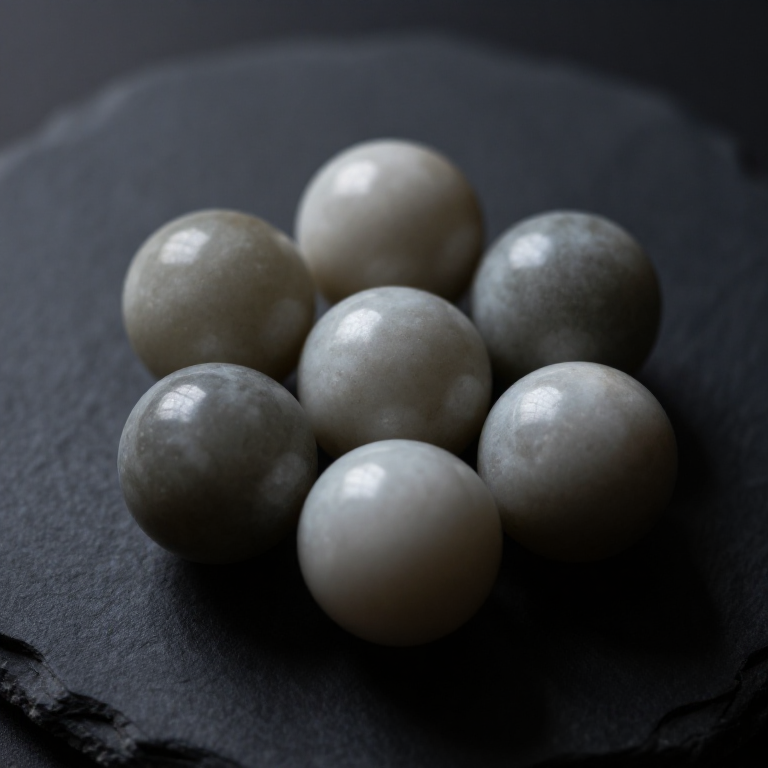
Take 6 counters (beads, buttons or coins). Find every way to divide them into equal groups: one group of 6, or 2 groups of 3, or 3 groups of 2, or 6 groups of 1. The group-SIZES that work (the divisors smaller than 6) are 1, 2 and 3.
Materialien für diesen Schritt:
 Glasperlen1 Stück
3
3
Add up the parts
Add up the parts
Add those divisors: 1 + 2 + 3 = 6. The parts add back up to the number itself -- 6 is perfect! Now try 28 with 28 counters: its divisors are 1, 2, 4, 7 and 14, and they add to 28. Try 10 or 12 and you will find they do NOT work, which is why perfect numbers are so rare.
4
4
Check with the computer
Check with the computer
Jupyter-Notebook wird geladen …
Benötigte Werkzeuge:
 Desktop-Computer
5
5
Compendium: an unsolved mystery
Compendium: an unsolved mystery
What your counters lead to. (1) The perfect numbers are strikingly rare: 6, 28, 496, 8128, then none until 33,550,336. (2) Around 300 BC Euclid found a recipe: whenever 2-to-the-power-p minus 1 is prime, you can build a perfect number from it -- which links them to the famous 'Mersenne primes' that a worldwide computer project still hunts today. (3) Every perfect number ever found is EVEN. (4) After 2,300 years, two questions Euclid could have asked remain unanswered: are there infinitely many, and does an ODD perfect number exist? Nobody has ever found one -- or proved one cannot exist. You have just handled the front edge of an open problem in mathematics.
Materialien
2- 1 StückPlatzhalter
- 1 BlattPlatzhalter
Benötigte Werkzeuge
2- Platzhalter
- Platzhalter
Verwandte Blueprints
Diese Blueprints teilen Wissen — Techniken, Materialien oder Prinzipien

CC0 Gemeinfrei
Dieser Blueprint ist unter CC0 veröffentlicht. Sie dürfen dieses Werk für jeden Zweck frei kopieren, ändern, verbreiten und verwenden, ohne um Erlaubnis zu fragen.
Unterstützen Sie den Maker, indem Sie Produkte über seinen Blueprint kaufen, wo er eine Maker-Provision von Anbietern festgelegt, verdient. Oder erstellen Sie eine neue Iteration dieses Blueprints und verbinden Sie ihn in Ihrem eigenen Blueprint, um Einnahmen zu teilen.