KUNST
SCHÖNHEIT & WELLNESS
HANDWERK
KULTUR & GESCHICHTE
UNTERHALTUNG
UMFELD
ESSEN & GETRÄNKE
REVERSE ENGINEERING
WISSENSCHAFTEN
SPORT
TECHNOLOGIE
WEARABLES
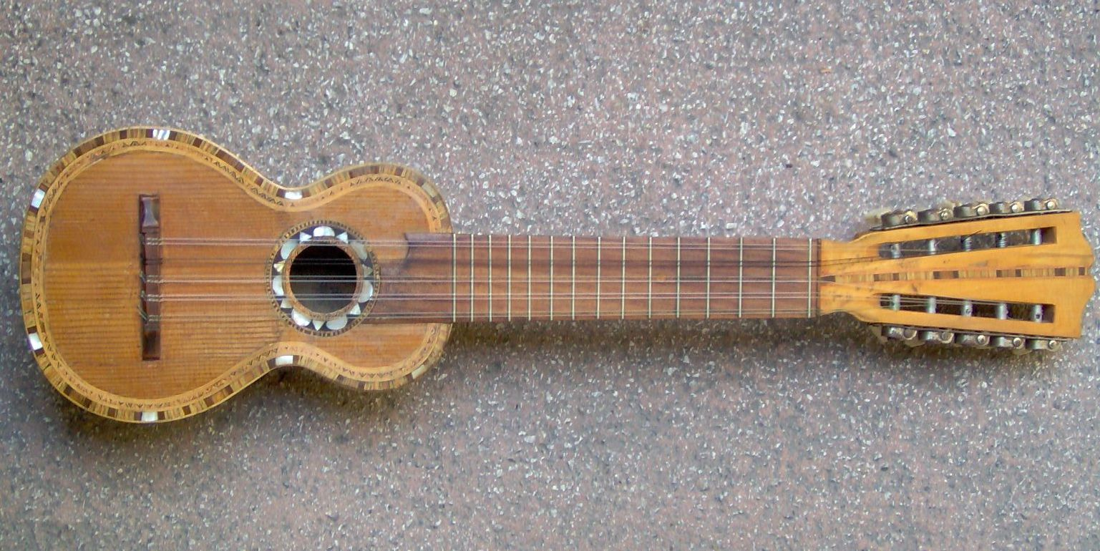
Wikimedia Commons contributor · Public Domain


Building a Charango — The Little High Lute of the Andes
Build a charango: a tiny, high-voiced Andean lute with ten strings in five doubled courses, once famously backed with an armadillo shell and now carved from wood. Build the deep little body, fit the fretted neck, tie the frets and string the five courses. A serious maker build in the fretted lute and why a small box sings high.
Fortgeschritten
Several hours over several sessions
Anweisungen
1
1
A tiny lute that sings high
A tiny lute that sings high
The charango is a small fretted lute with ten strings in five doubled courses. When the Spanish brought the lute-and-guitar family to the Andes, local makers shrank it and famously backed it with an armadillo shell — small body, short strings, a bright high voice.
2
2
Make the little body
Make the little body
Hollow or build a small, deep rounded soundbox — traditionally an armadillo shell, today carved from a block of wood. Keep it small: a little box is what gives the charango its bright, high sound.
Materialien für diesen Schritt:
 Hartholzbrett1 Stück
 Weißleim (PVAc)1 Stück
Benötigte Werkzeuge:
 Sloyd-Schnitzmesser
3
3
Fit the soundboard
Fit the soundboard
Glue a thin flat softwood soundboard over the open face and cut a round soundhole in it. This top is the speaker that radiates the strings' vibration.
Materialien für diesen Schritt:
 Trockenes Nadelholzbrett1 Stück
4
4
Fit the fretted neck
Fit the fretted neck
Fix a straight neck to the body and lay in the frets — little ridges across the neck. Pressing a string against a fret shortens its speaking length and so raises its note; the fret positions are what set the scale.
Materialien für diesen Schritt:
 Holzdübelstange1 Stück
 Nylon-Bundschnur1 Stück
5
5
String the five courses
String the five courses
Run ten strings in FIVE doubled courses (two strings side by side per course) from a bridge on the soundboard up over the frets to ten tuning pegs. The doubled strings ring together for the charango's shimmering chorus.
Materialien für diesen Schritt:
 Gitarrensaitensatz (Akustik, Phosphorbronze)1 Stück
 Wirbel10 Stück
6
6
Tune and strum
Tune and strum
Tune the five courses (the classic charango tuning is re-entrant, so it is not simply low-to-high), then strum and pluck. Press behind a fret to change a note, and let the doubled strings shimmer.
7
7
Compendium — the fretted lute, small and high
Compendium — the fretted lute, small and high
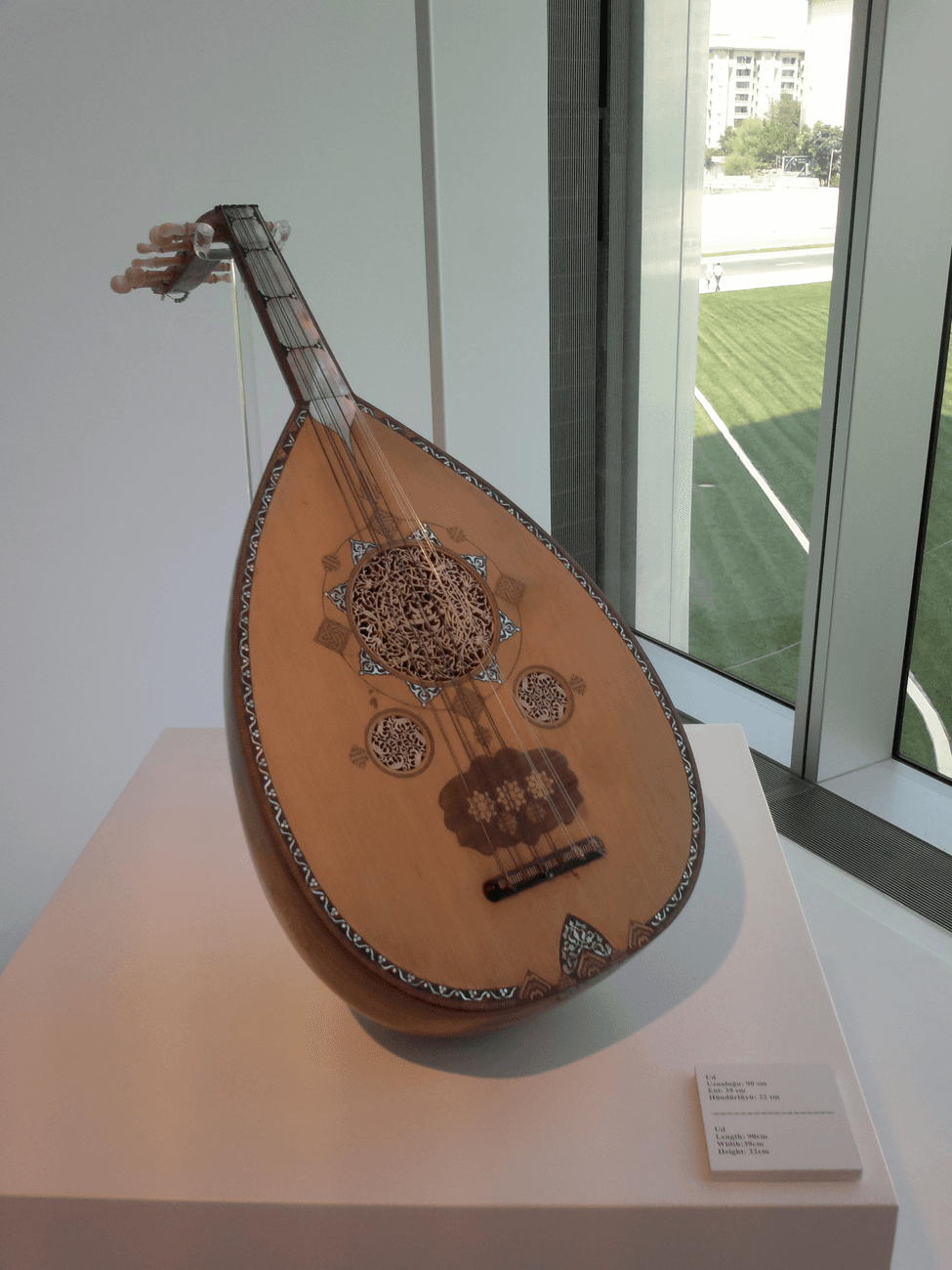
The charango is a lute: strings stretched over a soundbox and along a fretted neck, plucked or strummed. Three ideas make it work. First, pitch: a string sounds higher when it is shorter, tighter or lighter, so the player raises a note by pressing the string down onto a FRET, which shortens the part that can vibrate — the same trick as the oud and the guitar, and the reason the frets are spaced the way they are. Second, doubled COURSES: the charango pairs its strings two-by-two, and because no two strings are ever perfectly identical they beat gently against each other, giving that rich shimmering chorus (the same reason a twelve-string guitar or a mandolin sounds so full). Third, and most charango of all, SIZE: the soundbox and the strings are tiny, and small light strings on a short scale vibrate fast, so the whole instrument sits an octave or so above a guitar — bright, chirping, cutting through the thin high-altitude air of the Andes. It descends from the Spanish vihuela and baroque guitar carried across the Atlantic, themselves descendants of the Arabic oud, and it belongs with every soundbox-and-strings instrument from the lyre of Ur onward — the charango is simply that ancient idea shrunk to fit a poncho pocket.
Materialien
7- 1 StückPlatzhalter
- 1 StückPlatzhalter
- 1 StückPlatzhalter
- 1 StückPlatzhalter
- 1 StückPlatzhalter
- Platzhalter
- 10 StückPlatzhalter
Benötigte Werkzeuge
1- Platzhalter
Dieser Bauplan stellt her
Verwandte Blueprints
Diese Blueprints teilen Wissen — Techniken, Materialien oder Prinzipien

CC0 Gemeinfrei
Dieser Blueprint ist unter CC0 veröffentlicht. Sie dürfen dieses Werk für jeden Zweck frei kopieren, ändern, verbreiten und verwenden, ohne um Erlaubnis zu fragen.
Unterstützen Sie den Maker, indem Sie Produkte über seinen Blueprint kaufen, wo er eine Maker-Provision von Anbietern festgelegt, verdient. Oder erstellen Sie eine neue Iteration dieses Blueprints und verbinden Sie ihn in Ihrem eigenen Blueprint, um Einnahmen zu teilen.