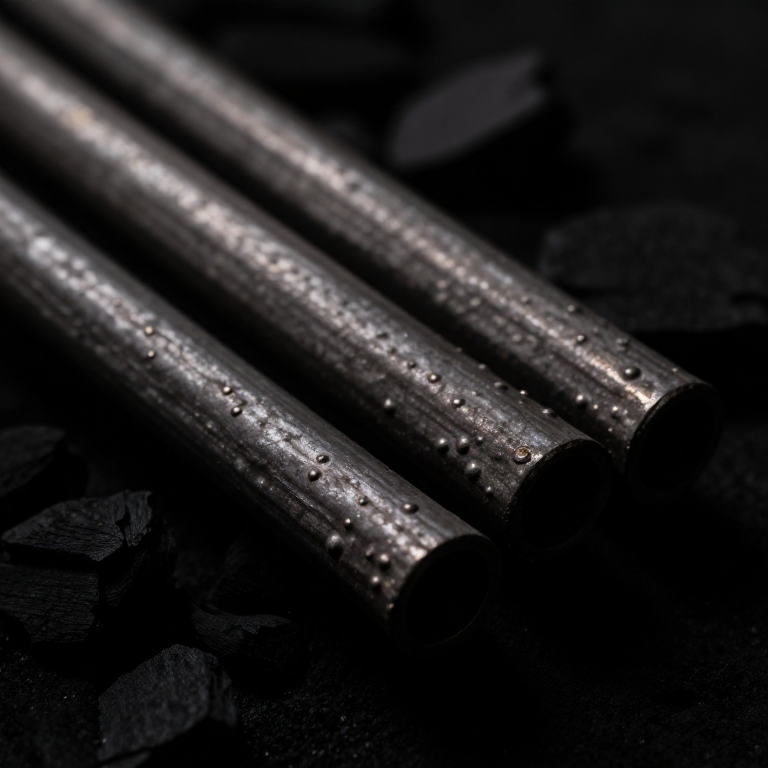


Making Blister Steel by Cementation — Carburizing Wrought Iron into Steel
Wrought iron bends but will not hold an edge; cast iron holds an edge but shatters. Steel — iron with just the right sliver of carbon — does both, and for centuries the great problem of metalworking was how to make it reliably. The cementation process, used across Europe from the 1600s, was the first method to manufacture steel in quantity from ordinary wrought iron bars.
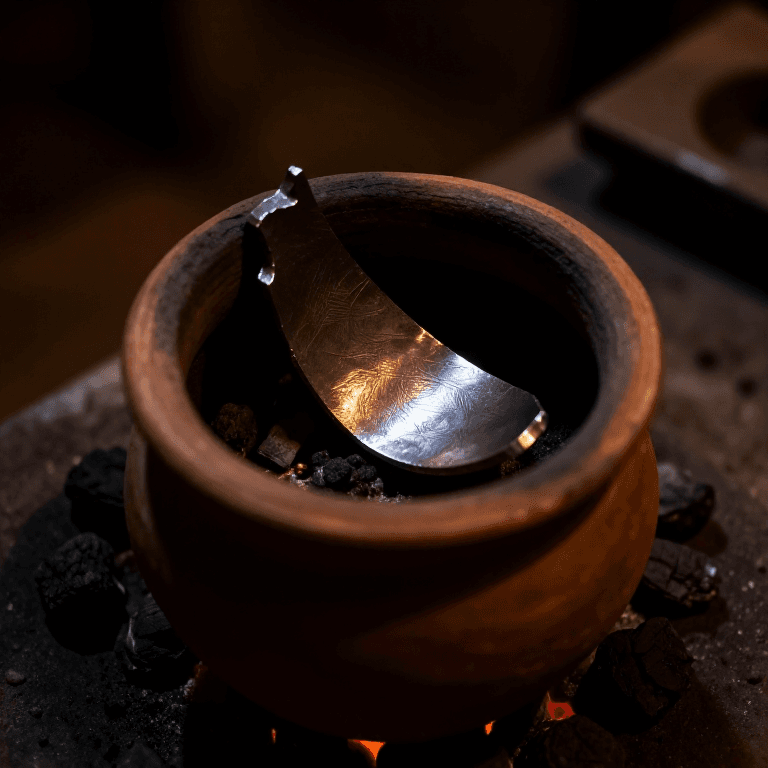
The idea is to add carbon to solid iron without ever melting it. Bars of wrought iron are packed in powdered charcoal inside a sealed stone chest and roasted for a week at a bright red heat. Over those days, carbon slowly creeps out of the charcoal and diffuses into the surface of the iron, turning the skin into steel. Gas trapped under the surface raises little blisters across the bars — which is why the product is called blister steel.
Blister steel is uneven, carbon-rich at the surface and soft in the core, so smiths refined it further: forge-welding and folding it into shear steel, or melting it in crucibles into perfectly uniform cast steel. But cementation was the foundation — the step that first made steel an industrial material rather than a rare treasure.
Anweisungen
Understand cementation
Understand cementation
Select wrought iron bars
Select wrought iron bars
Materialien für diesen Schritt:
 Schmiedeeiserne Stäbe20 kg
Build the cementation chest
Build the cementation chest
Materialien für diesen Schritt:
 Schamottesteine60 Stück
Benötigte Werkzeuge:
 Handschaufel
Crush the charcoal
Crush the charcoal
Materialien für diesen Schritt:
 Holzkohle15 kg
Benötigte Werkzeuge:
 Hammer
Pack iron and charcoal in layers
Pack iron and charcoal in layers
Seal the chest with clay
Seal the chest with clay
Materialien für diesen Schritt:
 Ton10 kg
Fire at red heat for days
Fire at red heat for days
Materialien für diesen Schritt:
 Steinkohle200 kg
Let the carbon diffuse
Let the carbon diffuse
Recognise the blisters
Recognise the blisters
Benötigte Werkzeuge:
 Ziehzange
Cool slowly and open
Cool slowly and open
Benötigte Werkzeuge:
ZiehzangeRefine into shear steel
Refine into shear steel
Benötigte Werkzeuge:
HammerTest that it is steel
Test that it is steel
Materialien für diesen Schritt:
 Wasser5 Liter
Materialien
6- Platzhalter
- 60 StückPlatzhalter
- 15 kgPlatzhalter
- 10 kgPlatzhalter
- 200 kgPlatzhalter
- 5 LiterPlatzhalter
Materialien verbundener Blueprints

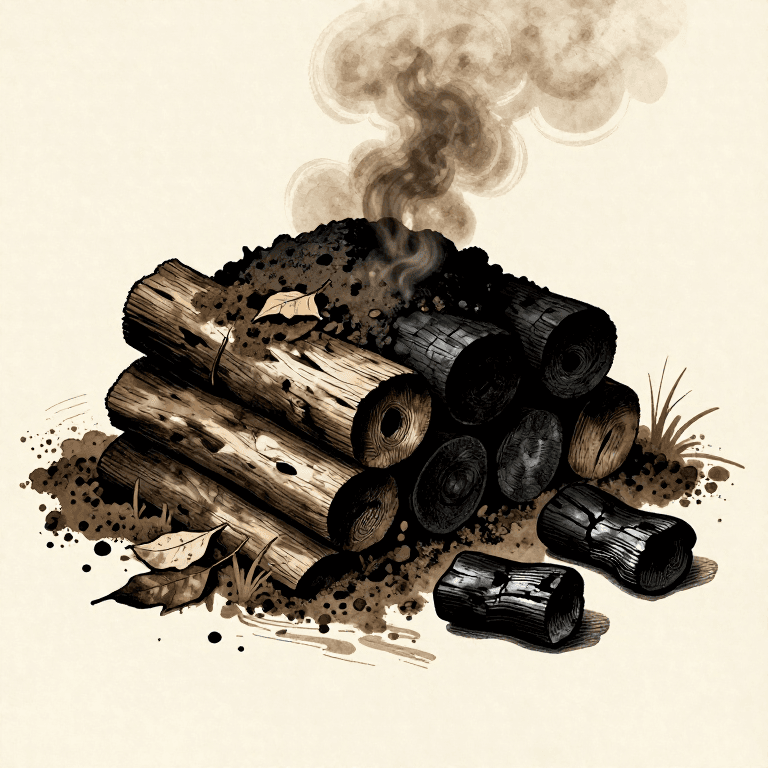

Dieser Bauplan stellt her

Verwandte Blueprints
Diese Blueprints teilen Wissen — Techniken, Materialien oder Prinzipien

CC0 Gemeinfrei
Dieser Blueprint ist unter CC0 veröffentlicht. Sie dürfen dieses Werk für jeden Zweck frei kopieren, ändern, verbreiten und verwenden, ohne um Erlaubnis zu fragen.
Unterstützen Sie den Maker, indem Sie Produkte über seinen Blueprint kaufen, wo er eine Maker-Provision von Anbietern festgelegt, verdient. Oder erstellen Sie eine neue Iteration dieses Blueprints und verbinden Sie ihn in Ihrem eigenen Blueprint, um Einnahmen zu teilen.