Zusammenarbeit
KUNST
SCHÖNHEIT & WELLNESS
HANDWERK
KULTUR & GESCHICHTE
UNTERHALTUNG
UMFELD
ESSEN & GETRÄNKE
REVERSE ENGINEERING
WISSENSCHAFTEN
SPORT
TECHNOLOGIE
WEARABLES
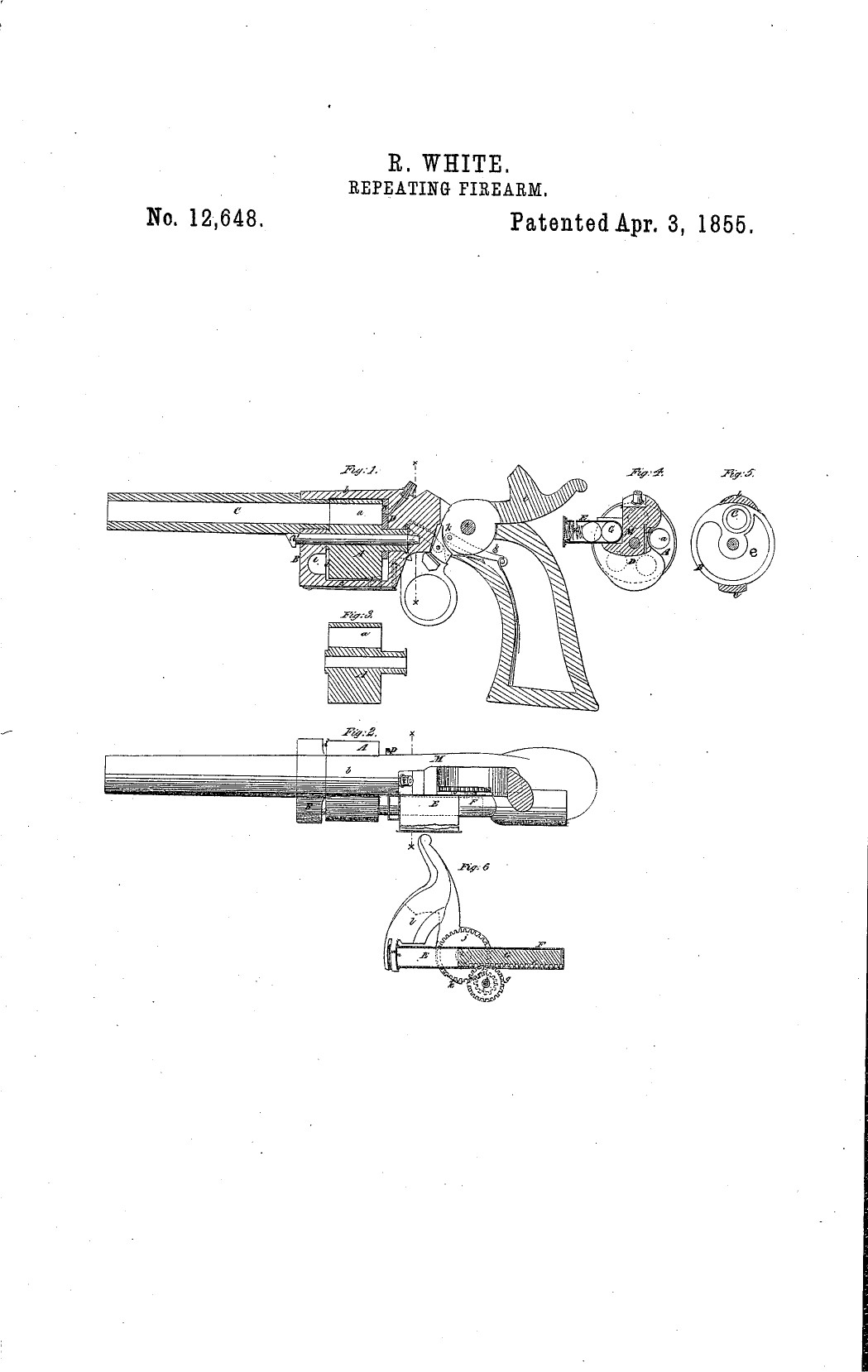

The Bored-Through Cylinder and the Self-Contained Cartridge (Rollin White, 1855) - History and How It Works
Anfänger
About 15 minutes
Anweisungen
1
1
Read White's patent
Read White's patent
His first claim: "Extending the chambers a a of the rotating cylinder A right through the rear of the said cylinder." (US 12,648, dated 3 April 1855.)
2
2
How it works, in principle
How it works, in principle
With the chambers open at both ends, a cartridge (powder and ball made up as one unit) goes in from the back instead of being loaded loose from the front. White made the chambers slightly conical, smallest at the front, "in order that a cartridge may be inserted easily at the back, but that the ball may fit tight when it arrives in its place".
3
3
What came of it
What came of it
Once cartridges carried their own powder, ball and ignition in a metal case, a revolver could be reloaded in seconds from the back. Smith & Wesson built their first cartridge revolvers under a licence of White's patent.
4
4
Honest limits
Honest limits
From the text of US 12,648 (1855). His patent also describes a magazine and charging piston not covered here. This page gives no dimensions, charges or making steps, by design.
Verwandte Blueprints
Diese Blueprints teilen Wissen — Techniken, Materialien oder Prinzipien

Gefährlich
Building a Song Dynasty Fire Lance — The World's First Gunpowder Weapon
von Charlie
Waffen
116
1
0
0
4
0

Gefährlich
Making Black Powder from Saltpeter, Sulfur, and Charcoal — The Mixture That Changed the World
von Charlie
Waffen
197
0
0
0
7
0
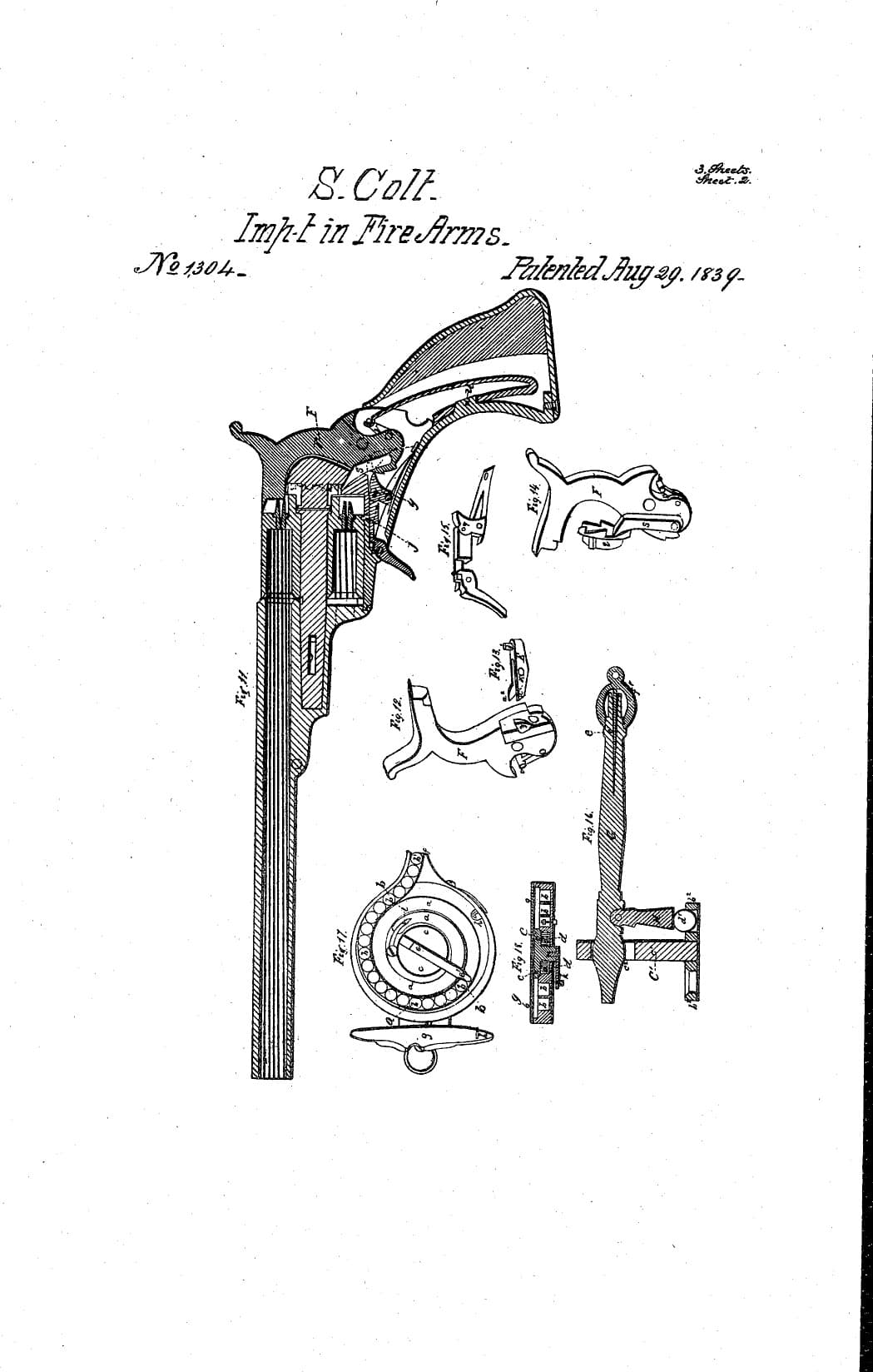
The Revolver: Several Chambers Turning Behind One Barrel (Colt, 1836 and 1839) - History and How It Works
von Charlie
Waffen
2
0
0
0
0
0
CC0 Gemeinfrei
Dieser Blueprint ist unter CC0 veröffentlicht. Sie dürfen dieses Werk für jeden Zweck frei kopieren, ändern, verbreiten und verwenden, ohne um Erlaubnis zu fragen.
Unterstützen Sie den Maker, indem Sie Produkte über seinen Blueprint kaufen, wo er eine Maker-Provision von Anbietern festgelegt, verdient. Oder erstellen Sie eine neue Iteration dieses Blueprints und verbinden Sie ihn in Ihrem eigenen Blueprint, um Einnahmen zu teilen.