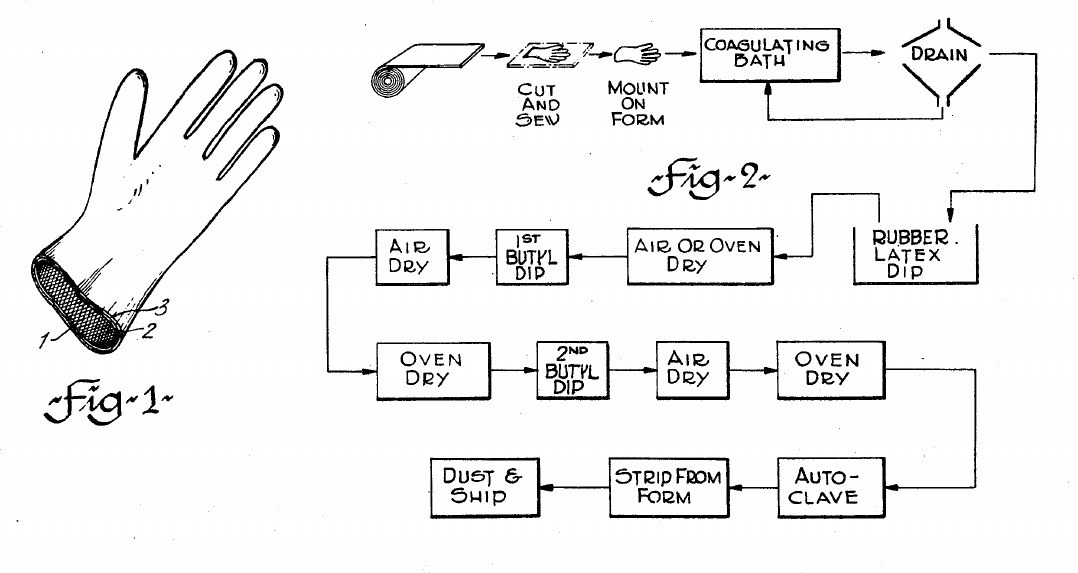


Chemical-Resistant Gloves: Butyl Latex over Natural Rubber on a Cotton Liner (Hart & Collyer, US 4,190,685, 1980)
Anweisungen
Sew the cotton liner
Sew the cotton liner
Materialien für diesen Schritt:
 Baumwollstrickstoff1 liner
Benötigte Werkzeuge:
 Schere
 Nähmaschine
 Unbekannte Maße
Dip in coagulant
Dip in coagulant
Materialien für diesen Schritt:
 Essigsäure (Eisessig)1 10 % in acetone
 Aceton1 solvent
Benötigte Werkzeuge:
 Handschuhform
 Propanbrenner
Dip the natural rubber coat
Dip the natural rubber coat
Materialien für diesen Schritt:
 Naturkautschuklatex1 bath
 Scheuermittel1 as needed
Benötigte Werkzeuge:
Handschuhform Scheuerbürste
Mix the butyl latex bath
Mix the butyl latex bath
Materialien für diesen Schritt:
 Butylkautschuk-Latex100 parts dry
 Schwefel3 parts
 Zinkdibutyldithiocarbamat4 parts
 Zinkoxidpulver5 parts
 Formaldehydlösung (37 % Formalin)0.1 parts formaldehyde
 Flüssiger Dithiocarbamat-Beschleuniger4 parts
 Unbekanntes Material6.5 parts pigment
Benötigte Werkzeuge:
 Rührer
Dip five butyl coats
Dip five butyl coats
Benötigte Werkzeuge:
Handschuhform Trockenofen
Cure and finish
Cure and finish
Materialien für diesen Schritt:
 Seife1 as needed
Benötigte Werkzeuge:
 Tisch-AutoklavSchere
Materialien
13- 1 linerPlatzhalter
- 1 10 % in acetonePlatzhalter
- 1 solventPlatzhalter
- 1 bathPlatzhalter
- 1 as neededPlatzhalter
- 100 parts dryPlatzhalter
- 3 partsPlatzhalter
- 4 partsPlatzhalter
- 5 partsPlatzhalter
- 0.1 parts formaldehydePlatzhalter
- Platzhalter
- 6.5 parts pigmentPlatzhalter
- 1 as neededPlatzhalter
Benötigte Werkzeuge
9- Platzhalter
- Platzhalter
- Platzhalter
- Platzhalter
- Platzhalter
- Platzhalter
- Platzhalter
- Platzhalter
- Platzhalter
Materialien verbundener Blueprints

กรีดยางพารา — การเก็บน้ำยางธรรมชาติจากต้นยางพารา
von SomchaiSang
Landwirtschaft

Glacial Acetic Acid from Wood Vinegar: Acetate of Soda, Oil of Vitriol and Freezing
von Charlie
Industriell
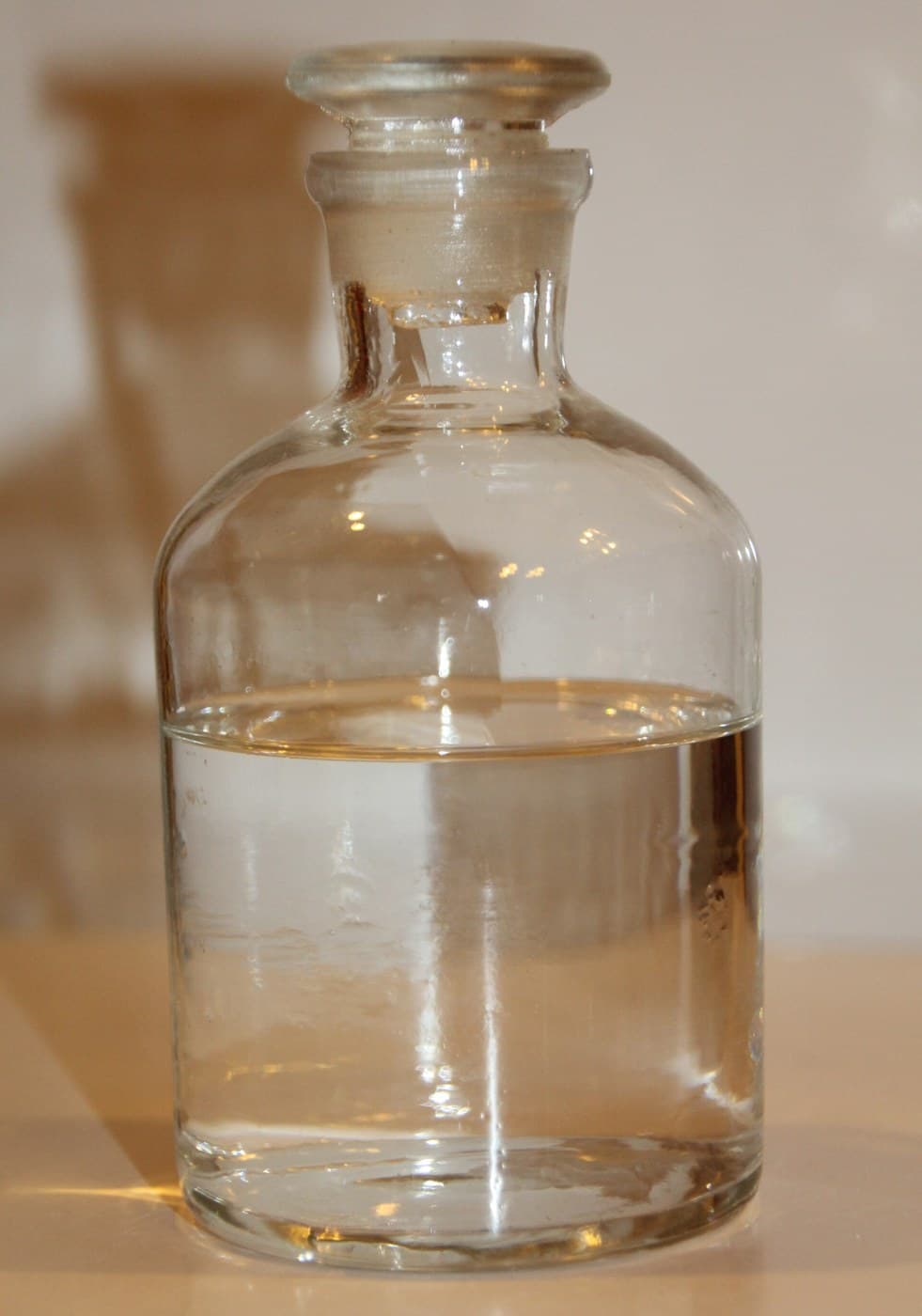
Acetone by Dry Distillation of Acetate of Lime
von Charlie
Chemie
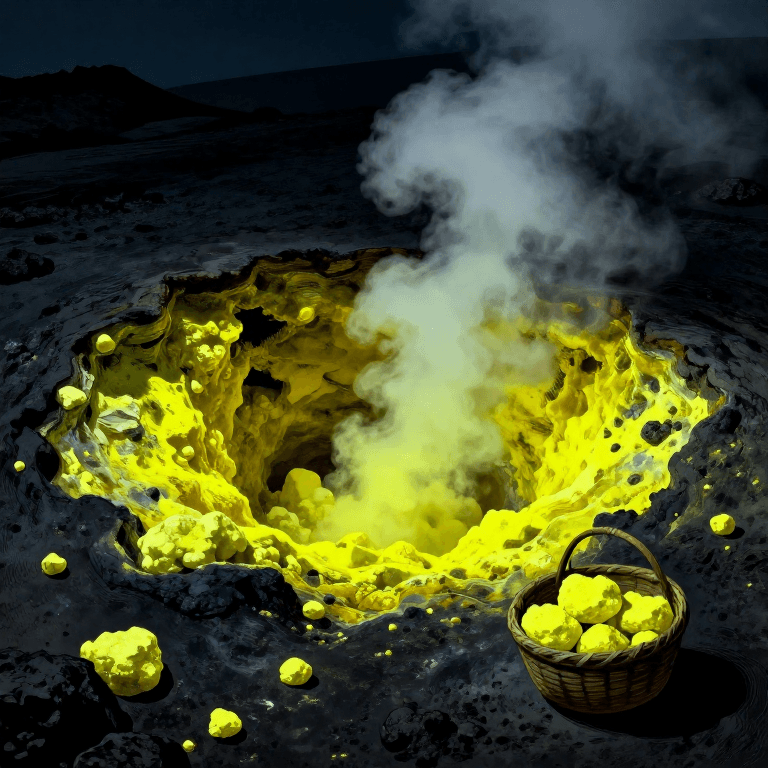
Collecting Native Sulfur from Volcanic Deposits
von Peter
Wüste
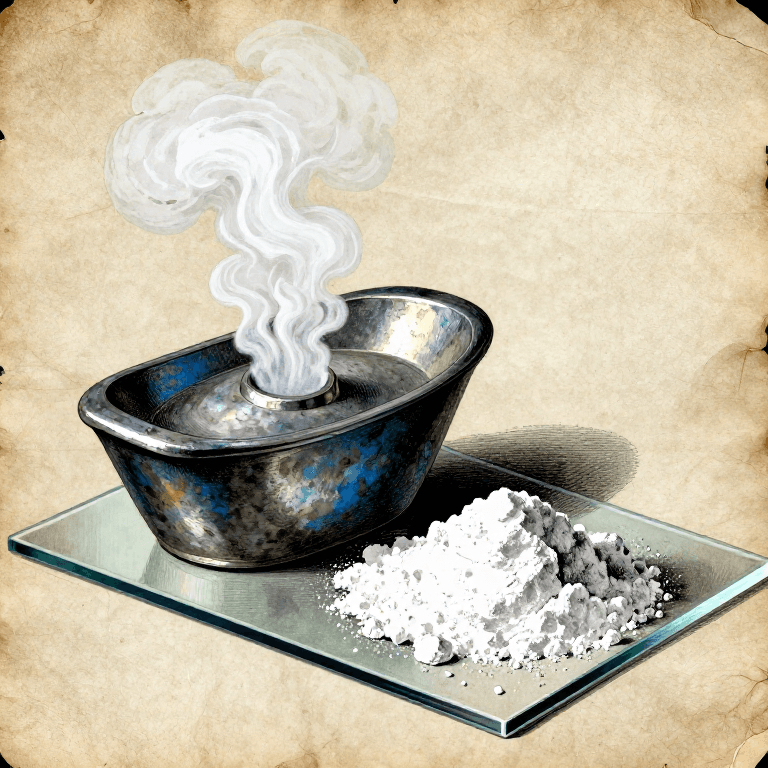
Making Zinc White Pigment — The Non-Toxic Replacement for Lead White
von Charlie
KUNST
Dieser Bauplan stellt her

CC0 Gemeinfrei
Dieser Blueprint ist unter CC0 veröffentlicht. Sie dürfen dieses Werk für jeden Zweck frei kopieren, ändern, verbreiten und verwenden, ohne um Erlaubnis zu fragen.
Unterstützen Sie den Maker, indem Sie Produkte über seinen Blueprint kaufen, wo er eine Maker-Provision von Anbietern festgelegt, verdient. Oder erstellen Sie eine neue Iteration dieses Blueprints und verbinden Sie ihn in Ihrem eigenen Blueprint, um Einnahmen zu teilen.