KUNST
SCHÖNHEIT & WELLNESS
HANDWERK
KULTUR & GESCHICHTE
UNTERHALTUNG
UMFELD
ESSEN & GETRÄNKE
REVERSE ENGINEERING
WISSENSCHAFTEN
SPORT
TECHNOLOGIE
WEARABLES
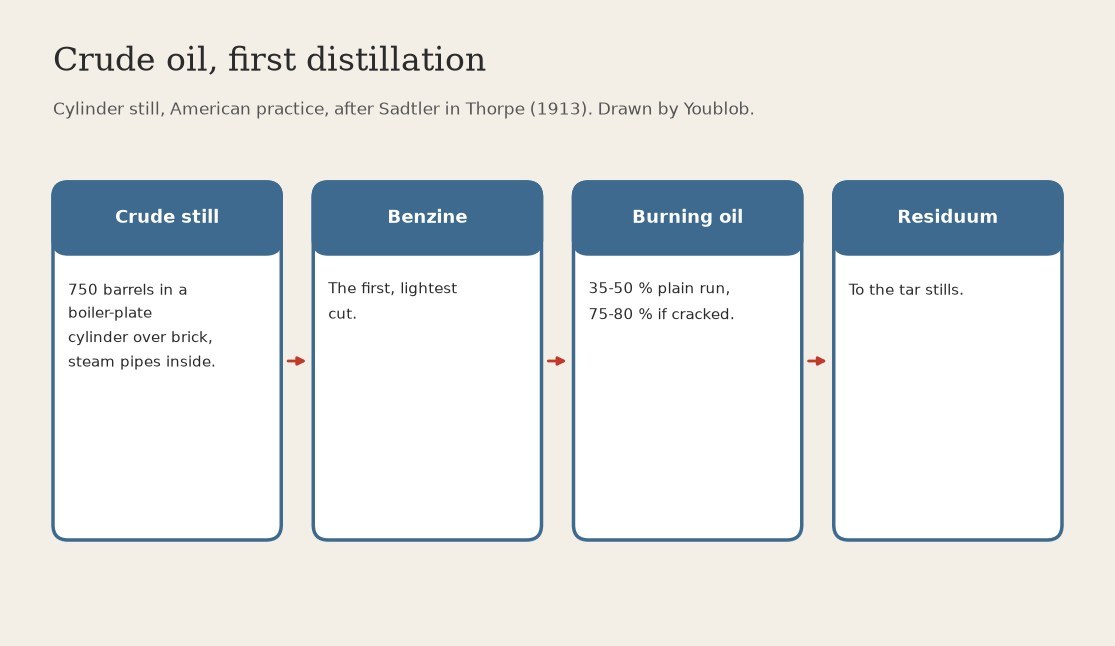


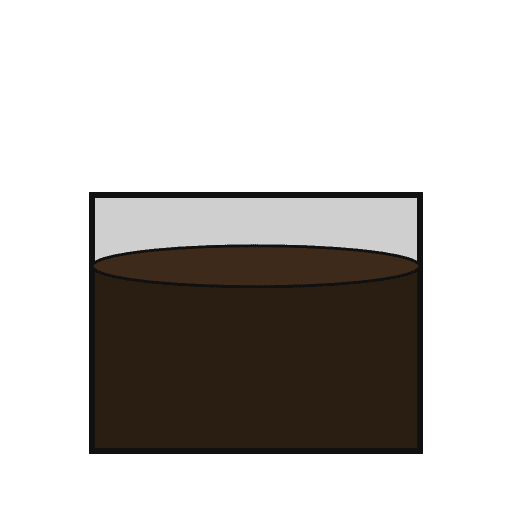
Crude Oil Distilled in a Cylinder Still: Benzine, Burning Oil and Residuum (Sadtler, in Thorpe 1913)
The first step of an American refinery around 1910: crude oil is boiled in a huge horizontal still and split into a light benzine cut, the burning oil that becomes kerosene, and a heavy residuum for the tar stills.
Variable: how hard you run the end of the distillation. Run as a plain fractional distillation, Pennsylvania crude gives 35 to 50 % burning oil and 20 to 30 % lubricating oils. Let the heavy vapours fall back on the hot oil and they crack: burning oil rises to 75 to 80 % and the residuum drops to 6 %.
Source: Sadtler, American Petroleum, in Thorpe's Dictionary of Applied Chemistry, vol. 4 (1913). Not given: the temperature or gravity at which each cut is switched. Crude oil vapour is highly flammable. Picture drawn by Youblob.
Erfahren
2 days
Anweisungen
1
1
Charge 750 barrels into the cylinder still
Charge 750 barrels into the cylinder still
The still is a boiler-plate cylinder, its lower half usually steel, 30 ft long and 12 ft 6 in across, lying in a brick furnace with its upper half open to the air. Charge it with crude oil: usually 750 barrels, often 1000. It carries closed and perforated steam pipes.
Materialien für diesen Schritt:
 Rohöl750 barrel
Benötigte Werkzeuge:
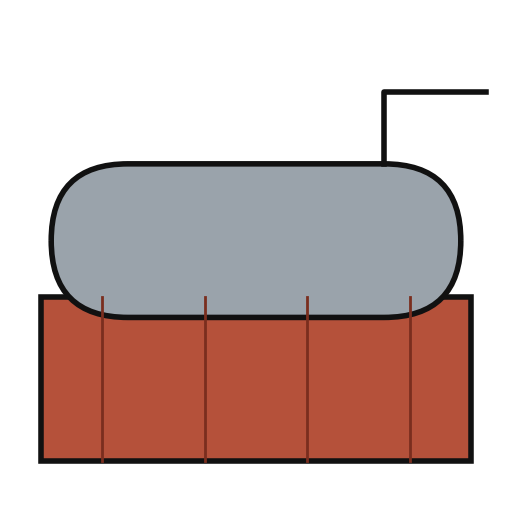 Liegende Zylinderblase
 Öltank
2
2
Fire it, blow steam, condense in water-cooled coils
Fire it, blow steam, condense in water-cooled coils
Fire the furnace. Steam jetting from the perforated pipe helps carry the oil vapours over. The vapours condense in long pipe coils standing in tanks of flowing water, and run to the receiving house. A trap near each pipe end carries off the gas that will not condense; it can be burned under the boilers or stills to save fuel.
Benötigte Werkzeuge:
Liegende Zylinderblase Dampfkessel
 Kondensatorschlange
 Wasser
3
3
Watch the run and switch receivers
Watch the run and switch receivers
The condenser pipes end in boxes with plate-glass sides, so you can see each run and take test portions to control the process. First comes the benzine distillate, then the burning oil distillate. Sadtler gives no temperatures or gravities for the switch. Ours: check test portions with a hydrometer.
Benötigte Werkzeuge:
 Spindel (Aräometer)Öltank
4
4
Choose: plain run or cracking run
Choose: plain run or cracking run
Plain fractional distillation: 35 to 50 % burning oil and 20 to 30 % lubricating oils from Pennsylvania crude. Cracking: let the heavy vapours drop back on the hot oil, which the open upper half of the still helps late in the run; burning oil rises to 75 to 80 % and the residuum falls to 6 %.
Benötigte Werkzeuge:
Liegende Zylinderblase5
5
Send the residuum to the tar stills
Send the residuum to the tar stills
When the burning oil is off, run the fluid residuum out to the tar stills, of about 260 barrels, for the paraffin and lubricating oils. Benzine and burning oil go to their own tanks for refining.
Benötigte Werkzeuge:
ÖltankDieser Bauplan stellt her
Verwandte Blueprints
Diese Blueprints teilen Wissen — Techniken, Materialien oder Prinzipien

CC0 Gemeinfrei
Dieser Blueprint ist unter CC0 veröffentlicht. Sie dürfen dieses Werk für jeden Zweck frei kopieren, ändern, verbreiten und verwenden, ohne um Erlaubnis zu fragen.
Unterstützen Sie den Maker, indem Sie Produkte über seinen Blueprint kaufen, wo er eine Maker-Provision von Anbietern festgelegt, verdient. Oder erstellen Sie eine neue Iteration dieses Blueprints und verbinden Sie ihn in Ihrem eigenen Blueprint, um Einnahmen zu teilen.