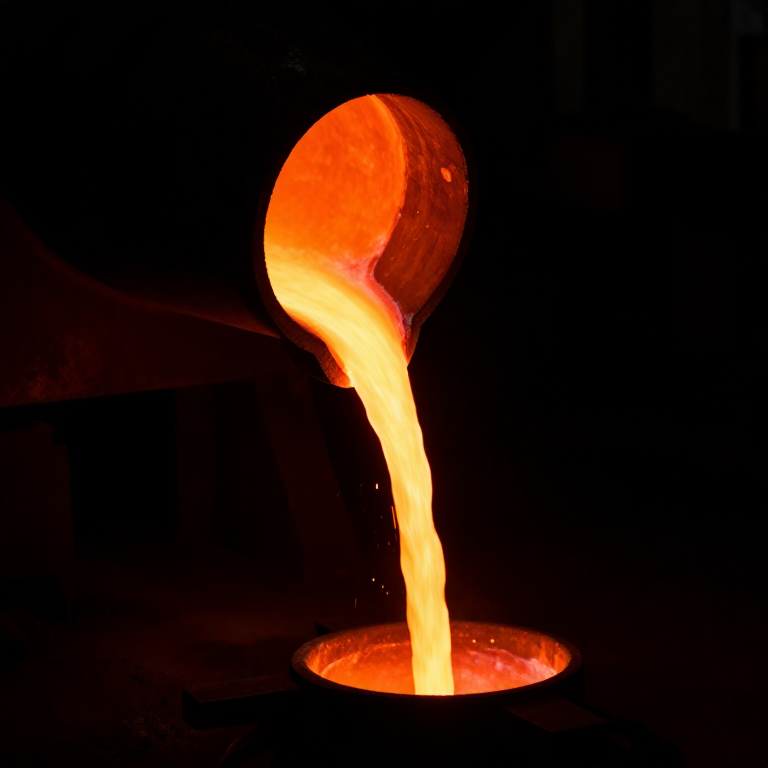


Casting Iron in a Cupola Furnace — Re-Melting Pig Iron into Finished Castings
The blast furnace makes pig iron by the tonne, but pig iron in bars is not yet a useful object. To turn it into pots, pipes, stoves, and machine frames, a foundry re-melts it and pours it into moulds — and the workhorse that does the re-melting is the cupola furnace.
A cupola is a tall iron chimney lined with firebrick, charged from the top with alternating layers of coke, pig iron, and limestone, and blown with air near its base. Unlike the blast furnace it does not smelt ore; it simply melts iron that is already made, quickly and cheaply, keeping a steady stream of molten metal ready to tap. The melting iron picks up a little carbon from the coke and runs out of the tap hole as grey cast iron.
Poured into sand moulds shaped from wooden patterns, that iron sets into castings of almost any form. Cast iron is brittle but immensely strong in compression and cheap to pour into complex shapes, which made the cupola the beating heart of Victorian industry — casting everything from cooking pots and drainpipes to the columns and machines of the factories themselves.
Anweisungen
Understand the cupola
Understand the cupola
Build and line the cupola
Build and line the cupola
Materialien für diesen Schritt:
 Schamottesteine100 Stück
Benötigte Werkzeuge:
 Handschaufel
Light the coke bed
Light the coke bed
Materialien für diesen Schritt:
 Hüttenkoks60 kg
Start the blast
Start the blast
Benötigte Werkzeuge:
 Gebläse
Charge in layers
Charge in layers
Materialien für diesen Schritt:
 Roheisenmasseln80 kg
 Kalksteinplatte6 kg
Melt the iron
Melt the iron
Flux off the slag
Flux off the slag
Benötigte Werkzeuge:
 Abstichstange
Prepare the sand moulds
Prepare the sand moulds
Materialien für diesen Schritt:
 Formsand60 kg
Benötigte Werkzeuge:
 Formkasten
Tap the molten iron
Tap the molten iron
Benötigte Werkzeuge:
 Gießpfanne
Pour the castings
Pour the castings
Shake out and clean
Shake out and clean
Benötigte Werkzeuge:
 Winkelschleifer
Identify cast iron
Identify cast iron
Materialien
5- 100 StückPlatzhalter
- 60 kgPlatzhalter
- 80 kgPlatzhalter
- 6 kgPlatzhalter
- 60 kgPlatzhalter
Benötigte Werkzeuge
6- Platzhalter
- Platzhalter
- Platzhalter
- Platzhalter
- Platzhalter
- 1 vendor sell this, none ship to you yetPlatzhalter
Materialien verbundener Blueprints

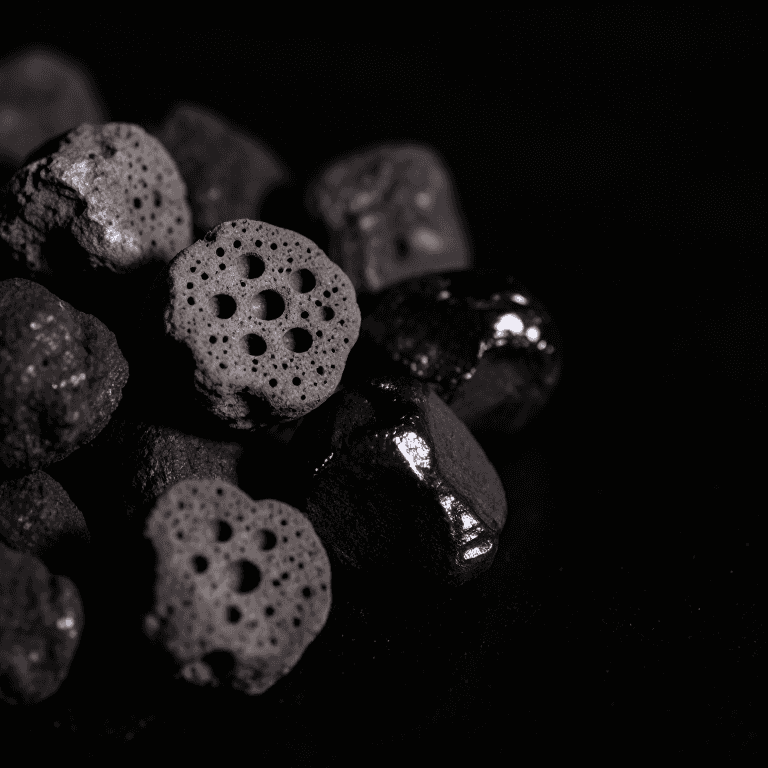
Dieser Bauplan stellt her



Verwandte Blueprints
Diese Blueprints teilen Wissen — Techniken, Materialien oder Prinzipien

CC0 Gemeinfrei
Dieser Blueprint ist unter CC0 veröffentlicht. Sie dürfen dieses Werk für jeden Zweck frei kopieren, ändern, verbreiten und verwenden, ohne um Erlaubnis zu fragen.
Unterstützen Sie den Maker, indem Sie Produkte über seinen Blueprint kaufen, wo er eine Maker-Provision von Anbietern festgelegt, verdient. Oder erstellen Sie eine neue Iteration dieses Blueprints und verbinden Sie ihn in Ihrem eigenen Blueprint, um Einnahmen zu teilen.