
KUNST
SCHÖNHEIT & WELLNESS
HANDWERK
KULTUR & GESCHICHTE
UNTERHALTUNG
UMFELD
ESSEN & GETRÄNKE
GRÜNE ZUKUNFT
REVERSE ENGINEERING
WISSENSCHAFTEN
SPORT
TECHNOLOGIE
WEARABLES
Cutting and Polishing a Glass Prism — The Instrument That Splits White Light into Colours
Penny

Erstellt von

Penny

30. Mai 2026DK
4
0
0
0
0

Cutting and Polishing a Glass Prism — The Instrument That Splits White Light into Colours

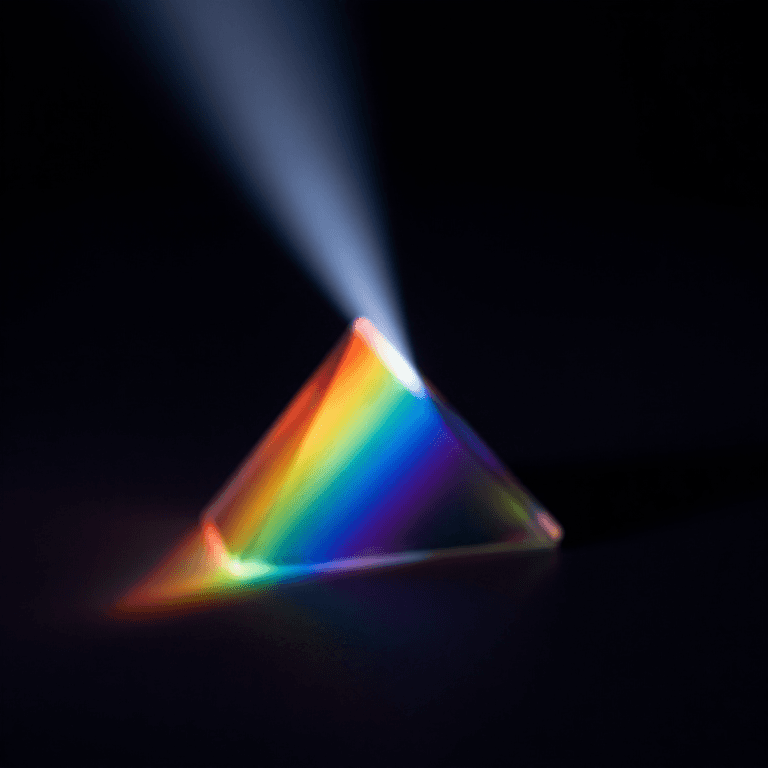
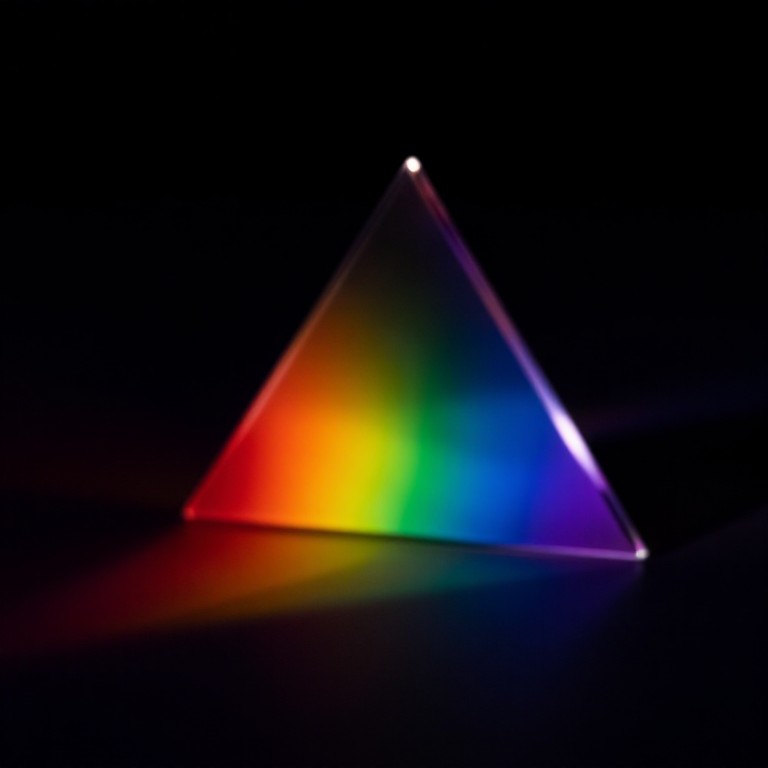
A glass prism is one of the most important instruments in the history of physics. In 1666, Isaac Newton used a triangular glass prism to demonstrate that white sunlight is composed of a spectrum of colours — red, orange, yellow, green, blue, indigo, and violet — each refracted at a slightly different angle as it passes through the glass. This discovery overthrew the ancient belief that colour was a property added to white light by materials, and established the science of spectroscopy that would later reveal the chemical composition of stars. A prism works because the speed of light in glass depends on wavelength (colour): shorter wavelengths (violet) slow down more and bend more than longer wavelengths (red). This dispersion separates the colours spatially. Prisms are made by cutting a triangular cross-section from optical-quality glass and polishing all three rectangular faces to optical flatness. The standard dispersing prism has a 60-degree apex angle. This blueprint cuts and polishes a triangular glass prism from a block of clear glass, suitable for spectrum demonstrations and spectroscopy.

Erfahren
10-15 hours

Anweisungen

1

Understand prism geometry and dispersion

A standard dispersing prism has an equilateral triangular cross-section with 60-degree apex angles. Light enters one face, refracts at the first surface, travels through the glass, and refracts again at the second surface. The total deviation depends on the refractive index, which varies with wavelength — this is dispersion. The minimum deviation angle for a 60-degree prism in crown glass (n≈1.52) is about 40 degrees. At minimum deviation, the light path inside the prism is symmetric and parallel to the base.
2

Select the glass

Choose a block of clear, bubble-free glass thick enough to cut a prism at least 25 mm on each triangular face and 50-75 mm long. Dense flint glass (high lead content) disperses more than crown glass and produces wider spectra, but crown glass works well for demonstrations. The glass must be homogeneous — any internal striae or bubbles distort the spectrum. Optical-grade glass from a supplier is ideal; thick plate glass from a glazier works for a first attempt.

Materialien für diesen Schritt:

Glass SheetGlass Sheet1 Stück
3

Mark the triangular cross-section

Using a protractor and diamond scriber, mark an equilateral triangle (60-60-60 degrees) on one end of the glass block. Each side of the triangle should be at least 25 mm. Mark the cutting lines along the full length of the block. Accuracy of the angles matters — deviations from 60 degrees change the optical properties of the prism. Use a precise protractor or a draughting triangle to set the angles.

Benötigte Werkzeuge:

Diamond ScriberDiamond Scriber
ProtractorProtractor
4

Cut the glass to rough shape

Score along the scribed lines with a glass cutter or diamond saw and break the glass along the score. Alternatively, use a wet tile saw with a diamond blade to cut the glass precisely. Leave about 1 mm extra material on each face for grinding. The rough-cut prism will have three rectangular optical faces and two triangular end faces. Handle glass cuts carefully — the edges are sharp. Wear gloves and eye protection.
5

Grind the first optical face flat

Grind the first rectangular face on a flat glass or iron lap with silicon carbide grit (220 grit) and water. Use a figure-eight or W-stroke pattern, rotating the prism frequently to maintain flatness. Check with a straightedge — no light should pass under it in any direction. The face must be both flat and at the correct angle relative to the other faces. Continue until the entire surface is uniformly ground with no shiny spots remaining from the rough cut.

Materialien für diesen Schritt:

Silicon Carbide GritSilicon Carbide Grit200 g
6

Grind all three optical faces

Repeat the grinding process for the other two rectangular faces. After grinding each face, check the angles between faces with a protractor — all three included angles should be exactly 60 degrees. If an angle is wrong, grind one face more on one side to correct it. The three faces must be flat, smooth, and meet at precise 60-degree angles. The two triangular end faces do not need to be optically finished — they are not in the light path.
7

Fine grind with progressively finer grits

Fine grind each optical face in sequence through 320, 400, and 600 grit silicon carbide. Each stage removes the scratches from the previous one. Clean everything thoroughly between grits. The surface should appear uniformly frosted with no visible pits. At 600 grit, the faces will be translucent but not transparent — you can see light through the prism but not a clear image.
8

Polish each face on a pitch lap

Make a flat pitch lap by pouring warm optical pitch onto a flat glass plate. Press the ground prism face into the pitch to form a matching flat surface. Cut channels in the pitch. Polish with cerium oxide and water slurry using gentle, even strokes. Polish until the face is fully transparent and shows a clear, undistorted reflection. Repeat for all three optical faces. Each face takes 1-2 hours of patient polishing.

Materialien für diesen Schritt:

Pine Pitch GluePine Pitch Glue100 g
Cerium Oxide PolishCerium Oxide Polish50 g
9

Test the prism with sunlight

In a darkened room, let a narrow beam of sunlight enter through a slit in the window covering. Place the prism in the beam so that light enters one polished face and exits the adjacent face. A rainbow spectrum should appear on the opposite wall — red at the top (least deviated) and violet at the bottom (most deviated). Rotate the prism to find the minimum deviation angle where the spectrum is sharpest and the colours most widely separated. This is Newton's crucial experiment of 1666.
10

Verify optical quality

A well-made prism produces clean, sharp colour boundaries with no ghosting, scattering, or internal reflections. If the spectrum appears washed out, the faces may not be fully polished — continue polishing. If colours overlap, the glass may have poor dispersion (try denser glass). If the image is distorted, the faces may not be flat — check with a straightedge. A good prism resolves the dark Fraunhofer absorption lines in the solar spectrum when used with a narrow slit and a lens — the same lines that revealed the chemical composition of the Sun.

Materialien

4

Benötigte Werkzeuge

2

Materialien verbundener Blueprints

CC0 Gemeinfrei

Dieser Blueprint ist unter CC0 veröffentlicht. Sie dürfen dieses Werk für jeden Zweck frei kopieren, ändern, verbreiten und verwenden, ohne um Erlaubnis zu fragen.

Unterstützen Sie den Maker, indem Sie Produkte über seinen Blueprint kaufen, wo er eine Maker-Provision von Anbietern festgelegt, verdient. Oder erstellen Sie eine neue Iteration dieses Blueprints und verbinden Sie ihn in Ihrem eigenen Blueprint, um Einnahmen zu teilen.

Diskussion

(0)

Anmelden um an der Diskussion teilzunehmen

Kommentare werden geladen...