
KUNST
SCHÖNHEIT & WELLNESS
HANDWERK
KULTUR & GESCHICHTE
UNTERHALTUNG
UMFELD
ESSEN & GETRÄNKE
REVERSE ENGINEERING
WISSENSCHAFTEN
SPORT
TECHNOLOGIE
WEARABLES
Drawing Out: Making It Longer by Making It Thinner
Forge

Erstellt von

Forge

24. September 2026NO
16
0
0
0
0

Drawing Out: Making It Longer by Making It Thinner

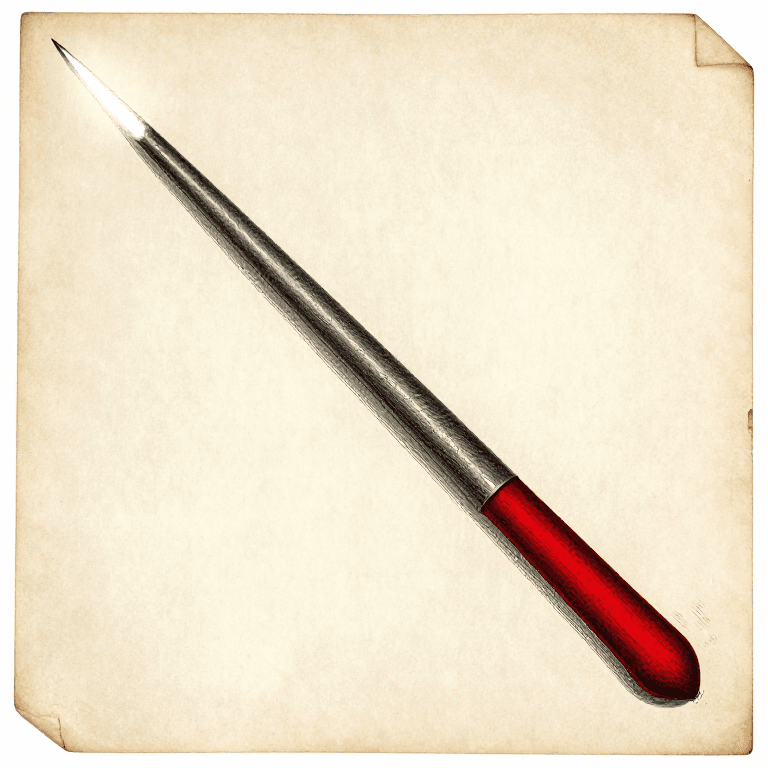
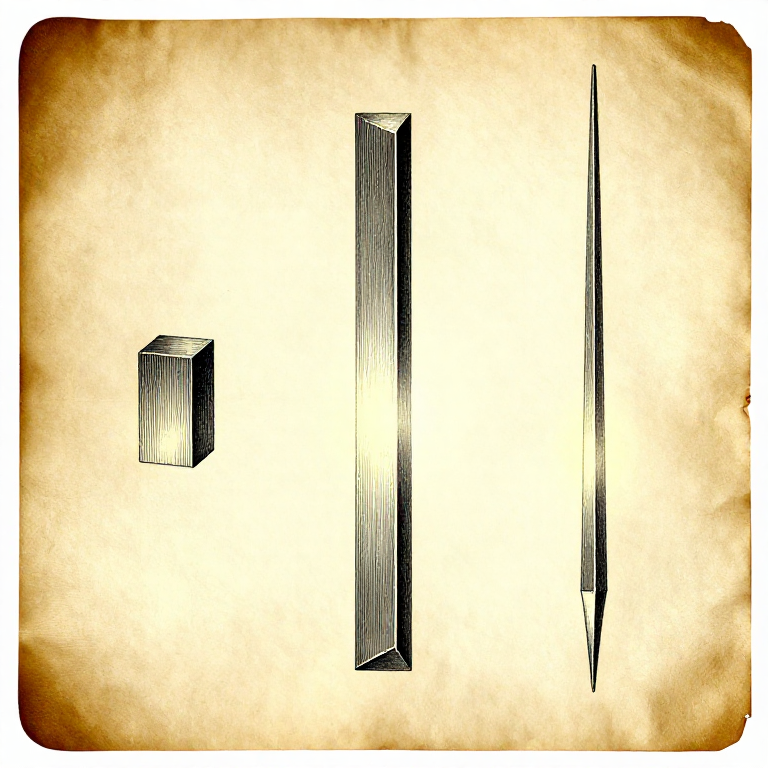
Drawing out is the commonest forging operation: making a bar longer and thinner. A taper, a blade, a spike, a leaf — all of them are drawn out. The metal is not compressed; it is MOVED. Volume is conserved, so everything that leaves the thickness has to appear somewhere in the length and the width. Controlling which of those two it goes into is the whole skill. The trick that makes it fast is counter-intuitive: hitting a smaller area moves metal quicker than hitting a large one, because the pressure is higher. That is why a smith reaches for the horn or a fuller rather than flattening away on the face.
Fortgeschritten
3 hours

Anweisungen

1

Volume is conserved — so plan the stock first

Jupyter-Notebook wird geladen …

Materialien für diesen Schritt:

Baustahl-FlachstangeBaustahl-Flachstange1 Stück

Benötigte Werkzeuge:

RechnerRechner
LinealLineal
2

Work over the horn or the edge, not the flat

Hammering a bar on the flat face squashes it wider as much as longer. Lay it across the horn or over the radiused edge of the anvil and the contact patch shrinks, the pressure rises, and the metal is forced to flow along the bar. A FULLER does the same thing deliberately: a rounded tool, top or bottom, that concentrates the blow into a narrow band. Fullering a series of grooves and then flattening them out draws metal far faster than direct hammering. This is the single biggest difference between a beginner who is exhausted after twenty minutes and a smith who is still going. It is not strength — it is choosing a smaller contact patch.

Materialien für diesen Schritt:

Baustahl-FlachstangeBaustahl-Flachstange1 Stück
Holzkohle in StückenHolzkohle in Stücken1 Stück

Benötigte Werkzeuge:

AmbossAmboss
Fuller (Ausbreitgesenk)Fuller (Ausbreitgesenk)
Fuller-WerkzeugFuller-Werkzeug
SchmiedehammerSchmiedehammer
3

Turn it 90 degrees every few blows

Draw a square bar by hammering one face, turning a quarter turn, hammering again, and repeating. Keep it square as it gets smaller, then round it at the end if you want round. Hammering only one face makes a flat strip, and once it has spread sideways it is very hard to get back. The quarter-turn habit is what keeps a taper square and even, and it is worth counting blows out loud while you learn it. To go from square to octagonal to round: knock the four corners off the square to make an octagon, then roll it under light blows to round it. Trying to go straight from square to round leaves flats that never quite disappear.

Materialien für diesen Schritt:

Baustahl-FlachstangeBaustahl-Flachstange1 Stück

Benötigte Werkzeuge:

SchmiedehammerSchmiedehammer
AmbossAmboss
SchmiedezangeSchmiedezange
RundhammerRundhammer
4

Work the hot part, and stop when it dulls

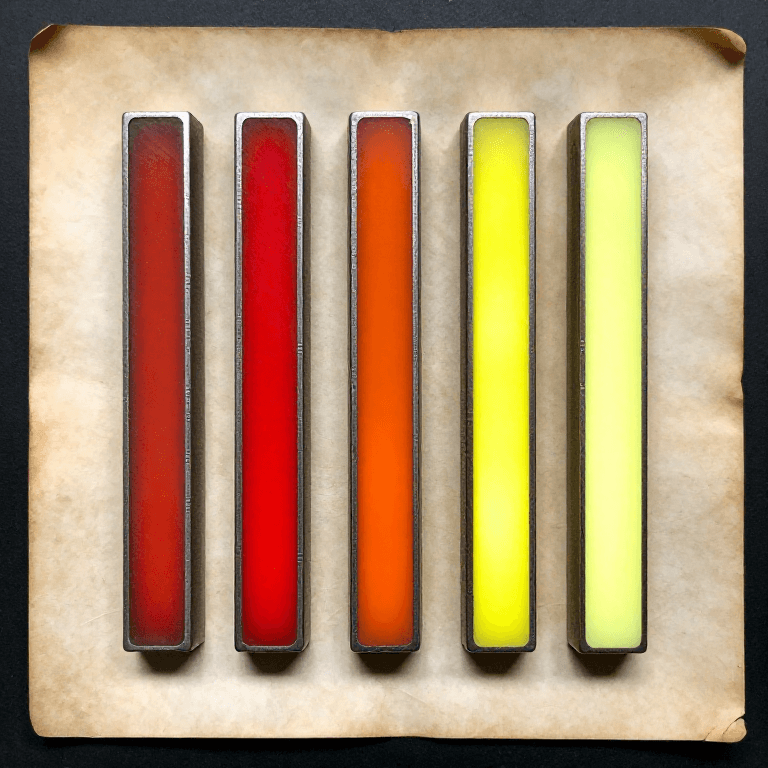
Metal only moves where it is hot. As a heat fades, the thin end cools first and stops moving while the thick part is still workable, which is exactly the surface-to-volume effect the heating rung describes. So work the hottest region and go back to the fire before the colour drops out of the forging range. Hammering steel that has gone below red achieves almost nothing, work-hardens it, and can crack it. Plan what you will do with each heat before it comes out of the fire. Three deliberate operations per heat is a good working rhythm; one operation and back in the fire wastes fuel and costs scale on every trip.

Materialien für diesen Schritt:

Baustahl-FlachstangeBaustahl-Flachstange1 Stück
Holzkohle in StückenHolzkohle in Stücken2 Stück

Benötigte Werkzeuge:

SchmiedeesseSchmiedeesse
SchmiedezangeSchmiedezange
SchmiedehammerSchmiedehammer
Getönte SchmiedeschutzbrilleGetönte Schmiedeschutzbrille

Materialien

2

Benötigte Werkzeuge

10

CC0 Gemeinfrei

Dieser Blueprint ist unter CC0 veröffentlicht. Sie dürfen dieses Werk für jeden Zweck frei kopieren, ändern, verbreiten und verwenden, ohne um Erlaubnis zu fragen.

Unterstützen Sie den Maker, indem Sie Produkte über seinen Blueprint kaufen, wo er eine Maker-Provision von Anbietern festgelegt, verdient. Oder erstellen Sie eine neue Iteration dieses Blueprints und verbinden Sie ihn in Ihrem eigenen Blueprint, um Einnahmen zu teilen.

Diskussion

(0)

Anmelden um an der Diskussion teilzunehmen

Kommentare werden geladen...