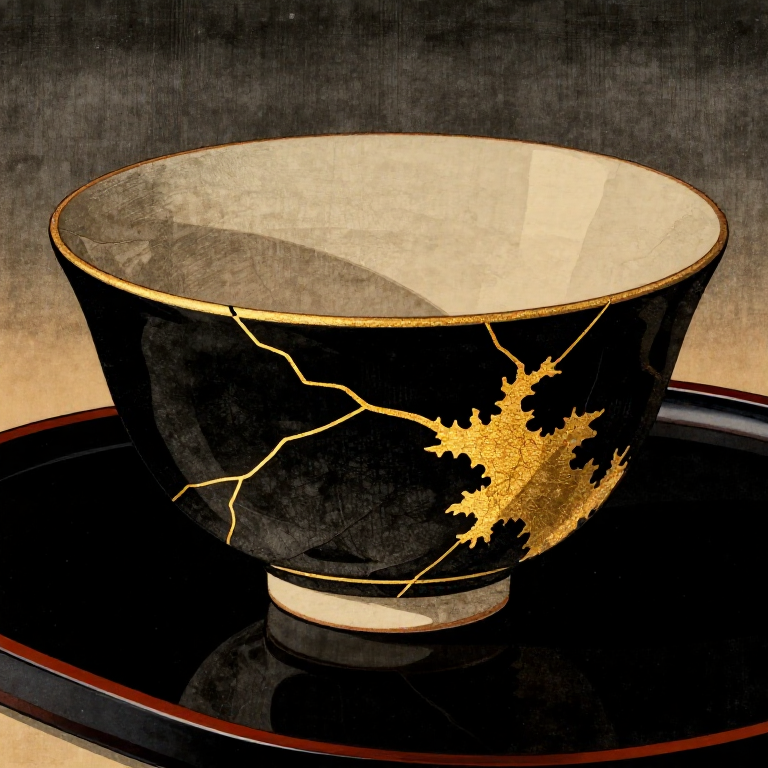


Zerbrochene Keramik mit Goldlack reparieren (Kintsugi) — die Kunst der goldenen Fuge
Anweisungen
Die Scherben vorbereiten
Die Scherben vorbereiten
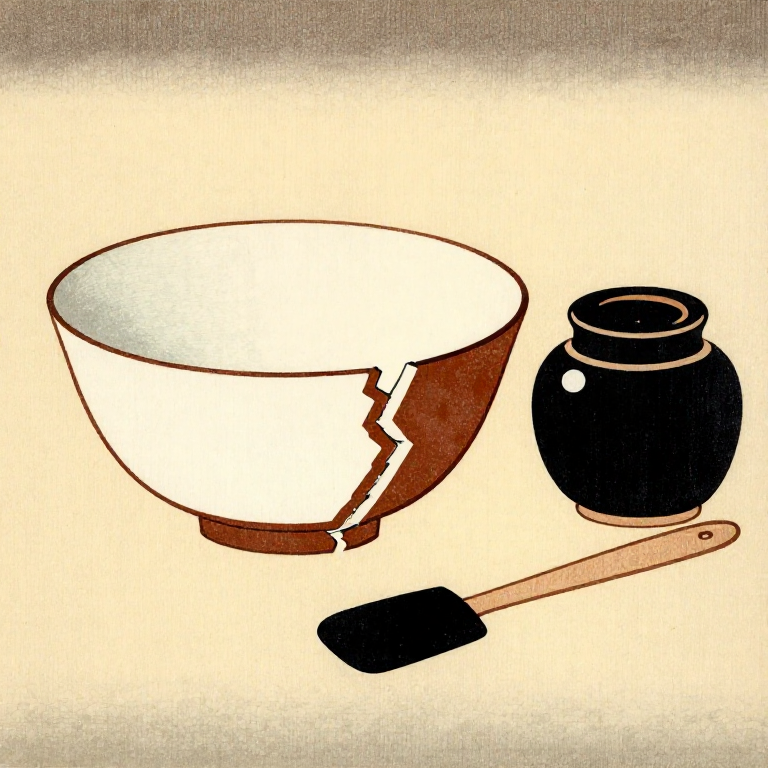
Reinige alle Bruchkanten gründlich mit warmem Wasser und lass sie vollständig trocknen. Entferne alte Klebereste früherer Reparaturen mit Kampferöl oder Aceton. Setze die Teile trocken zusammen, um zu verstehen, wie sie passen, und fotografiere die Anordnung als Vorlage. Kintsugi gelingt am besten bei sauberen Brüchen, die genau zusammenpassen. Fehlen kleine Splitter, werden sie in einem späteren Schritt mit Lackpaste gefüllt. Trage während der ganzen Arbeit Nitrilhandschuhe: Roher Urushi enthält Urushiol, denselben Stoff wie der Giftsumach, und löst bei den meisten Menschen eine starke Kontaktdermatitis aus. Arbeite in einem gut belüfteten Raum.
Materialien für diesen Schritt:
 Urushi-Lack10-20ml ml
 Tonoko-Pulver20-30g g
 Goldpulver1-2g g
 Terpentinsmall amount Stück
 Terrakottaton1 Stück
Benötigte Werkzeuge:
 Pfannenwender
 Schaumstoffpinsel
 Feuchtekasten
 Schleifpapier
 Nitrilhandschuhe
Den Lackkleber anrühren und auftragen
Den Lackkleber anrühren und auftragen
Stelle den traditionellen Kleber her, Mugi-Urushi: Knete einfaches Weizenmehl mit etwas Wasser zu einem festen Teig und arbeite dann rohen Urushi (Ki-Urushi) ein – ungefähr gleiche Teile Urushi und Mehl –, bis die Paste ihre Form hält, ohne zu zerfließen. Trage die Paste mit einem kleinen Spatel auf eine Seite jedes Bruchs auf und drücke die Teile fest zusammen. Wisch herausquellenden Überschuss ab, aber strebe keine Perfektion an – die abschließende Goldschicht deckt die Naht ab. Fixiere die zusammengefügten Teile mit Malerkrepp oder Gummibändern. Stelle das Stück für 1-2 Wochen in eine Feuchtebox (ein geschlossenes Gefäß mit einem feuchten Tuch darin, bei hoher Luftfeuchtigkeit gehalten; der traditionelle Schrank dafür heißt Furo). Urushi härtet nicht durch Austrocknen: Er härtet durch eine langsame Reaktion mit Sauerstoff, die nur in warmer, feuchter Luft abläuft – in einem trockenen Raum bleibt er weich.
Materialien für diesen Schritt:
 Weizenmehl10 g g
Lücken füllen und die Naht aufbauen
Lücken füllen und die Naht aufbauen
Wenn der Kleber ausgehärtet ist (1-2 Wochen), prüfe die Verbindung. Fülle Lücken, Splitter oder Vertiefungen mit Sabi-Urushi – rohem Urushi, gemischt mit Tonoko (einem ultrafeinen Gesteinspulver, traditionell aus verwittertem Schieferton und Tonstein oder vom Schneiden von Schleifsteinen) und etwas Wasser – bis die Oberfläche bündig mit der umgebenden Keramik ist. Bei größeren Fehlstellen trägst du die Paste in dünnen Schichten auf und lässt jede Schicht in der Feuchtebox aushärten, bevor die nächste kommt. Dicke Aufträge härten nur an der Oberfläche und bleiben darunter weich, was früher oder später zum Versagen führt. Wenn alle Füllungen ausgehärtet sind und die Oberfläche eben ist, schleife den Nahtbereich leicht mit Nassschleifpapier der Körnung 800, damit eine glatte, gleichmäßige Fläche für die abschließende Goldschicht entsteht.
Materialien für diesen Schritt:
Schleifpapier1 BlattDie goldene Abschlussschicht auftragen
Die goldene Abschlussschicht auftragen
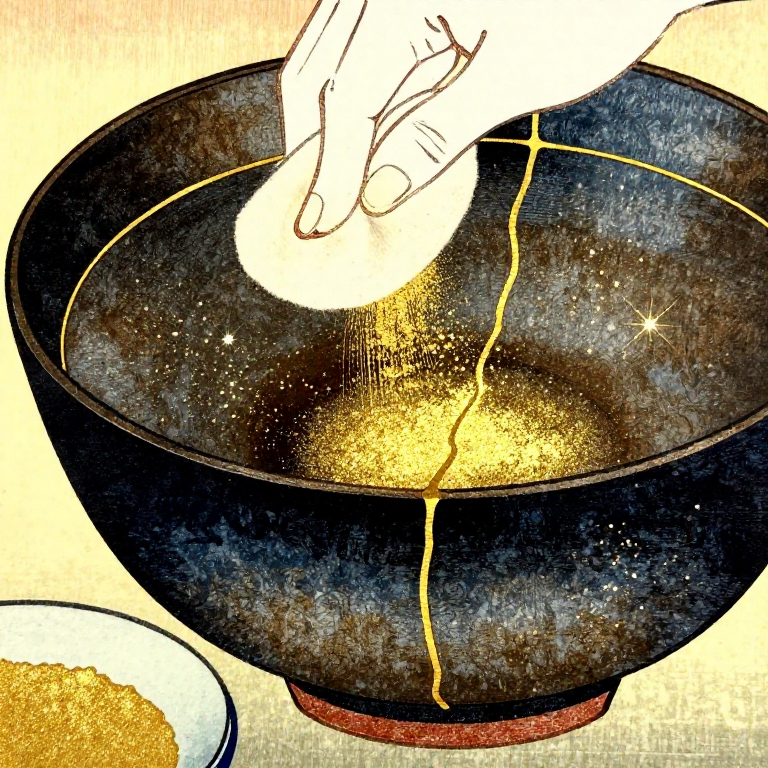
Trage mit einem feinen Pinsel eine dünne Schicht Urushi entlang der reparierten Nahtlinien auf – traditionell Bengara-Urushi, mit rotem Eisenoxid gefärbt, das dem Gold einen warmen Grund gibt. Arbeite sorgfältig, damit der Lack auf den Nahtbereich beschränkt bleibt – ausgehärteter Urushi lässt sich von glasierten Flächen nur schwer entfernen. Sobald der Lack leicht klebrig geworden ist (die Wartezeit hängt von Temperatur und Luftfeuchtigkeit ab, prüfe es also am Ende der Linie), stäube Goldpulver mit einem weichen Pinsel oder einem Wattebausch auf den Lack. Das Gold haftet am klebrigen Lack und fällt von trockenen Stellen ab. Verwende reines Goldpulver für Stücke, die mit Lebensmitteln in Berührung kommen, oder Messingpulver als dekorativen Ersatz, der nicht lebensmittelecht ist. Stell das Stück für eine letzte Aushärtung von 1-2 Wochen zurück in die Feuchtebox.
Die Goldlinien polieren und versiegeln
Die Goldlinien polieren und versiegeln
Poliere die Goldlinien nach der letzten Aushärtung sanft mit einem weichen Tuch oder einem Achatpolierer, um das Goldpulver zu verdichten und seinen Glanz herauszuholen. Überschüssiges Goldpulver auf den umliegenden Flächen lässt sich mit einem mit Kampferöl befeuchteten Tuch abwischen. Für mehr Haltbarkeit und Glanz trägst du noch eine sehr dünne Schicht klaren Urushi über das Gold auf und lässt sie eine weitere Woche aushärten. Vollständig ausgehärtet ist eine Reparatur aus natürlichem Urushi und reinem Gold wasserdicht und für den normalen Gebrauch belastbar, und ausgehärteter Urushi ist dasselbe Material wie traditionelle Lackschalen für Speisen. Die Goldnähte sind dauerhaft und waschen sich nicht ab. Kintsugi ist mit Wabi-Sabi verbunden, dem Annehmen des Unvollkommenen: Bruch und Reparatur gelten als Teil der Geschichte eines Gegenstands, nicht als etwas, das man verbergen müsste.
Materialien
10- 20-30g gPlatzhalter
- small amount StückPlatzhalter
- 1 StückPlatzhalter
- 10 g gPlatzhalter
- 1 BlattPlatzhalter
- 10-20ml StückPlatzhalter
- 1-2g StückPlatzhalter
- small amount StückPlatzhalter
- 1 StückPlatzhalter
- 1 BlattPlatzhalter
Benötigte Werkzeuge
5- Platzhalter
- Platzhalter
- Platzhalter
- Platzhalter
- Platzhalter
CC0 Gemeinfrei
Dieser Blueprint ist unter CC0 veröffentlicht. Sie dürfen dieses Werk für jeden Zweck frei kopieren, ändern, verbreiten und verwenden, ohne um Erlaubnis zu fragen.
Unterstützen Sie den Maker, indem Sie Produkte über seinen Blueprint kaufen, wo er eine Maker-Provision von Anbietern festgelegt, verdient. Oder erstellen Sie eine neue Iteration dieses Blueprints und verbinden Sie ihn in Ihrem eigenen Blueprint, um Einnahmen zu teilen.