

Extracting Chromium from Chromite — The Element That Paints the Rainbow
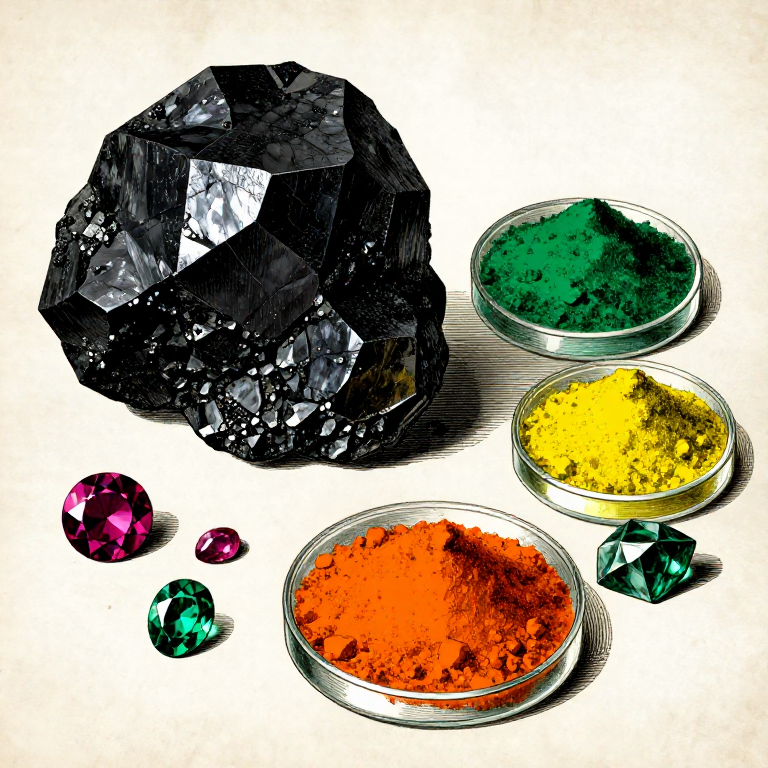
Chromium (Cr, element 24) takes its name from the Greek chroma ('color'), because nearly all of its compounds are intensely and vividly colored. Ruby red is Cr³⁺ in aluminum oxide. Emerald green is Cr³⁺ in beryllium aluminum silicate. Chrome yellow, chrome orange, and chrome green were the dominant industrial pigments of the 19th century. No other element produces such a spectacular range of colors across its compounds.
French chemist Louis-Nicolas Vauquelin discovered chromium in 1797 by analyzing crocoite (PbCrO₄), a vivid orange-red mineral from Siberia. He isolated the metal in 1798 by reducing chromium trioxide (Cr₂O₃) with charcoal. The discovery caused immediate excitement because of the new element's extraordinary coloring properties — within years, chrome pigments were being manufactured across Europe.
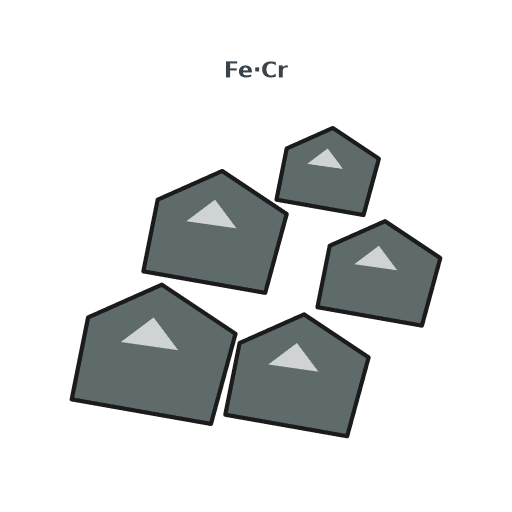
Chromite (FeCr₂O₄, iron chromium oxide) is the only commercially important chromium mineral, containing 46.5% Cr₂O₃ (31.8% chromium metal) by mass. Unlike Vauquelin's original reduction of pure Cr₂O₃, reducing chromite directly with carbon produces ferrochrome (an iron-chromium alloy) rather than pure chromium — but ferrochrome is itself the primary feedstock for stainless steel production, which consumes over 90% of the world's chromium output.
HAZARD: Hexavalent chromium (Cr(VI)) compounds are potent carcinogens (IARC Group 1) and cause severe skin ulceration. Chromite ore itself contains only trivalent chromium (Cr(III)), which is far less toxic, but incomplete reduction or oxidizing conditions during processing can generate Cr(VI). Chromium dust is a respiratory hazard. Work with full respiratory protection and gloves.
Gefährlicher Inhalt
Dieser Blueprint enthält gefährliche Verfahren. Melden Sie sich an und aktivieren Sie gefährliche Inhalte in Ihren Kontoeinstellungen, um die Schritt-für-Schritt-Anleitung anzuzeigen.
AnmeldenDieser Bauplan stellt her
CC0 Gemeinfrei
Dieser Blueprint ist unter CC0 veröffentlicht. Sie dürfen dieses Werk für jeden Zweck frei kopieren, ändern, verbreiten und verwenden, ohne um Erlaubnis zu fragen.
Unterstützen Sie den Maker, indem Sie Produkte über seinen Blueprint kaufen, wo er eine Maker-Provision von Anbietern festgelegt, verdient. Oder erstellen Sie eine neue Iteration dieses Blueprints und verbinden Sie ihn in Ihrem eigenen Blueprint, um Einnahmen zu teilen.