Zusammenarbeit
KUNST
SCHÖNHEIT & WELLNESS
HANDWERK
KULTUR & GESCHICHTE
UNTERHALTUNG
UMFELD
ESSEN & GETRÄNKE
REVERSE ENGINEERING
WISSENSCHAFTEN
SPORT
TECHNOLOGIE
WEARABLES
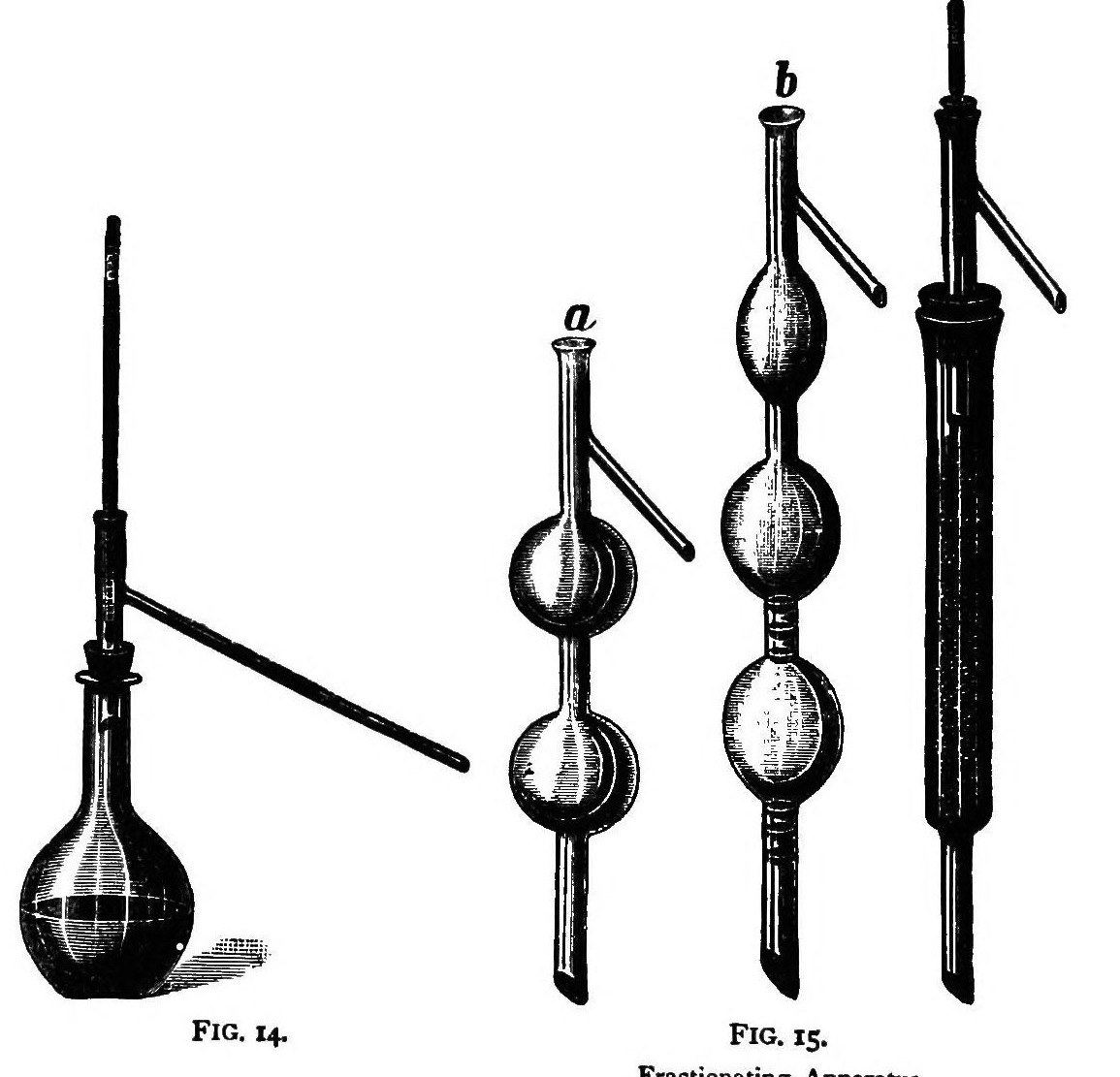


Fractionating Still: Hempel Bead Column on a Round Flask with Liebig Condenser (Gattermann, 1901)
The classic laboratory set-up for splitting a mixture of liquids by boiling point. A round flask is topped by a Hempel column, a tube packed with glass beads, with a side outlet near the top and a thermometer in a cork above it. The higher-boiling vapour condenses on the beads and runs back, so the vapour reaching the outlet is richer in the lower-boiling part; a Liebig condenser turns it to liquid in the receiver. One pass through it separates better than repeated distillations from a plain flask.
Result: a fractionating still for laboratory distillations at atmospheric pressure.
Source: L. Gattermann, The Practical Methods of Organic Chemistry (2nd American ed., 1901), pp. 16-24. Unknown: column and bead sizes. Picture: the book's Figs. 14-15.
Fortgeschritten
Unknown
Anweisungen
1
1
Make the Hempel column
Make the Hempel column
Take a wide glass tube with a side outlet tube near its top and fill it with glass beads; the beads act like sieves, holding back the higher-boiling part. Fit it to a round, short-necked flask with a bored cork (or have it fused onto the bulb); flasks with the same neck width can share one cork. Choose a flask the charge will fill about two-thirds. Not given: sizes. Ours: a glass tube for the column body.
Materialien für diesen Schritt:
 Glasrohr1 column
 Glasperlen1 packing
 Rundkolben1 Stück
 Korken2 Stück
Benötigte Werkzeuge:
 Korkbohrer
2
2
Set the thermometer and condenser
Set the thermometer and condenser
Pass the thermometer through a cork (not rubber) in the top of the column so its bulb sits level with the outlet, never down in the liquid. For liquids boiling up to 100° join the outlet to a Liebig condenser with a cork (long for very low boilers, short for high); from 100-200° cool the receiver with running water; above that a wide glass tube 50 cm long on the outlet is enough. If the vapour attacks cork, push the outlet far into the condenser instead. Clamp the apparatus above the outlet, never below it, or the hot glass may crack.
Materialien für diesen Schritt:
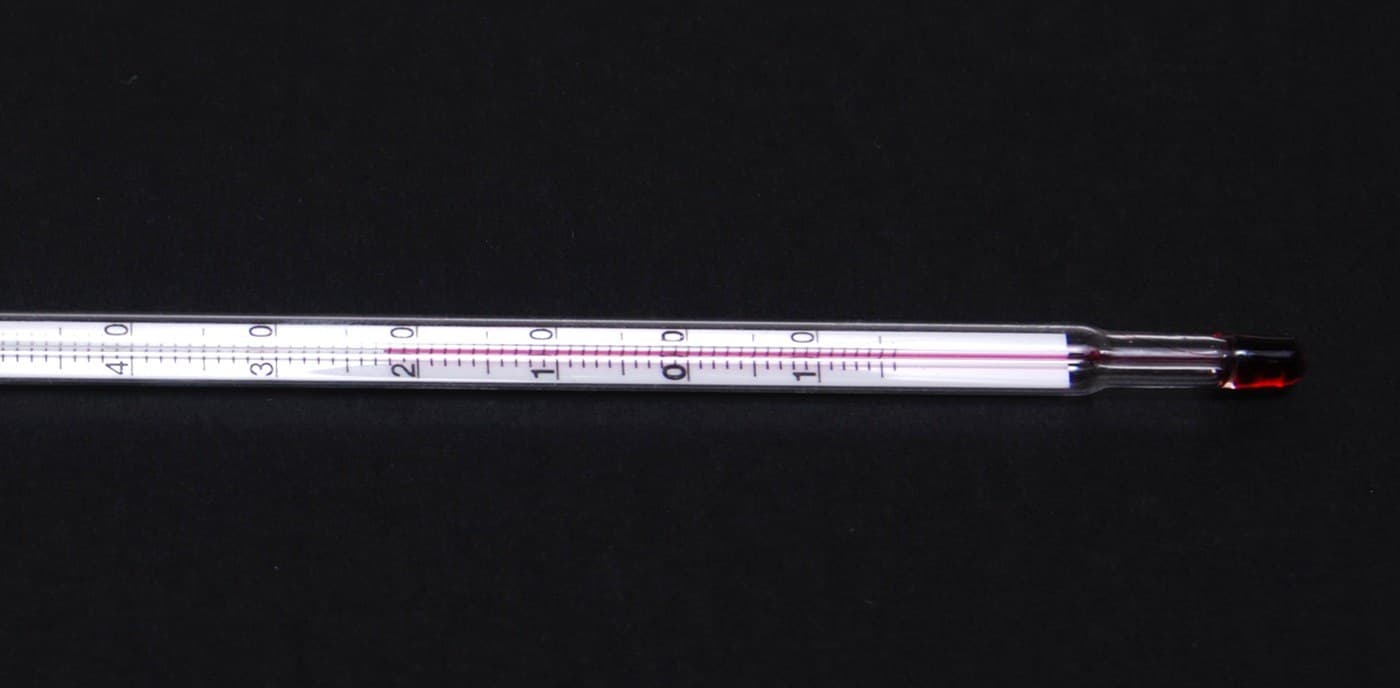
 Laborthermometer1 Stück
 Wassergekühlter Kühler1 Stück
 Erlenmeyerkolben2 receivers
Benötigte Werkzeuge:
 Stativ (Laborstativ)Korkbohrer
3
3
Fractionate
Fractionate
Add a few bits of glass or platinum wire against bumping. Heat on the water-bath for liquids boiling up to about 80°, otherwise over a small free flame moved slowly to and fro under the flask, never above the liquid level, so the distillate falls into the receiver steadily in drops. With the Hempel column stop heating now and then so the liquid held in the beads can run back. Collect the first runnings, the main fraction at a steady temperature, and the last runnings in separate receivers; for a mixture, collect fractions over set ranges and distil them again.
Benötigte Werkzeuge:
 BunsenbrennerStativ (Laborstativ)
Materialien
7- 1 columnPlatzhalter
- 1 packingPlatzhalter
- 1 StückPlatzhalter
- 2 StückPlatzhalter
- 1 StückPlatzhalter
- 1 StückPlatzhalter
- 2 receiversPlatzhalter
Benötigte Werkzeuge
3- Platzhalter
- Platzhalter
- Platzhalter
Dieser Bauplan stellt her

Verwandte Blueprints
Diese Blueprints teilen Wissen — Techniken, Materialien oder Prinzipien

CC0 Gemeinfrei
Dieser Blueprint ist unter CC0 veröffentlicht. Sie dürfen dieses Werk für jeden Zweck frei kopieren, ändern, verbreiten und verwenden, ohne um Erlaubnis zu fragen.
Unterstützen Sie den Maker, indem Sie Produkte über seinen Blueprint kaufen, wo er eine Maker-Provision von Anbietern festgelegt, verdient. Oder erstellen Sie eine neue Iteration dieses Blueprints und verbinden Sie ihn in Ihrem eigenen Blueprint, um Einnahmen zu teilen.