KUNST
SCHÖNHEIT & WELLNESS
HANDWERK
KULTUR & GESCHICHTE
UNTERHALTUNG
UMFELD
ESSEN & GETRÄNKE
REVERSE ENGINEERING
WISSENSCHAFTEN
SPORT
TECHNOLOGIE
WEARABLES
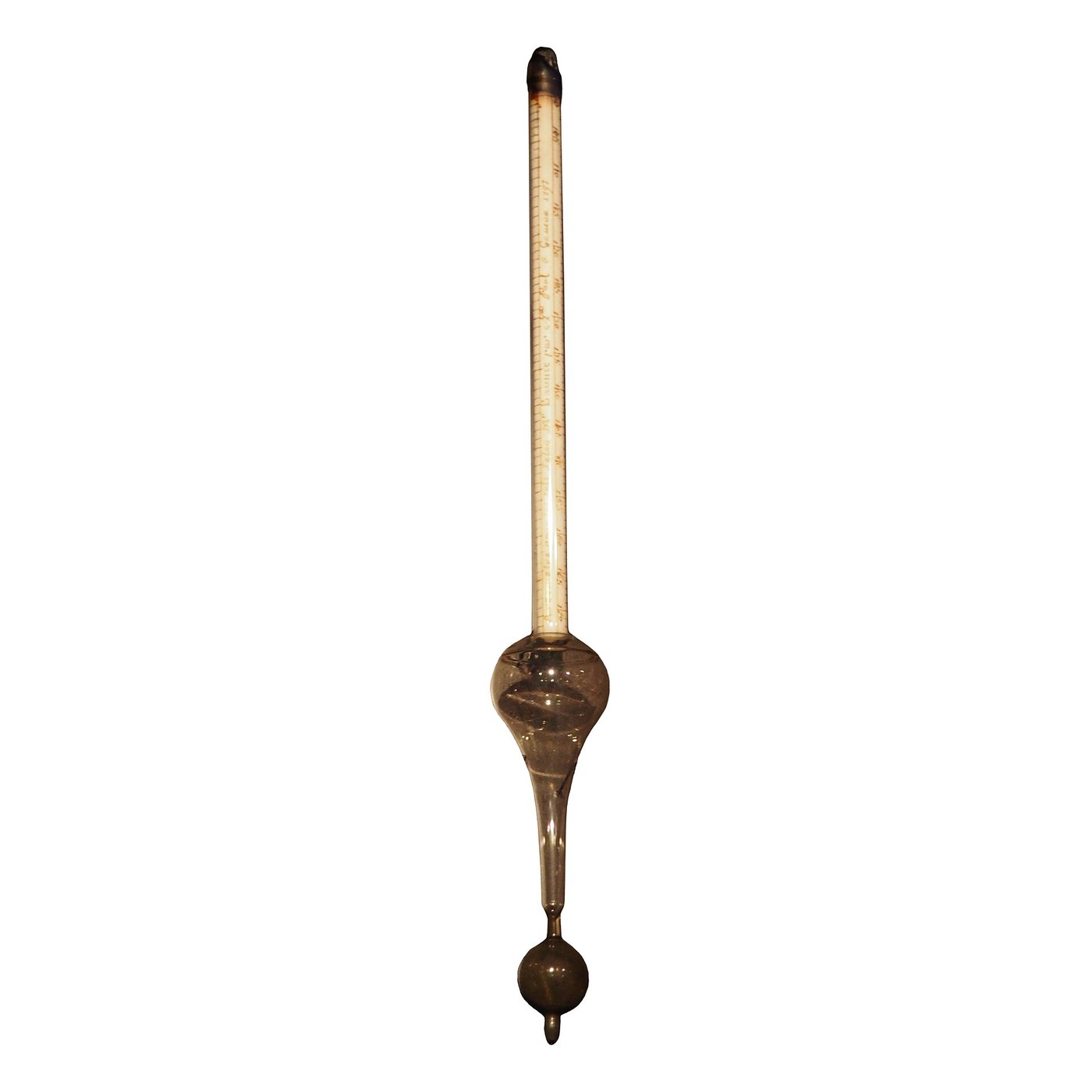


Glass Hydrometer: Blown, Weighted with Shot, Calibrated in Known Liquids
A hydrometer is a glass float with a thin stem: it sinks deeper in light liquids and rides higher in dense ones, so a scale on the stem reads specific gravity. Baumé fixed his scale at two points, pure water and 15 % brine (Ure, 1839); here the scale is marked in sugar solutions of known strength, giving degrees Brix, and in liquids weighed for their specific gravity.
The picture: an old glass hydrometer with a paper scale inside its stem and a ballast bulb below.
Erfahren
A day
Anweisungen
1
1
Blow the float
Blow the float
On a tube, blow an elongated bulb, then a small second bulb below it for ballast, and draw the tube above into a thin, even stem.
Materialien für diesen Schritt:
 Glasrohr-Sortiment1 Stück
Benötigte Werkzeuge:
 Tischbrenner für Glasbläser
 Schutzbrille
 Hitzebeständige Handschuhe
2
2
Ballast and scale paper
Ballast and scale paper
Drop small lead shot into the lower bulb until the float stands upright in water with most of the stem out. Slide a paper strip into the stem.
Materialien für diesen Schritt:
 Bleibarren50 g
 Papier1 Stück
Benötigte Werkzeuge:
 Balkenwaage
3
3
Seal the top
Seal the top
Heat the top of the stem and draw it closed. Check that it floats upright and does not leak.
Benötigte Werkzeuge:
Tischbrenner für GlasbläserSchutzbrille4
4
Mark the water point
Mark the water point
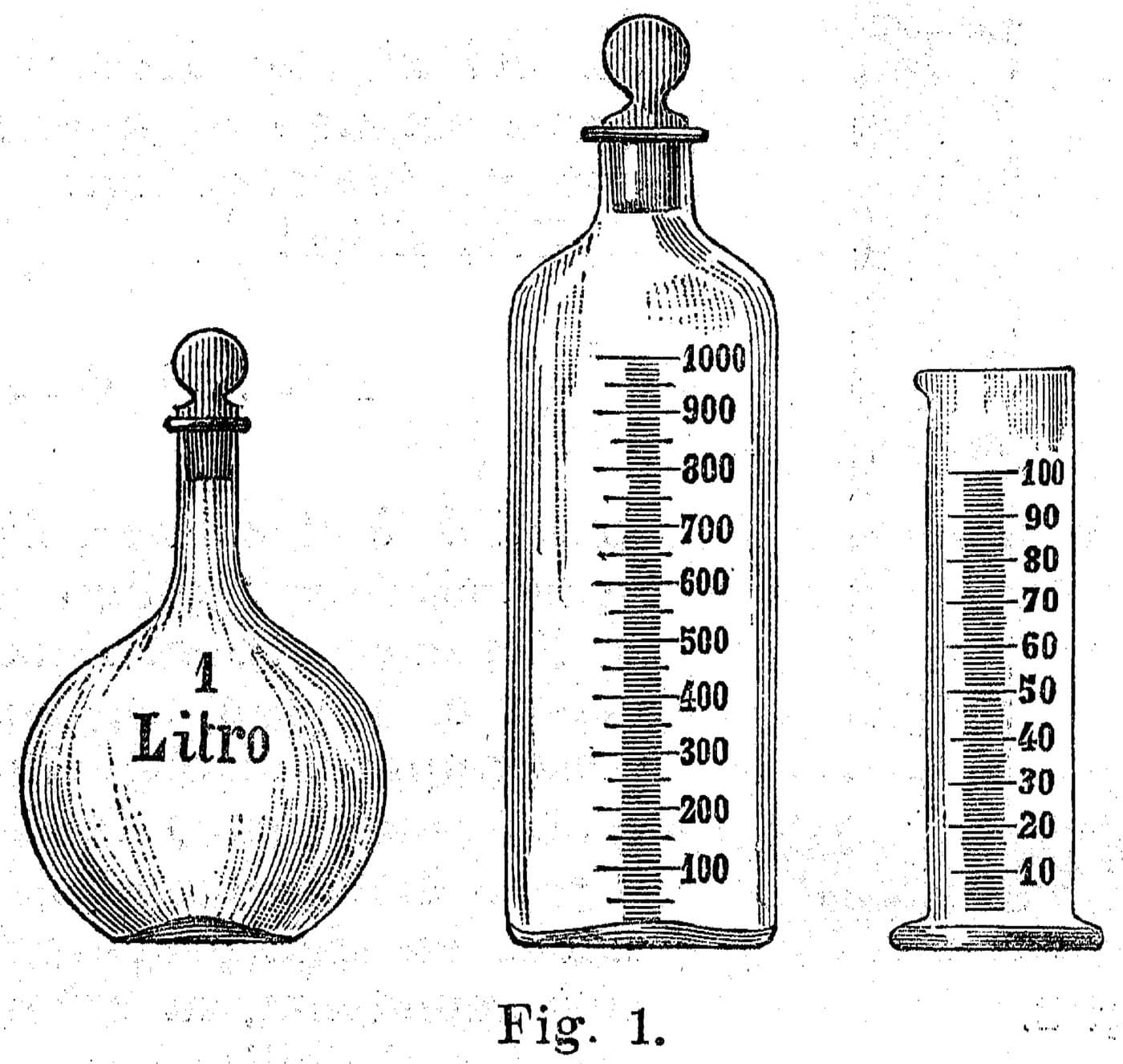
Float it in water at room temperature in the cylinder and mark where the surface cuts the stem: specific gravity 1.000 and 0 °Brix.
Materialien für diesen Schritt:
 Wasser1 Liter
Benötigte Werkzeuge:
 Messzylinder
 Thermometer
 Diamantreißnadel
5
5
Mark the other points
Mark the other points
Make sugar solutions by weight (see the notebook) and salt brines; float the hydrometer in each and mark the stem. Weigh 100 mL of each liquid to write its specific gravity beside the mark. Copy the marks onto the paper strip in ink and reseal if you opened it.
Materialien für diesen Schritt:
 Weißer Zucker0.3 kg
 Salz0.3 kgWasser2 Liter
 Eisengallustinte2 ml
Benötigte Werkzeuge:
BalkenwaageMesszylinder Federkiel
6
6
Calibration liquids
Calibration liquids
Jupyter-Notebook wird geladen …
7
7
Limits
Limits
Ure's two-point Baumé principle and the Brix definition are sourced; the bulb form, shot ballast and weighing method are ours. Read at the temperature you calibrated at; this hydrometer has no potential-alcohol scale.
Materialien
7- 1 StückPlatzhalter
- 50 gPlatzhalter
- 1 StückPlatzhalter
- 3 LiterPlatzhalter
- 0.3 kgPlatzhalter
- 0.3 kgPlatzhalter
- 2 mlPlatzhalter
Benötigte Werkzeuge
8- Platzhalter
- Platzhalter
- Platzhalter
- Platzhalter
- Platzhalter
- Platzhalter
- Platzhalter
- Platzhalter
Dieser Bauplan stellt her
Verwandte Blueprints
Diese Blueprints teilen Wissen — Techniken, Materialien oder Prinzipien

CC0 Gemeinfrei
Dieser Blueprint ist unter CC0 veröffentlicht. Sie dürfen dieses Werk für jeden Zweck frei kopieren, ändern, verbreiten und verwenden, ohne um Erlaubnis zu fragen.
Unterstützen Sie den Maker, indem Sie Produkte über seinen Blueprint kaufen, wo er eine Maker-Provision von Anbietern festgelegt, verdient. Oder erstellen Sie eine neue Iteration dieses Blueprints und verbinden Sie ihn in Ihrem eigenen Blueprint, um Einnahmen zu teilen.