
KUNST
SCHÖNHEIT & WELLNESS
HANDWERK
KULTUR & GESCHICHTE
UNTERHALTUNG
UMFELD
ESSEN & GETRÄNKE
REVERSE ENGINEERING
WISSENSCHAFTEN
SPORT
TECHNOLOGIE
WEARABLES
Goatskin Leather Tanned with Sumac, the Morocco Way
Tex

Erstellt von

Tex

14. Oktober 2026FO
21
0
0
0
0

Goatskin Leather Tanned with Sumac, the Morocco Way

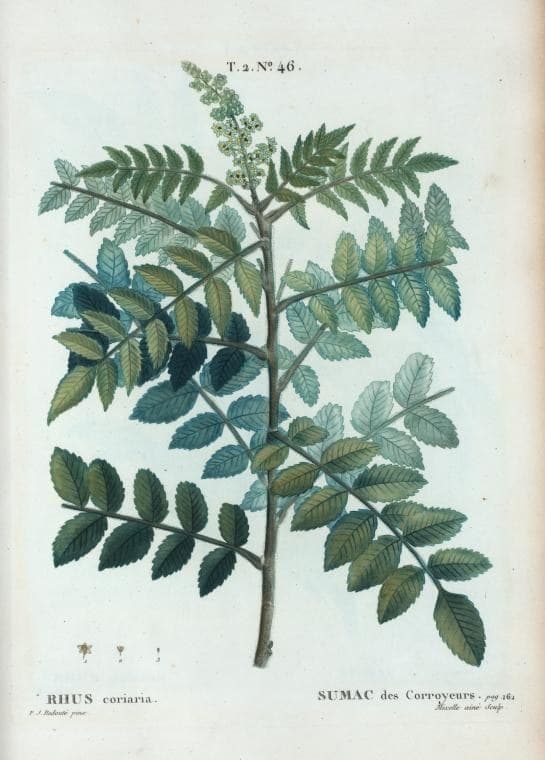
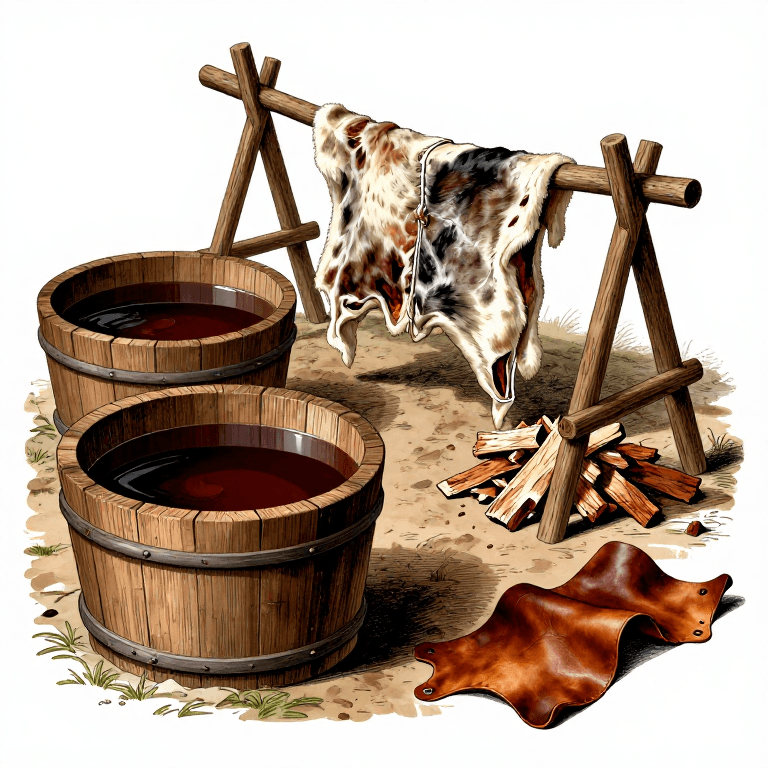
Morocco leather is goatskin tanned with sumac: light, supple and fine-grained. Andrew Ure (1839) gives the method: bran and lime to loosen the hair, the skin scraped clean, then sewn into a bag, grain outside, and floated in sumac liquor for a day. Oiled and curried, it takes the pebbled grain used for gloves and book covers. The picture: early 18th-century calf bindings inlaid with panels of coloured morocco.
Erfahren
Two to three weeks

Anweisungen

1

Soak in bran water

Steep the skins a few days in water with bran stirred in, until it ferments. Work them on the beam, soak 12 hours in fresh water and rinse.

Materialien für diesen Schritt:

Rohe ZiegenhautRohe Ziegenhaut6 Stück
WeizenkleieWeizenkleie2 kg
WasserWasser100 Liter

Benötigte Werkzeuge:

HolzbottichHolzbottich

SchabebaumSchabebaum
2

Lime and dehair

Steep them in weak lime water until the hair pulls out easily. Scrape the hair off on the beam with the back of the fleshing knife and wash them in running water.

Materialien für diesen Schritt:

Gelöschter KalkGelöschter Kalk2 kg
WasserWasser60 Liter

Benötigte Werkzeuge:

HolzbottichHolzbottich
SchabebaumSchabebaum
SchabmesserSchabmesser
GummihandschuheGummihandschuhe
3

Flesh and clean out the lime

Shave off flesh and fat with the fleshing knife and trim the edges. Rub the grain hard with a flat stone to press out lime, then a night and a day in a fresh bran bath.

Materialien für diesen Schritt:

WeizenkleieWeizenkleie1 kg
WasserWasser50 Liter

Benötigte Werkzeuge:

SchabmesserSchabmesser
SchabebaumSchabebaum
Schleifstein Körnung 1000Schleifstein Körnung 1000
HolzbottichHolzbottich
4

Sew into bags

Sew each skin edgewise into a bag with the grain outside, leaving a small opening.

Materialien für diesen Schritt:

LeinenfadenLeinenfaden20 m

Benötigte Werkzeuge:

NähnadelNähnadel
5

Tan in sumac

Fill each bag with strong sumac liquor and close it; float the bags in a tub of the same liquor and keep them moving by hand for four hours. Drain, refill and tan again: about 24 hours in all.

Materialien für diesen Schritt:

Sumachblätter (getrocknet)Sumachblätter (getrocknet)5.4 kg
WasserWasser60 Liter

Benötigte Werkzeuge:

HolzbottichHolzbottich
BalkenwaageBalkenwaage
6

Open, rinse and dry

Unstitch the skins, rinse them, beat them soft, drain them and hang them to dry. While still damp, sponge a thin film of linseed oil on the grain so they stay glossy and do not go horny.

Materialien für diesen Schritt:

LeinölLeinöl0.2 Liter

Benötigte Werkzeuge:

SchwammSchwamm
7

Curry and grain

Thin the flesh side where needed and smooth the damp skin. Then work it on the flesh side with a cork-faced board, in several directions, to raise the pebbled grain (Ure: the curriers' pommel faced with cork).

Benötigte Werkzeuge:

SchabmesserSchabmesser
KorkplatteKorkplatte
8

Sumach for the batch

Jupyter-Notebook wird geladen …
9

Limits

The process and the sumac rate are Ure's; we leave out his dyeing (cochineal, iron, indigo) and give the undyed leather. Bath volumes are ours.

Materialien

7

Benötigte Werkzeuge

9

Dieser Bauplan stellt her

CC0 Gemeinfrei

Dieser Blueprint ist unter CC0 veröffentlicht. Sie dürfen dieses Werk für jeden Zweck frei kopieren, ändern, verbreiten und verwenden, ohne um Erlaubnis zu fragen.

Unterstützen Sie den Maker, indem Sie Produkte über seinen Blueprint kaufen, wo er eine Maker-Provision von Anbietern festgelegt, verdient. Oder erstellen Sie eine neue Iteration dieses Blueprints und verbinden Sie ihn in Ihrem eigenen Blueprint, um Einnahmen zu teilen.

Diskussion

(0)

Anmelden um an der Diskussion teilzunehmen

Kommentare werden geladen...