Zusammenarbeit
KUNST
SCHÖNHEIT & WELLNESS
HANDWERK
KULTUR & GESCHICHTE
UNTERHALTUNG
UMFELD
ESSEN & GETRÄNKE
REVERSE ENGINEERING
WISSENSCHAFTEN
SPORT
TECHNOLOGIE
WEARABLES
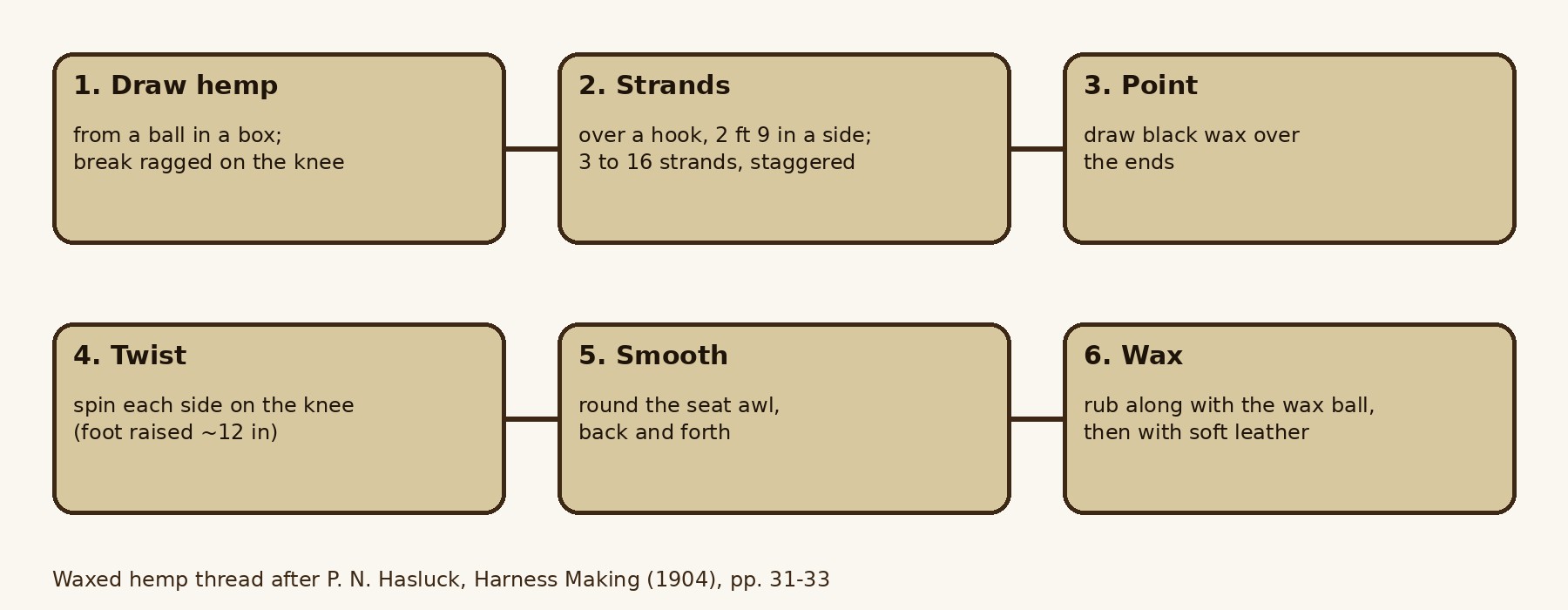


Saddler's Waxed Hemp Thread: Ragged-Pointed Strands Spun on the Knee and Rubbed With Black Wax (Hasluck, 1904)
How a harness maker makes his own waxed thread, from P. N. Hasluck's Harness Making (1904): strands of hemp broken to ragged points over a bench hook, 3 to 16 of them laid with staggered ends, each side twisted by rolling on the knee, smoothed round the seat-awl, and rubbed with black cobbler's wax (beeswax for light work).
Anfänger
About 15 minutes per thread
Anweisungen
1
1
Length and strands
Length and strands
Jupyter-Notebook wird geladen …
2
2
Read Harness Making
Read Harness Making
"The threads used in the trade are many, but the principal is waxed thread, made by the saddler himself." White hemp is the best and toughest; fine No. 15 and coarse No. 3 meet most needs.
3
3
Cut the strands
Cut the strands
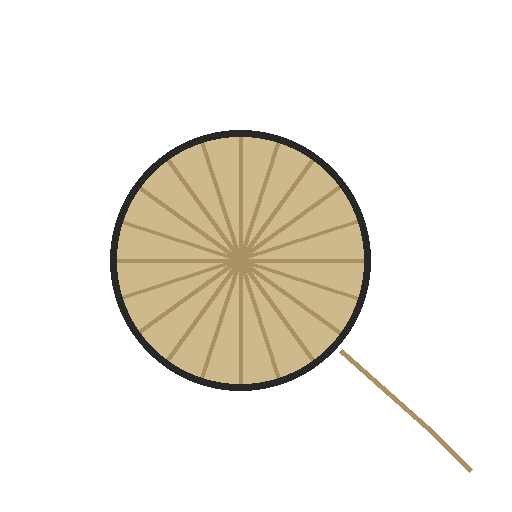
Keep the ball of hemp in a box with a small hole in the lid. Draw out the end, twist it once round the fingers, and break it by rolling on the knee and giving a sharp pull, so it breaks ragged (the more ragged, the better the point). Throw it over a nail or hook in the bench and pull until each side is about 2 ft 9 in, untwist by rolling on the knee and break again. Add strands the same way, 3 to 16 by the strength wanted, leaving the ends of unequal length for a fine point.
Materialien für diesen Schritt:
 Hanfgarn1 Stück
Benötigte Werkzeuge:
 Holzkiste
4
4
Point and twist
Point and twist
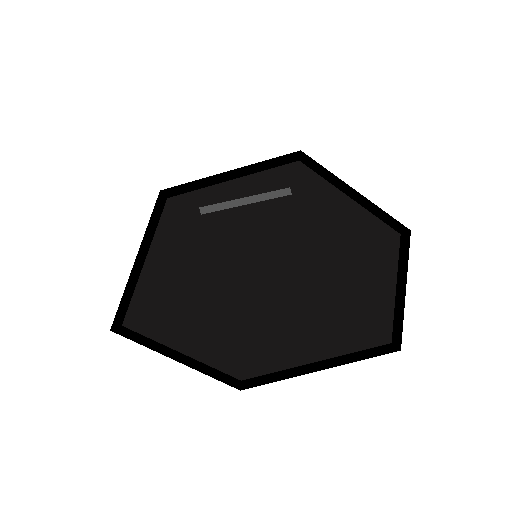
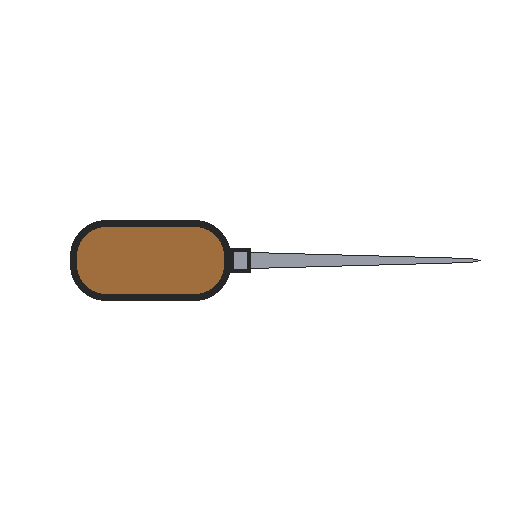
Draw the ball of wax over the points two or three times to hold them together. Raise the knee about 12 in by resting the foot on a support, and spin each side by rolling it on the knee with the palm until twisted enough (too much and it knots in stitching). For best work, twist both sides once round the seat-awl and draw it sharply back and forth to smooth out lumps.
Materialien für diesen Schritt:
 Schusterpech1 Stück
Benötigte Werkzeuge:
 Sattler-Stopfahle
5
5
Wax
Wax
Rub the thread with tallow so the wax runs smooth. Holding both ends in the left hand, rub the ball of wax along the whole thread, pulling the part round the hook out to wax it too, then rub the thread sharply end to end with soft leather or the bare hand to even the wax. For yellow or white thread on light work use beeswax, but always point the ends with black wax: only black wax keeps the thread fast to the needles.
Materialien für diesen Schritt:
Schusterpech1 Stück Talg1 Stück
 Bienenwachs1 Stück
Benötigte Werkzeuge:
Sattler-Stopfahle6
6
Troubleshooting
Troubleshooting
Thread troubleshooting.
Flow
Loading...
7
7
History and honest limits
History and honest limits
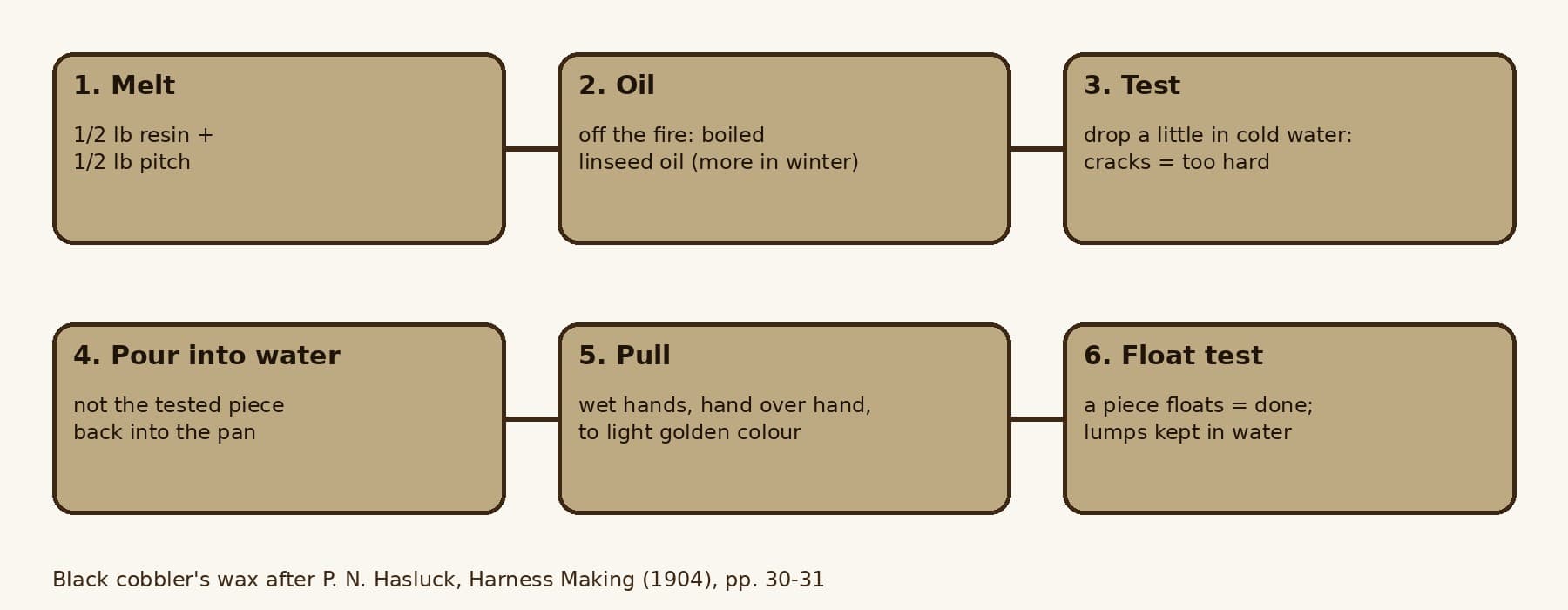
From Paul N. Hasluck, **Harness Making** (1904), "Harness-makers' Materials" (checked on the archive.org scan harnessmaking00hasl, pp. 29-33). The strand-use notes, metric figures and the diagram are ours.
Materialien
4- 1 StückPlatzhalter
- 1 StückPlatzhalter
- 1 StückPlatzhalter
- 1 StückPlatzhalter
Dieser Bauplan stellt her
Verwandte Blueprints
Diese Blueprints teilen Wissen — Techniken, Materialien oder Prinzipien

CC0 Gemeinfrei
Dieser Blueprint ist unter CC0 veröffentlicht. Sie dürfen dieses Werk für jeden Zweck frei kopieren, ändern, verbreiten und verwenden, ohne um Erlaubnis zu fragen.
Unterstützen Sie den Maker, indem Sie Produkte über seinen Blueprint kaufen, wo er eine Maker-Provision von Anbietern festgelegt, verdient. Oder erstellen Sie eine neue Iteration dieses Blueprints und verbinden Sie ihn in Ihrem eigenen Blueprint, um Einnahmen zu teilen.