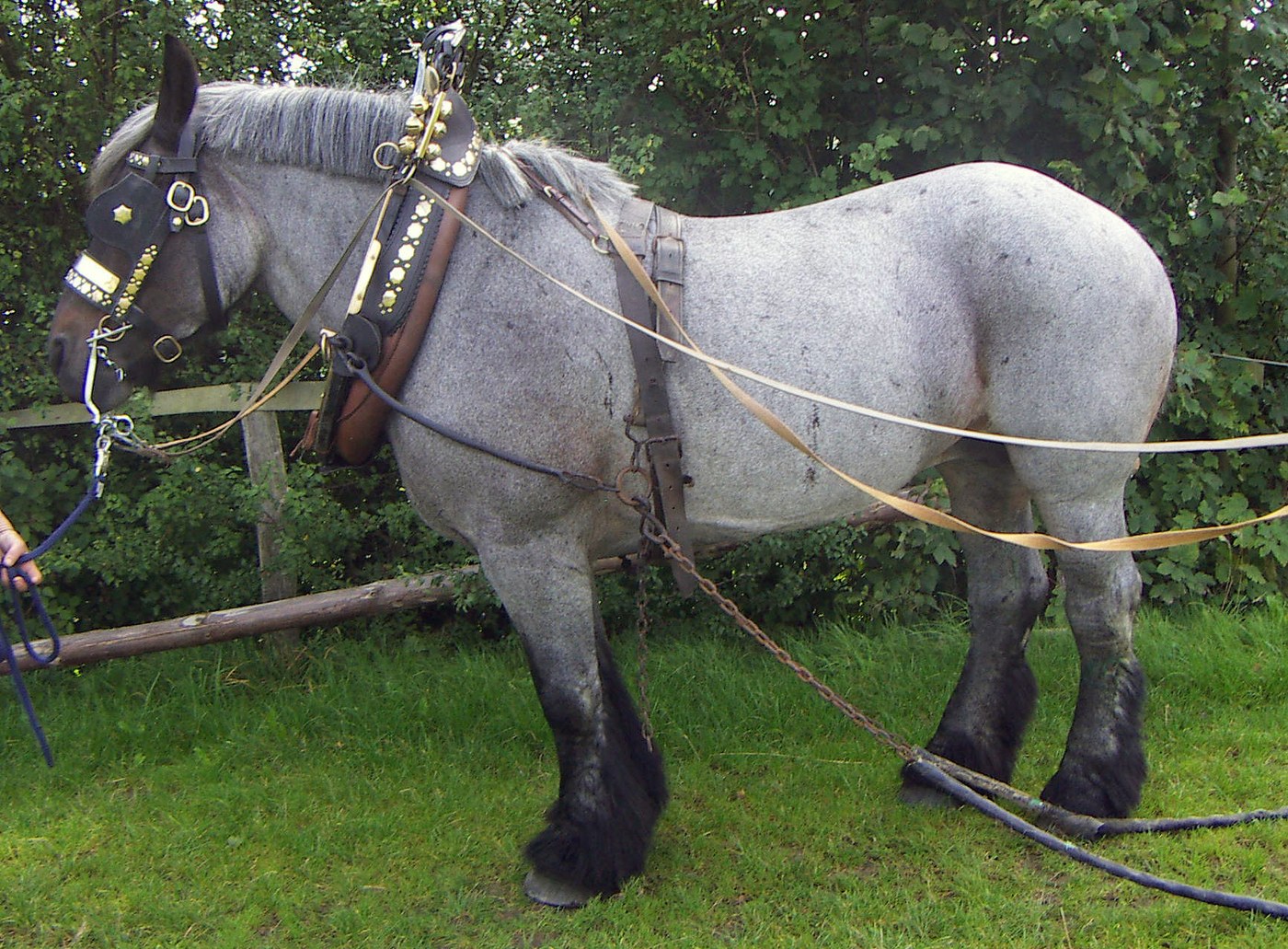


Horse Collar
Anweisungen
Model the throat harness and find the fault
Model the throat harness and find the fault
Use a model or a willing volunteer's shoulders — never an actual animal.
- Loop a strap around a cylinder representing the neck, high up at the throat.
- Pull hard on the strap from the front and low down.
- Note where the pressure concentrates.
Materialien für diesen Schritt:
 Lederriemen1 Stück
Build the collar body
Build the collar body
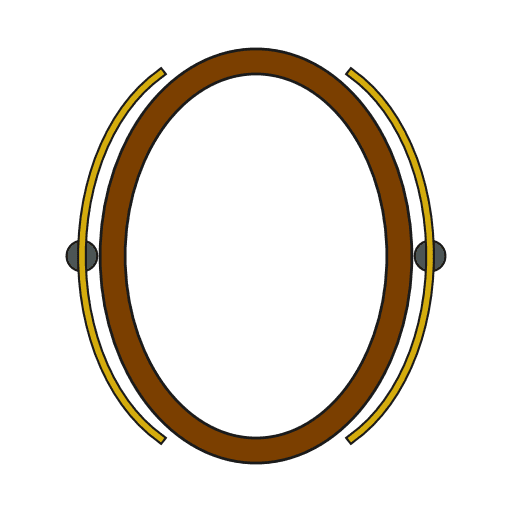
A stiff oval hoop, padded, shaped to the shoulders.
- Form a rigid oval frame that clears the throat completely at the bottom.
- Pad the inside face generously and evenly.
- Cover the padding in leather so it presents a smooth surface.
Materialien für diesen Schritt:
 Gürtelstreifen aus Leder — pflanzlich gegerbt1 Stück
 Hanffaser500 g
Attach the traces at the right height
Attach the traces at the right height
Where the pull leaves the collar decides where it goes in the animal.
- Fit hames — rigid arms — around the collar's outside groove.
- Attach the traces to the hames at roughly the height of the point of shoulder.
- Run the traces back to the load at a shallow angle.
Materialien für diesen Schritt:
 Juteseil1 length
Compare the two harnesses under load
Compare the two harnesses under load
Measure the difference on your model rather than quoting it.
- Apply the same pulling force through each arrangement.
- Measure the contact area over which the load is carried in each case.
- Divide force by area for each — that is the pressure.
Benötigte Werkzeuge:
 Digitale Küchenwaage
 Lineal
History and context
History and context
The padded collar appears in China by around the fifth century, in wall paintings and figurines, and there is an intermediate breast-strap harness earlier still that already moves the load off the throat. It reaches Europe around the tenth to eleventh century and is common by the twelfth.
Why it mattered so much in northern Europe: the heavy wet clay soils north of the Alps needed a mouldboard plough and a lot of draught. Oxen could do it slowly. A horse in a collar could do it faster, and horses could then also haul carts to market and be ridden. Historians treat the collar, the mouldboard plough, the horseshoe and three-field rotation as a package that together lifted medieval agricultural output — and it is a package, not a single miracle invention.
A caution about the claim. The strong version of this story — that antiquity was crippled by ignorance of the collar, so ancient economies could not develop — was pushed hard by Lefebvre des Noëttes in the 1930s and has been substantially qualified since. Roman harness was better than he allowed, oxen were often the rational choice on cost, and horses need grain that oxen do not. The collar was a real and large improvement; it was not the sole hinge of European history.
Still in use. Working draught horses wear collars of essentially this design today, and fitting one correctly to the individual animal remains a skilled job — a collar that is too large rocks and rubs, too small chokes, and either causes injury within a day's work.
Materialien
4- 1 StückPlatzhalter
- Platzhalter
- 500 gPlatzhalter
- 1 lengthPlatzhalter
Dieser Bauplan stellt her
Verwandte Blueprints
Diese Blueprints teilen Wissen — Techniken, Materialien oder Prinzipien
CC0 Gemeinfrei
Dieser Blueprint ist unter CC0 veröffentlicht. Sie dürfen dieses Werk für jeden Zweck frei kopieren, ändern, verbreiten und verwenden, ohne um Erlaubnis zu fragen.
Unterstützen Sie den Maker, indem Sie Produkte über seinen Blueprint kaufen, wo er eine Maker-Provision von Anbietern festgelegt, verdient. Oder erstellen Sie eine neue Iteration dieses Blueprints und verbinden Sie ihn in Ihrem eigenen Blueprint, um Einnahmen zu teilen.