KUNST
SCHÖNHEIT & WELLNESS
HANDWERK
KULTUR & GESCHICHTE
UNTERHALTUNG
UMFELD
ESSEN & GETRÄNKE
REVERSE ENGINEERING
WISSENSCHAFTEN
SPORT
TECHNOLOGIE
WEARABLES
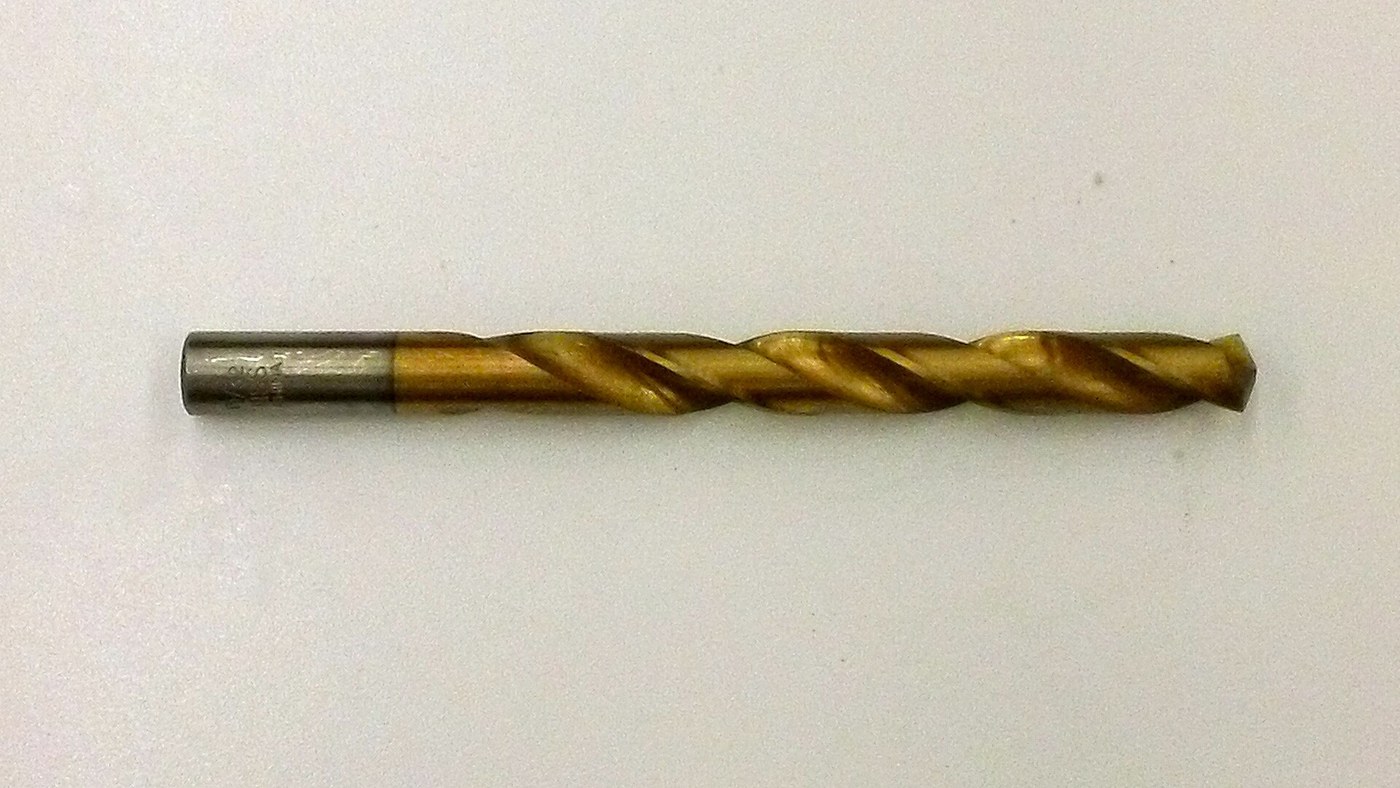


Twist Drill Bits: Flutes, Point and Coating
A twist drill is named after how it was first made: two grooves were cut in opposite sides of a round bar and the bar was twisted to make helical flutes. Today the flutes are usually ground: the bar turns while it moves past a grinding wheel, the way helical gears are cut. Drills have also been forged with their flutes, from blanks heated by induction. The common hardware-store drill has a 118° point, which works in wood, metal and plastic. A black oxide finish, made in a hot bath of sodium hydroxide with nitrates at about 141 °C that turns the surface to magnetite, adds heat and rust resistance; a titanium nitride coat, a few micrometres thick, can make a high-speed steel bit last three or more times longer.
Erfahren
Factory process
Anweisungen
1
1
Cut the blanks
Cut the blanks
Cut high-speed steel round bar into blanks the length of the drill.
Materialien für diesen Schritt:
 Schnellarbeitsstahl-Rundstab1 kg
2
2
Grind the flutes
Grind the flutes
Turn each blank while moving it past a grinding wheel to cut the two helical flutes.
Benötigte Werkzeuge:
 Bohrer-Spannutenschleifmaschine
3
3
Grind the point
Grind the point
Grind the cutting point; 118° is the general-purpose angle.
Benötigte Werkzeuge:
 Bohrerschleifgerät
4
4
Finish
Finish
Give the drills a black oxide finish in a hot caustic nitrate bath, or a titanium nitride coat by vapour deposition.
Benötigte Werkzeuge:
 Brünierbad
 Natronlauge-Lösung
Materialien
1- Platzhalter
Benötigte Werkzeuge
4- Platzhalter
- Platzhalter
- Platzhalter
- Platzhalter
Dieser Bauplan stellt her
Verwandte Blueprints
Diese Blueprints teilen Wissen — Techniken, Materialien oder Prinzipien

CC0 Gemeinfrei
Dieser Blueprint ist unter CC0 veröffentlicht. Sie dürfen dieses Werk für jeden Zweck frei kopieren, ändern, verbreiten und verwenden, ohne um Erlaubnis zu fragen.
Unterstützen Sie den Maker, indem Sie Produkte über seinen Blueprint kaufen, wo er eine Maker-Provision von Anbietern festgelegt, verdient. Oder erstellen Sie eine neue Iteration dieses Blueprints und verbinden Sie ihn in Ihrem eigenen Blueprint, um Einnahmen zu teilen.