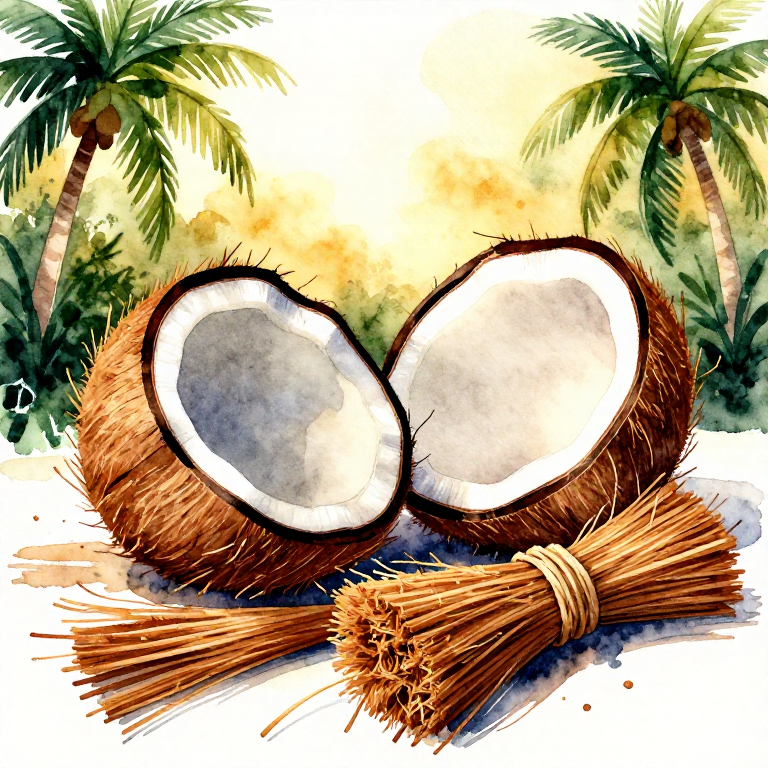

การเก็บเกี่ยวใยมะพร้าว — จากเปลือกสู่เส้นใย
Anweisungen
เลือกผลมะพร้าวที่เหมาะสม
เลือกผลมะพร้าวที่เหมาะสม
เลือกผลมะพร้าวที่แก่จัด (อายุ 10-12 เดือน) เปลือกนอกเปลี่ยนเป็นสีน้ำตาล มะพร้าวแก่มีเส้นใยที่แข็งแรงและยาวกว่ามะพร้าวอ่อน มะพร้าวอ่อน (สีเขียว) มีเส้นใยอ่อนเกินไปสำหรับการทำเชือก
Materialien für diesen Schritt:
 Reife Kokosnüsse (10 bis 12 Monate)20 Stück
แกะเปลือกนอกออกจากกะลา
แกะเปลือกนอกออกจากกะลา
ปักเหล็กแหลม (หลาว) ลงดินในแนวเอียง ใช้แรงกดผลมะพร้าวลงบนปลายเหล็กเพื่อแทงเข้าไปในเปลือก แล้วงัดออก ทำซ้ำรอบผลจนเปลือกหลุดออกทั้งหมด แยกเปลือก (กาบ) ออกจากกะลา
Benötigte Werkzeuge:
 Enthülsungsdorn (Eisenpfahl)
 Lederstulpenhandschuhe
ตัดเปลือกเป็นชิ้นเล็ก
ตัดเปลือกเป็นชิ้นเล็ก
ตัดเปลือกมะพร้าวเป็นชิ้นขนาดประมาณ 15-20 ซม. ชิ้นที่เล็กลงจะแช่น้ำได้ทั่วถึงกว่าและเส้นใยแยกตัวง่ายกว่า
Benötigte Werkzeuge:
 Machete
เตรียมบ่อแช่น้ำ
เตรียมบ่อแช่น้ำ
เตรียมบ่อแช่ — อาจเป็นถังพลาสติกขนาดใหญ่ บ่อซีเมนต์ หรือบ่อน้ำธรรมชาติ น้ำต้องมากพอท่วมเปลือกมะพร้าวทั้งหมด น้ำจืดที่ค่อนข้างนิ่ง (ไม่ไหลแรง) ให้ผลดีที่สุด
Materialien für diesen Schritt:
 Wasser200 Liter
Benötigte Werkzeuge:
 Großer Kunststofftank
แช่เปลือกมะพร้าวในน้ำ (Retting)
แช่เปลือกมะพร้าวในน้ำ (Retting)
จุ่มชิ้นเปลือกมะพร้าวลงในน้ำ วางหินหรือไม้ทับไว้ไม่ให้ลอย น้ำจะค่อย ๆ ย่อยสลายเนื้อเยื่ออ่อน (เพกติน) ที่ยึดเส้นใยไว้ กระบวนการนี้เรียกว่า "retting" (การแช่หมัก)
Materialien für diesen Schritt:
 Wägesteine5 kilogram
ตรวจสอบทุกสัปดาห์
ตรวจสอบทุกสัปดาห์
ตรวจสอบเปลือกทุก 7 วัน ลองดึงเส้นใยด้วยนิ้ว ถ้าเส้นใยยังแยกยาก ให้แช่ต่อ น้ำจะเปลี่ยนเป็นสีน้ำตาลเข้มและมีกลิ่น — นี่เป็นเรื่องปกติ เป็นผลจากการย่อยสลายของจุลินทรีย์
แช่ 2-4 สัปดาห์
แช่ 2-4 สัปดาห์
ระยะเวลาแช่ขึ้นกับอุณหภูมิ: อากาศร้อน (30°C+) ใช้เวลา 2-3 สัปดาห์ อากาศเย็น (20°C) อาจนาน 4-6 สัปดาห์ เมื่อเส้นใยแยกตัวง่ายด้วยนิ้วมือ ถือว่าพร้อม อย่าแช่นานเกินไป — เส้นใยจะอ่อนและเปราะ
นำเปลือกขึ้นจากน้ำ
นำเปลือกขึ้นจากน้ำ
ยกเปลือกที่แช่แล้วออกจากบ่อ ปล่อยน้ำหยดออกสักครู่ ใส่ถุงตาข่ายหรือวางบนตะแกรงให้สะเด็ดน้ำ น้ำที่เหลือในบ่อมีธาตุอาหารสูง — ใช้รดต้นไม้ได้
Benötigte Werkzeuge:
 Abtropfbeutel aus Netzgewebe
ตีแยกเส้นใย
ตีแยกเส้นใย
วางเปลือกที่แช่แล้วบนพื้นแข็ง (แผ่นไม้หรือหิน) ใช้ไม้ท่อนตีเบา ๆ ซ้ำ ๆ เพื่อแยกเส้นใยออกจากเนื้อเยื่ออ่อนที่เหลือ ตีทั่วชิ้น พลิกด้านแล้วตีอีก
Benötigte Werkzeuge:
 Hölzerner Klopfschlegel
 Flaches Holzbrett
ล้างเส้นใยในน้ำสะอาด
ล้างเส้นใยในน้ำสะอาด
นำเส้นใยที่แยกแล้วไปล้างในน้ำสะอาด ขยำและบีบเบา ๆ เพื่อล้างเศษเนื้อเยื่อ โคลน และกลิ่นออก เปลี่ยนน้ำ 2-3 ครั้งจนน้ำล้างค่อนข้างใส
Materialien für diesen Schritt:
 Destilliertes Wasser40 Liter
Benötigte Werkzeuge:
 Waschschüssel
คัดแยกเส้นใยตามความยาว
คัดแยกเส้นใยตามความยาว
แยกเส้นใยเป็น 3 กลุ่ม: ยาว (15 ซม.+) สำหรับทำเชือกและทอเสื่อ, ปานกลาง (5-15 ซม.) สำหรับทำแปรงและบุนวม, สั้น (ต่ำกว่า 5 ซม.) สำหรับผสมดินปลูกหรือวัสดุกรอง
บีบน้ำออกจากเส้นใย
บีบน้ำออกจากเส้นใย
บีบเส้นใยด้วยมือให้แห้งที่สุดเท่าที่จะทำได้ หรือใช้เครื่องบีบ (ถ้ามี) ยิ่งบีบน้ำออกมากเท่าไหร่ เวลาตากแห้งจะน้อยลง
ตากเส้นใยให้แห้ง
ตากเส้นใยให้แห้ง
กระจายเส้นใยบาง ๆ บนตะแกรงหรือผ้าใบกลางแดด พลิกกลับทุก 3-4 ชั่วโมงเพื่อให้แห้งสม่ำเสมอ ใช้เวลา 2-3 วันในแดดจัด เก็บเข้าร่มถ้าฝนตก
Benötigte Werkzeuge:
 Geschirrabtropfgestell
ตรวจสอบความแห้ง
ตรวจสอบความแห้ง
เส้นใยที่แห้งดีจะรู้สึกแห้งสนิท ไม่เย็นเมื่อสัมผัส และมีสีน้ำตาลทอง ถ้ายังชื้นอยู่ จะมีกลิ่นเหม็นอับและขึ้นรา ความชื้นควรต่ำกว่า 12%
สางเส้นใยให้ฟู
สางเส้นใยให้ฟู
ใช้หวีเหล็กหรือมือสางเส้นใยที่แห้งแล้วให้แยกตัวฟูขึ้น เส้นใยที่จับตัวเป็นก้อนจะใช้งานยาก การสางช่วยให้เส้นใยพร้อมสำหรับการตีเกลียวเป็นเชือกหรือทอเสื่อ
Benötigte Werkzeuge:
 Stahlkamm
บรรจุและเก็บรักษา
บรรจุและเก็บรักษา
บรรจุเส้นใยแห้งในกระสอบป่านหรือถุงผ้าที่ระบายอากาศได้ อย่าใช้ถุงพลาสติกปิดสนิท — ความชื้นจะทำให้ขึ้นรา เก็บในที่แห้ง ยกสูงจากพื้น ใยมะพร้าวแห้งเก็บได้นานหลายปีโดยไม่เสื่อมคุณภาพ
Materialien für diesen Schritt:
 Jutesack3 Stück
Materialien
5- Platzhalter
- 200 LiterPlatzhalter
- 5 kilogramPlatzhalter
- 40 LiterPlatzhalter
- 3 StückPlatzhalter
Benötigte Werkzeuge
10- Platzhalter
- Platzhalter
- Platzhalter
- Platzhalter
- Platzhalter
- Platzhalter
- Platzhalter
- Platzhalter
- Platzhalter
- Platzhalter
CC0 Gemeinfrei
Dieser Blueprint ist unter CC0 veröffentlicht. Sie dürfen dieses Werk für jeden Zweck frei kopieren, ändern, verbreiten und verwenden, ohne um Erlaubnis zu fragen.
Unterstützen Sie den Maker, indem Sie Produkte über seinen Blueprint kaufen, wo er eine Maker-Provision von Anbietern festgelegt, verdient. Oder erstellen Sie eine neue Iteration dieses Blueprints und verbinden Sie ihn in Ihrem eigenen Blueprint, um Einnahmen zu teilen.