Zusammenarbeit
KUNST
SCHÖNHEIT & WELLNESS
HANDWERK
KULTUR & GESCHICHTE
UNTERHALTUNG
UMFELD
ESSEN & GETRÄNKE
REVERSE ENGINEERING
WISSENSCHAFTEN
SPORT
TECHNOLOGIE
WEARABLES
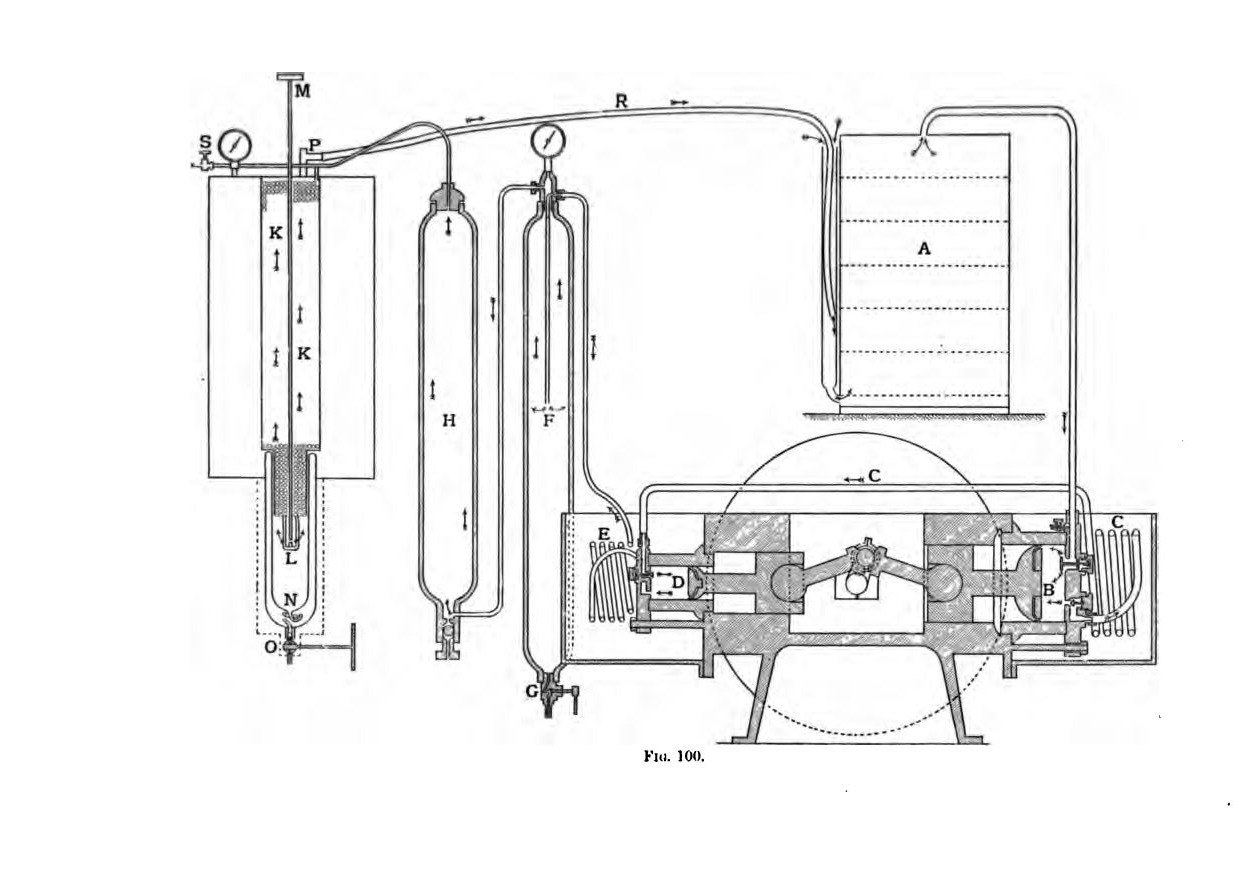


Liquid Air: Air Compressed to 170 Atmospheres and Expanded through the Hampson Liquefier (Travers 1901)
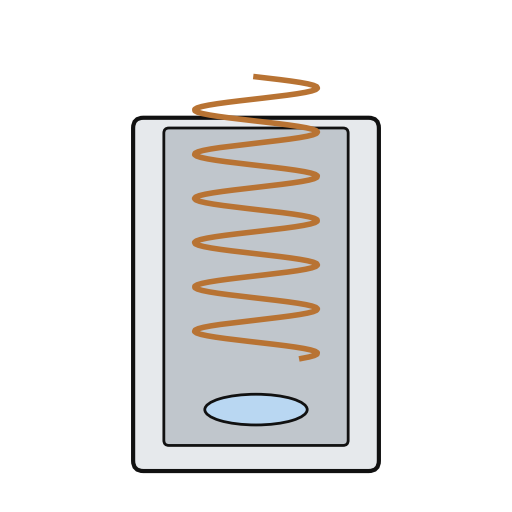
Air freed of carbon dioxide and water is pumped to about 170 atmospheres and let out through a fine valve at the foot of long copper coils. The expanding air cools a little and flows back over the coils, cooling the air coming down, until some of it turns liquid and drips into a vacuum vessel.
Result: liquid air, about 1-1.5 litres an hour, the first after about four minutes.
Source: M. W. Travers, The Experimental Study of Gases (1901), pp. 190-194, Fig. 100 (shown above). High pressure and liquid air: Travers warns that a sudden fault can cause a serious accident.
Erfahren
1 day
Anweisungen
1
1
Draw air through slaked lime
Draw air through slaked lime
Draw the air into the compressor through a cylinder of moist slaked lime spread on trays.
Materialien für diesen Schritt:
 Atmosphärische Luft - Erde1 as required
Benötigte Werkzeuge:
 Calciumhydroxid (gelöschter Kalk)
2
2
Compress in two stages
Compress in two stages
Compress in two stages to 160-180 atmospheres (the first to about 16), each stage followed by a copper coil in running water and then a water separator. A little water goes in with the air to lubricate; blow it off from the separator now and then. Travers' compressor was driven by a 5 horse-power electric motor.
Benötigte Werkzeuge:
 Gasverdichter
 Elektromotor
 Wasser
 Manometer
3
3
Dry over caustic potash
Dry over caustic potash
Pass the air through a cylinder of lumps of caustic potash to take out the water vapour and the last carbon dioxide. Run off the little water that collects after some weeks.
Benötigte Werkzeuge:
 Kaliumhydroxid
4
4
Liquefy
Liquefy
Lead the dry air into the Hampson liquefier, its lower end and valve inside a vacuum vessel. Start the motor, blow a little air through, close the valve and let the pressure rise to 170 atmospheres. Open the valve and keep the flow steady by the glycerol gauge on the exit (about 10 cm of glycerol with an exit rubber tube 80 cm long and 2 cm across). Liquid air appears in about four minutes; about 5 % of the air liquefies.
Benötigte Werkzeuge:
 Hampson-Luftverflüssiger
 Vakuumgefäß (Dewar)
 Gummischlauch
 GlycerinManometer
5
5
Draw it off, watch the machine
Draw it off, watch the machine
Run off the liquid air through the tap from time to time, about 1-1.5 litres an hour. Watch the machinery the whole time.
Benötigte Werkzeuge:
Vakuumgefäß (Dewar)Materialien
1- 1 as requiredPlatzhalter
Benötigte Werkzeuge
10- Platzhalter
- Platzhalter
- Platzhalter
- Platzhalter
- Platzhalter
- Platzhalter
- Platzhalter
- Platzhalter
- Platzhalter
- Platzhalter
Dieser Bauplan stellt her
CC0 Gemeinfrei
Dieser Blueprint ist unter CC0 veröffentlicht. Sie dürfen dieses Werk für jeden Zweck frei kopieren, ändern, verbreiten und verwenden, ohne um Erlaubnis zu fragen.
Unterstützen Sie den Maker, indem Sie Produkte über seinen Blueprint kaufen, wo er eine Maker-Provision von Anbietern festgelegt, verdient. Oder erstellen Sie eine neue Iteration dieses Blueprints und verbinden Sie ihn in Ihrem eigenen Blueprint, um Einnahmen zu teilen.